
Flowers
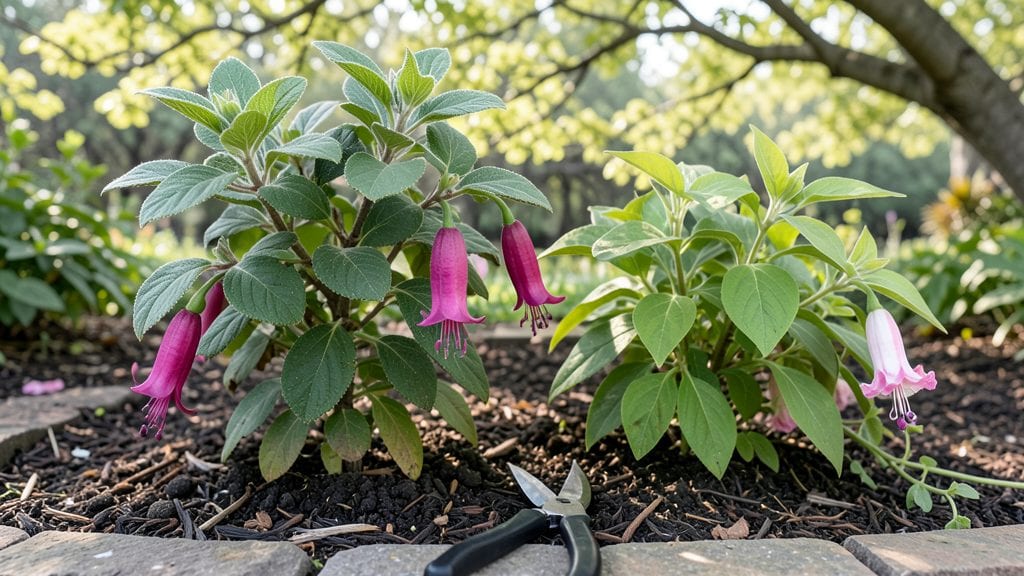
Fuchsias thrive as perennials only where winter temperatures rarely dip below 30°F (-1°C), making zones 9-11 their ideal range. 🌿 In colder areas, gardeners must either replant yearly or use protective measures like container growing.
The key difference lies in their woody stems—these die back in frost but regrow from roots in warmer climates, while colder zones force a complete restart each spring.
For those outside zones 9-11, overwintering techniques like digging tubers or moving plants indoors can extend their lifespan beyond one season. Some hybrid varieties also show better cold tolerance, though none match the hardiness of true perennials.
The choice between annual and perennial treatment ultimately comes down to your local frost patterns and willingness to invest in seasonal care.
💡 In This Article
- How USDA Zones Define Fuchsia Lifespan
- Extending Fuchsia Growth in Cold Climates
How USDA zones define fuchsia lifespan
The critical dividing line for fuchsias isn't just about temperature—it's about cellular damage thresholds. These plants have delicate woody stems that begin to suffer irreversible harm when exposed to 28°F (-2°C) for more than 2-3 hours.
At 25°F (-4°C), the damage becomes catastrophic, as ice crystals form within plant cells, rupturing their membranes. This is why zones 9-11, where winters rarely drop below 30°F (-1°C), allow fuchsias to persist as perennials—their roots and basal growth points remain protected.
Here's what actually happens in colder zones: When frost hits, the above-ground stems die back completely, but the root system may survive if protected by 3-4 inches of mulch. However, without consistent warmth, the roots often weaken or fail to regenerate properly.
In contrast, fuchsias in zones 9-11 enter a natural dormancy during mild winters, conserving energy until spring. Their stems remain semi-dormant but intact, ready to burst into growth as soon as temperatures rise above 55°F (13°C). 🌱
The science behind this involves cold acclimation. Fuchsias native to South America (their original habitat) evolved in regions with mild winters, meaning they lack the hardiness mechanisms of temperate-zone perennials.
Their leaves, for example, contain high moisture content that freezes easily, while their stems lack the protective suberin layers found in hardier plants. This is why even a light frost can cause leaf burn—visible as brown, papery edges that curl back like burnt paper.
What most people don't realize is how microclimates can extend perennial growth in marginal zones. In zone 8, for instance, fuchsias might survive winters if planted near south-facing walls or in containers that can be moved to sheltered spots.
The key is maintaining soil temperatures above 20°F (-6°C)—a threshold where root damage becomes minimal. In these cases, gardeners often see partial regrowth, though not the robust perennial performance seen in zones 9-11.
Consider this comparison: A fuchsia in zone 10 will naturally produce new growth from its base each spring, while one in zone 5 will need to be replanted from cuttings or seeds. The difference comes down to consistent above-freezing temperatures for at least 7-8 months per year.
Even a single hard frost in zone 8 can set back growth by weeks, whereas zone 11 fuchsias might only experience slowed growth during brief cold snaps.
For those pushing the limits in zones 8-9, hybrid varieties like 'Giant Marble' or 'Lady Thumb' show slightly better cold tolerance, but none approach true perennial hardiness.
The trade-off is often worth it: Perennial fuchsias in ideal zones can live 5-10 years with proper care, while annuals in colder zones must be replaced yearly—a stark reminder of how climate dictates plant lifespan at the cellular level. 🌿