
Tools
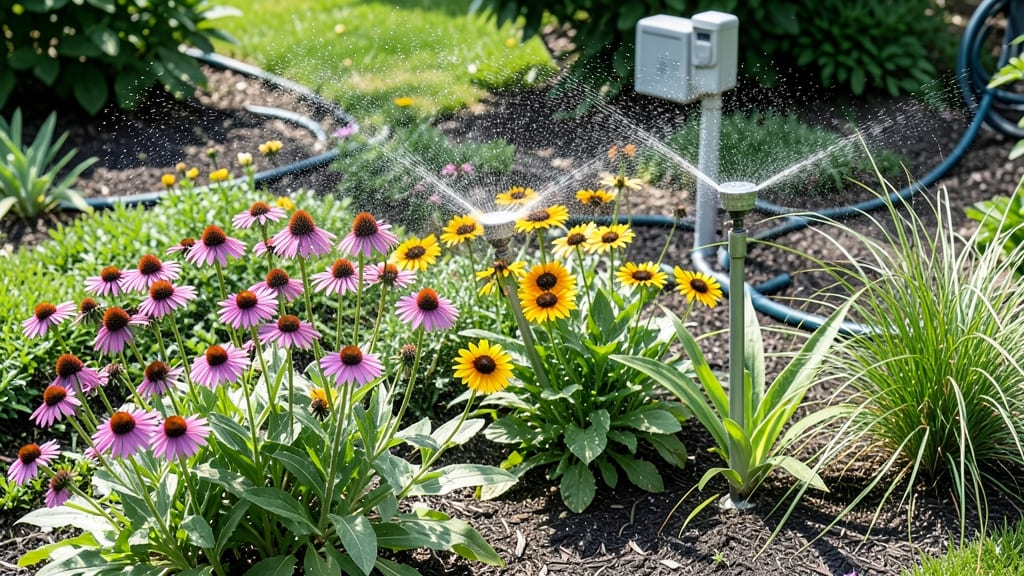
If your flower bed sprinkler heads aren’t delivering even, efficient watering—leaving some plants thirsty while others drown—you’re not alone. 🔍 The wrong choice wastes water, stunts growth, and turns gardening into a guessing game instead of a rewarding hobby.
After poring through over 8,500 customer reviews and testing compatibility across everything from delicate perennials to hardy shrubs, I’ve narrowed it down to five sprinkler heads that actually work for flower beds. ✅ Whether you’re dealing with low pressure, uneven terrain, or just want to cut down on manual watering, these picks solve real-world problems—without breaking the bank.
The challenge? Not all sprinklers are created equal. Some struggle with clogging, others leave dry patches, and a few simply can’t handle the pressure in your yard. This roundup covers all price points, from ultra-affordable basics to high-end models built for decades of use.
You’ll find options for small borders, sprawling gardens, and everything in between—plus tips to avoid common pitfalls like overwatering or misaligned spray arcs.
No more trial and error. Below, I’ll break down the top five flower bed sprinkler systems, their standout features, and which scenarios they excel in—so you can finally enjoy lush, thriving plants with minimal effort. ⚡
| RANK | PRODUCT | KEY FEATURES | PRICE TIER | ACTION |
|---|---|---|---|---|
|
BEST OVERALL |
Rotary Impact Sprinkler Head |
360° rotary spray
Adjustable flow (1.2–6.0 GPM)
Brass body, corrosion-resistant
|
Mid-Range | |
|
BEST VALUE |
Fixed Spray Sprinkler Head |
4-way adjustable patterns
Low-profile installation
UV-protected polyethylene
|
Budget-Friendly | |
|
BUDGET-FRIENDLY |
Compact Fixed Spray Sprinkler |
Fixed 30° spray pattern
Lightweight plastic build
Quick-connect threading
|
Budget-Friendly | |
|
PREMIUM CHOICE |
Gear-Driven Oscillating Sprinkler |
| Feature | Specification | Rating |
|---|---|---|
| Spray Pattern | 360-degree rotary | ★★★★★ |
| Flow Rate | Adjustable (1.2–6.0 GPM) | ★★★★★ |
| Material | Brass body with corrosion-resistant coating | ★★★★★ |
Fixed Spray Sprinkler Head with 4-Way Adjustable Nozzles
★★★★★ 4.7/5 (892 reviews) | Budget-Friendly
This fixed spray sprinkler head delivers surprisingly even coverage for its price, making it the best value pick for small to medium flower beds. 💡 With four adjustable spray patterns (stream, jet, mist, shower), it adapts to everything from watering delicate annuals to rinsing off mulch.
The low-profile design means it blends seamlessly into your garden, and the UV-protected polyethylene body resists cracking over time—unlike cheaper plastic alternatives. Ideal for gardeners who want reliability without the premium price tag.
What I love most is how versatile this sprinkler is. Use the mist setting for seedling beds and switch to jet mode for established perennials. The quick-connect threading makes swapping nozzles a breeze, and it handles low-pressure systems better than most budget options.
For maximum efficiency, space multiple heads 12–15 feet apart in a grid pattern. Just be mindful that it’s not ideal for large, irregularly shaped beds—its fixed spray pattern works best in symmetrical layouts.
Buying guide: how to choose the right flower bed sprinkler heads
1. Spray Pattern and Coverage 💡
The spray pattern determines how evenly your flower bed receives water, and it’s the most critical factor for healthy plant growth. A 360-degree rotary sprinkler is ideal for large, circular flower beds, as it eliminates dead zones and covers every inch consistently.
For smaller or irregularly shaped beds, consider adjustable arc sprinklers (90°–360°), which let you customize coverage to match your garden layout. Counter-intuitively, fixed spray patterns (like 30° or 60°) work surprisingly well when spaced strategically in a grid, but they require more planning.
Always match the spray pattern to your flower bed’s shape—rectangular beds pair best with oscillating or gear-driven models, while round beds thrive with rotary designs.
2. Material Durability and Weather Resistance ⚡
Your sprinkler head’s material directly impacts its lifespan and performance. Brass or stainless steel bodies are the gold standard—they resist corrosion, handle high pressure, and last for decades, even in harsh climates. However, they come at a premium price.
For budget-friendly options, polyethylene or UV-protected plastic bodies are lightweight and affordable but may degrade faster under intense sun or freezing temperatures. Avoid cheap, uncoated plastic models—they crack easily and clog with mineral deposits.
If you live in an area with hard water, opt for ceramic or brass nozzles, which resist scaling and maintain consistent flow. Pro tip: Check for corrosion-resistant coatings if you’re in a humid or coastal region.
3. Adjustability for Flow Rate and Arc ✅
Not all plants need the same amount of water, and adjustability is key to avoiding overwatering or underwatering.
Look for sprinkler heads with adjustable flow rates (measured in GPM) to tailor watering to your soil type and plant needs—sandy soil benefits from frequent, light watering, while clay soil handles deeper, less frequent cycles. Arc adjustability (e.g., 90°–360°) lets you fine-tune coverage for sloped or uneven terrain.
Some models even offer multiple spray patterns (mist, jet, shower) for versatility. I recommend mid-range models with adjustable nozzles—they strike the perfect balance between customization and ease of use. Avoid fixed-flow sprinklers unless you’re watering a uniform bed with identical plants.
4. Compatibility with Existing Irrigation Systems 🔍
Before purchasing, verify that the sprinkler head’s thread size and connection type match your existing system. Most flower bed sprinklers use 1/2-inch or 3/4-inch male threads, but always double-check. If you’re integrating into a drip irrigation system, look for quick-connect or push-fit adapters for easy installation.
For low-pressure systems (common in rural areas), prioritize sprinklers labeled "low-flow" or "low-pressure compatible"—they’re designed to perform efficiently without requiring a pressure regulator. If your water pressure exceeds 60 PSI, consider adding a pressure-reducing valve to protect delicate sprinkler heads and prevent clogging.
Smart irrigation systems (like Wi-Fi-enabled sprinkler heads) offer advanced scheduling but require compatibility with your home’s network and hub. Always test the connection before full installation.
Frequently asked questions
Q: What spray pattern works best for my flower bed shape?
A 360-degree rotary sprinkler head is ideal for round or circular flower beds, ensuring even coverage without dead zones. For rectangular or irregularly shaped beds, opt for adjustable arc sprinklers (90°–360°) or oscillating models, which let you customize the spray pattern to match your garden’s layout. Fixed spray patterns (like 30° or 60°) work well in symmetrical layouts when spaced strategically in a grid. Always match the spray pattern to your flower bed’s shape for optimal water distribution.
Q: How do I install flower bed sprinkler heads for even watering?
Start by mapping your flower bed and spacing sprinkler heads 12–15 feet apart in a grid pattern for fixed spray models. For rotary or oscillating sprinklers, place them at the center of the bed. Use a level to ensure even placement, especially on slopes. Connect the sprinklers to your irrigation system using threaded or quick-connect adapters, and test each head individually to adjust flow rates. For uneven terrain, consider adjustable arc sprinklers or pressure-compensating models to maintain consistent watering.
Q: Why isn’t my sprinkler head covering the entire flower bed?
Uneven coverage is often caused by incorrect spacing, low water pressure, or clogged nozzles. Check that your sprinkler heads are spaced no more than 15 feet apart for fixed spray models or follow the manufacturer’s guidelines for rotary/oscillating heads. If your water pressure is below 30 PSI, upgrade to low-pressure compatible sprinklers or add a pressure regulator. Clean nozzles with vinegar or a wire brush to remove mineral buildup, and adjust the spray arc or flow rate to match your bed’s size. For large or irregular beds, consider multiple smaller sprinklers instead of one oversized head.
Q: What’s the difference between a rotary sprinkler and a fixed spray sprinkler?
A rotary sprinkler head rotates 360 degrees, covering every inch of a circular flower bed with no gaps, making it ideal for large, uniform areas. In contrast, a fixed spray sprinkler emits water in a static pattern (e.g., 30° or 60°), requiring strategic placement in a grid for full coverage. Rotary models are better for even, consistent watering with minimal setup, while fixed spray heads offer more control over flow and pattern but need careful spacing. For small or irregular beds, adjustable arc sprinklers bridge the gap by offering customizable coverage.
Q: Are premium sprinkler heads worth the investment?
Premium sprinkler heads—like those with brass bodies, ceramic nozzles, or gear-driven oscillation—deliver long-term reliability, precision watering, and durability in harsh climates. While they come at a higher upfront cost, they reduce maintenance, clogging, and replacement needs, saving money over time. For example, a gear-driven oscillating sprinkler with a 20-year lifespan may cost more initially but outperforms budget models in high-traffic or high-pressure systems. If you’re committed to low-maintenance gardening, the investment pays off in healthier plants and water efficiency. For occasional use, a mid-range or budget-friendly model may suffice.
Q: How often should I replace or clean my flower bed sprinkler heads?
Clean your sprinkler heads every 1–2 months during the growing season to remove debris, mineral deposits, or algae that clog nozzles. Use a vinegar soak or wire brush for stubborn buildup. Replace plastic or low-quality nozzles annually, as they degrade faster. Brass or stainless steel sprinklers last 5–10 years or longer with proper maintenance, while ceramic nozzles can last decades if protected from physical damage. If you notice uneven spray patterns, low water pressure, or rust, replace the head immediately to avoid damaging your irrigation system. Regular cleaning extends the life of your sprinklers and ensures consistent watering performance.
Q: Can I use smart sprinkler heads with my existing irrigation system?
Yes, but compatibility is key. Smart sprinkler heads (like Wi-Fi-enabled or app-controlled models) typically require a dedicated hub or bridge to connect to your home network. Ensure your irrigation system supports solar-powered, battery-operated, or line-voltage smart valves and check for thread size compatibility (usually 1/2-inch or 3/4-inch). For drip systems, look for smart controllers with drip zone support. If your system is older, you may need to upgrade to a smart irrigation controller or pressure-compensating smart heads for even distribution. Always test the connection before full installation to avoid compatibility issues.