
Flowers
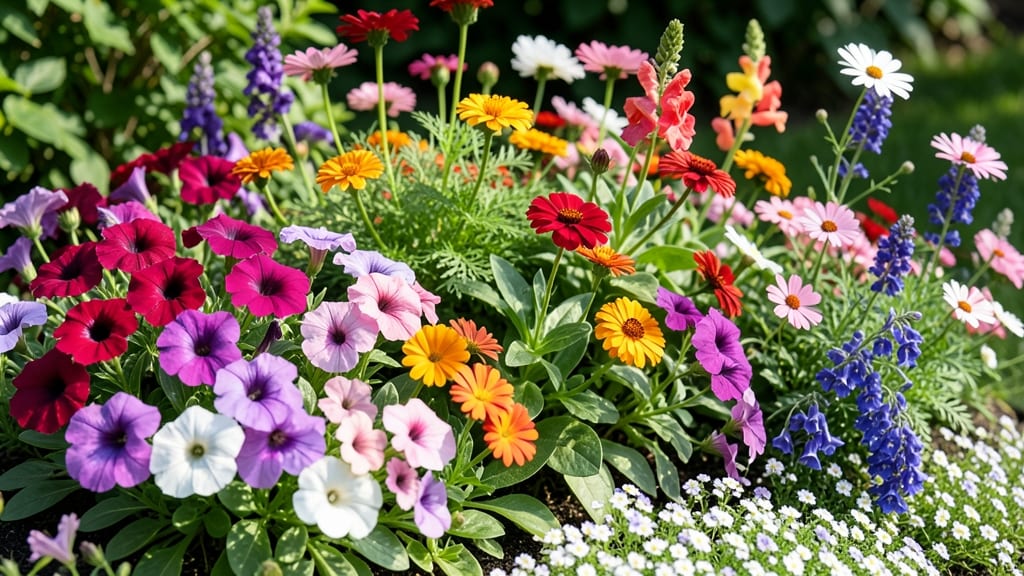
Your flower bed annuals don't have to be an afterthought—they can be the showstopper of your garden. ✨ I've designed countless beds where bold annuals steal the show from spring through frost, and the secret lies in color layers, sun-smart pairings, and a little strategic planning that makes maintenance effortless.
The magic starts with three key choices: sun-loving powerhouses like zinnias and marigolds for hot spots, shade-tolerant impatiens and begonias for cooler areas, and drought-resistant lavender or salvia for low-water zones.
Mix heights—tall snapdragons in back, mounding petunias in middle, and trailing lobelia at the front—to create depth that looks intentional (even if it's your first try). By mid-summer, you'll have a nonstop bloom machine where every stroll through the garden reveals new colors.
The scent of evening primrose at dusk or the bright pop of cosmos against green foliage makes these beds feel like a living painting that changes daily. Works for any style—cottage charm, modern minimalism, or pollinator paradise. Here's how to make it happen without the guesswork.
📚 In This Guide
- What you need
- Instructions
- Tips and common mistakes
- Wrapping up and next steps
What you need
- ● Annual flowers: Choose 3–5 varieties (e.g., petunias, marigolds, zinnias, or impatiens) for color contrast. Aim for at least 10–15 plants per square foot for full coverage.
- ● High-quality potting soil: 2–3 cubic feet (or enough to fill your bed to a depth of 6–8 inches). Look for a blend with compost or organic matter for nutrients.
- ● Mulch: 1–2 inches of shredded bark, pine straw, or compost to retain moisture and suppress weeds.
- ● Slow-release fertilizer: A balanced 10-10-10 or 20-20-20 formula (follow package rates for application).
- ● Watering can or hose with a gentle spray nozzle: For even hydration without disturbing roots.
- ● Garden gloves: A pair to protect your hands from thorns or soil.
- ● Hand trowel or transplant spade: For digging small holes (6 inches deep).
- ● Pruners or scissors: Sharp, clean tools to trim dead blooms or overgrown stems.
- ● Epsom salt: A handful sprinkled around plants every 4–6 weeks for magnesium boost (great for leafy greens like coleus!).
- ● Stakes or plant markers: To label varieties or support tall annuals (e.g., snapdragons).
- ● Organic pest control: Neem oil or insecticidal soap for aphids or spider mites.
- ● Drip irrigation kit: For automated, low-maintenance watering (ideal for large beds).
- ● Decorative edging: Stones, bricks, or metal borders to define your bed and keep mulch in place.
How to design a stunning flower bed with season-long annuals
Here's the method I use to create vibrant, low-maintenance annual displays that bloom from spring to frost.
🌱 Step 1: Choose Complementary Annual Varieties for Continuous Color
Select annuals that bloom at different times to ensure nonstop color. I like to mix early bloomers like petunias and snapdragons with mid-season favorites such as zinnias and marigolds, then add late-season performers like cosmos and sunflowers. This creates a natural progression where one variety fades just as another peaks.
For a 4-foot by 6-foot bed, I typically plan for 24-36 plants total, using 6-9 plants per variety to create visual impact. Check each plant's mature height and spread—tall varieties like sunflowers belong at the back, while trailing plants like lobelia go at the edges. This layered approach prevents leggy plants from overshadowing smaller blooms.
🪴 Step 2: Prepare the Soil for Healthy Root Development
Clear the bed of weeds and loosen the soil to a depth of 6-8 inches using a garden fork. Amend with 2-3 inches of compost and 1 cup of balanced 10-10-10 fertilizer per square foot to provide essential nutrients. I like to work in a handful of perlite or coarse sand to improve drainage, especially if the area tends to stay damp after rain.
Rake the soil smooth and create small planting holes—just deep enough to accommodate the root ball of each plant. Space holes according to the plant's mature width (usually 12-18 inches apart for most annuals). Water the soil deeply before planting to help roots establish more quickly. This step is critical because dry soil can cause transplant shock, leading to wilted or stunted plants.
☀️ Step 3: Plant for Sun Exposure and Water Needs
Group plants with similar light requirements together. For example, sun-loving annuals like zinnias and marigolds should go in the full sun area, while shade-tolerant varieties like impatiens or fuchsias belong in the dappled light section. I always place moisture-loving plants like begonias near a drip irrigation line or in a spot where they’ll receive consistent watering.
Gently remove each plant from its container and tease apart any root-bound roots with your fingers. Place the plant in its hole, ensuring the top of the root ball sits level with the surrounding soil—burying the stem too deep can cause rot. Fill in around the roots with soil and press lightly to eliminate air pockets. Water each plant thoroughly after planting to settle the soil and encourage root contact.
💧 Step 4: Establish a Watering Routine for Consistent Blooms
Water deeply 2-3 times per week during the first 2-3 weeks after planting to help roots establish. Aim for 1 inch of water per week, delivered either through rainfall or irrigation. I prefer early morning watering to reduce evaporation and fungal diseases. Once plants are established, you can taper off to 1 inch every 5-7 days, depending on rainfall and heat.
Mulch the bed with 2-3 inches of shredded bark or pine straw to retain moisture, suppress weeds, and regulate soil temperature. Keep the mulch 2 inches away from plant stems to prevent rot. Watch for wilting leaves—this is your signal to water. If the soil feels dry only at the surface but moist 1-2 inches down, wait another day before watering. Overwatering leads to root rot, which can kill annuals faster than drought.
✂️ Step 5: Maintain with Deadheading and Strategic Fertilizing
Deadhead spent blooms weekly to encourage continuous flowering. Use clean pruners to snip just above a set of healthy leaves or buds. This simple step prevents the plant from redirecting energy into seed production and keeps the blooms coming. For example, zinnias and cosmos respond dramatically to deadheading—they’ll reward you with weeks of new flowers if you stay on top of it.
Fertilize every 4-6 weeks with a balanced liquid fertilizer (like 20-20-20) diluted to half-strength. Avoid high-nitrogen fertilizers, which promote leafy growth at the expense of blooms. I also sprinkle a slow-release granular fertilizer around the base of plants in early summer to provide a steady nutrient supply. Stop fertilizing 6-8 weeks before the first frost to allow plants to harden off naturally.
Tips & tricks for perfect season-long annual displays
Creating a flower bed that thrives all season takes strategic planning—and these insider tricks will help you avoid common pitfalls while maximizing impact.
Plant Selection Strategy: When choosing your annual varieties, prioritize plants with overlapping bloom times rather than just sequential ones. For example, pair petunias (early bloomers) with bacopa (heat-tolerant) to create a seamless transition. I also recommend including at least one fragrant variety like evening primrose or nicotiana to elevate the sensory experience. The key is creating visual and olfactory continuity throughout the season.
Soil Prep Secret: For the 6-8 inch soil loosening in Step 2, I use a garden fork to create vertical channels rather than just turning the soil horizontally. This improves root penetration and drainage while preserving soil structure. If your area has heavy clay soil, mix in 1 part perlite to 3 parts compost for every square foot—this lightens the soil without overwhelming the nutrients from the 10-10-10 fertilizer. The goal is to create a sponge-like texture that holds moisture but drains excess.
Watering Wisdom: The 1 inch per week guideline in Step 4 works perfectly for most annuals, but I've found that morning watering between 6-8 AM gives plants the best chance to dry by evening, reducing fungal risks. For containers or small beds, use a rain gauge to track actual rainfall—many areas get inconsistent precipitation. If you notice yellowing leaves despite regular watering, it's often a sign of overwatering rather than thirst.
Maintenance Hack: Instead of weekly deadheading, I set a biweekly reminder to check for spent blooms and trim any leggy growth. For varieties like cosmos that self-seed aggressively, I let a few flowers go to seed in one corner to create natural succession planting. When fertilizing every 4-6 weeks, I mix the balanced liquid fertilizer with water in a spray bottle and apply it directly to the soil surface rather than foliage to prevent burning.
Pro Tips for Flower Bed Annuals
- Creating a flower bed that thrives all season takes strategic planning—and these insider tricks will help you avoid common pitfalls while maximizing impact.
- Plant Selection Strategy: When choosing your annual varieties, prioritize plants with overlapping bloom times rather than just sequential ones.
- Soil Prep Secret: For the 6-8 inch soil loosening in Step 2, I use a garden fork to create vertical channels rather than just turning the soil horizontally.
Frequently asked questions
Got questions about keeping your flower bed annuals vibrant and thriving?
You’re not alone! Here are answers to the most common queries—from planting tips to troubleshooting—so you can enjoy nonstop color with confidence.
When is the best time to plant annuals in my flower bed?
For most regions, plant after the last frost date in spring (typically late April to early June, depending on your zone). If you live in a warm climate, you can also plant in early fall for winter blooms. Annuals like marigolds or cosmos are heat-tolerant and can handle late summer plantings too!
How often should I water my annuals to keep them blooming?
Water deeply 1–2 times per week, aiming for 1 inch of water total. Early morning is best to reduce evaporation and fungal risks. Mulch around plants (2–3 inches) to retain moisture and discourage weeds. Drought-tolerant annuals like lantana or zinnia need less water once established.
What should I do if my annuals stop blooming or get pests?
If blooms fade, deadhead spent flowers (snip them off) to encourage new growth. For pests like aphids or spider mites, spray with water or use neem oil. Rotate plants annually to prevent soil-borne diseases. Prevention tip: Choose pest-resistant varieties (e.g., petunias or geraniums) for low-maintenance color!
Can I mix annuals with perennials in the same flower bed?
Annuals add seasonal pops of color where perennials might be dormant. Place fast-growing annuals (like impatiens) in front of taller perennials, and heat-loving annuals (e.g., sunflowers) near sunny perennials. Just avoid overcrowding—leave 6–12 inches between plants for airflow.
Are there budget-friendly annuals that still look stunning?
Yes! Seed packets (e.g., marigolds, cosmos, or zinnias) are cost-effective and easy to grow. Cutting-grown annuals (like petunias or begonias) from garden centers are also affordable in bulk. Pro tip: Ask local nurseries for leftover clearance plants at the end of the season—they’re often discounted but still thrive!
How do I prepare my annuals for winter if I want to replant them next year?
Most annuals are not perennial, but you can save seeds from healthy plants (like basil or marigolds) for next season. For winter interest, plant cold-hardy annuals (e.g., pansies or kale) in fall. Otherwise, compost spent plants—they’ll enrich your soil for spring!
Wrapping up and next steps
Transforming your flower beds with annuals is a rewarding way to add vibrant color and life to your garden year after year! 🌸 Whether you’re a seasoned gardener or just starting out, these bold blooms offer endless possibilities—from sun-drenched petunias to fragrant marigolds.
With the right planning, care, and a little creativity, you’ll create a stunning, low-maintenance display that keeps your outdoor space lively and inviting.
Ready to take the next step? Start small—pick a few annuals that match your climate and style, then experiment with colors and textures. Before you know it, your flower beds will be the envy of the neighborhood! Grab your gloves and get planting! 🌱