
Flowers
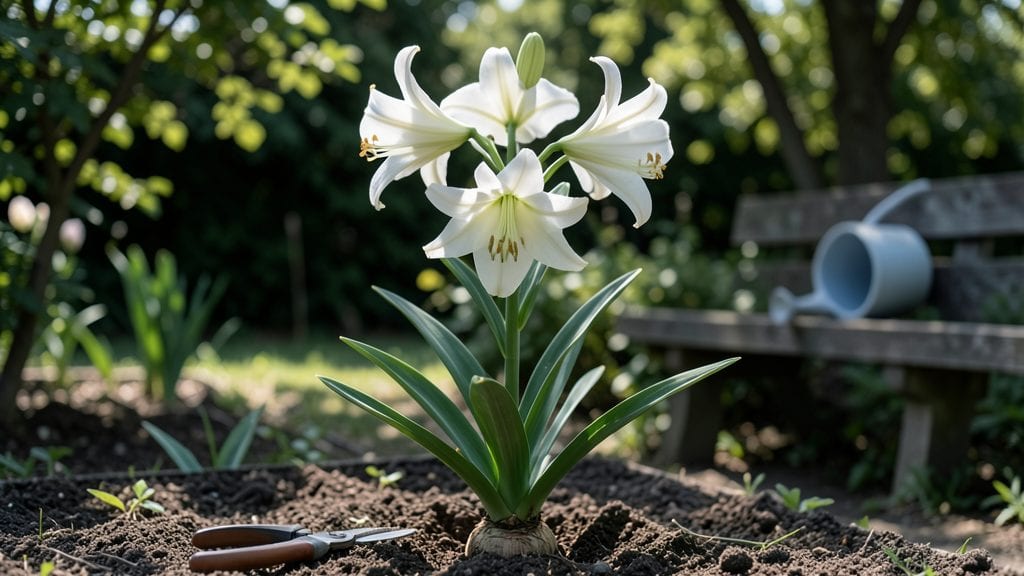
Easter lilies behave like perennials only in frost-free zones (8-10), dying back to bulbs after flowering and requiring winter protection in colder climates. They function as annuals in most regions unless carefully overwintered indoors or mulched heavily. With proper care, their bulbs can regrow for several seasons.
Easter lilies confuse many gardeners because their bulbs persist underground, making them seem perennial. 🌱 However, their above-ground growth dies completely after blooming in most climates—only the bulb survives. In colder zones (3-7), this means they'll disappear entirely without intervention, while in milder areas (8-10), they'll naturally regrow each spring.
The key difference from true perennials like daylilies is that Easter lilies lack cold hardiness—their bulbs need protection below 20°F to survive winter.
What makes this tricky is how people often treat them: planting them as annuals when they could be perennials with minimal effort.
A simple layer of 4-6 inches of mulch in fall can protect bulbs in marginal zones (7-8), while digging and potting them for indoor storage works reliably in colder areas.
The bulbs themselves are surprisingly durable—they can last 5-7 years with proper care, making the extra effort worthwhile for repeat blooms.
💡 In This Article
- Easter Lily Lifespan and Climate Adaptations
- How to Overwinter Easter Lilies for Repeated Blooms
Easter lily lifespan and climate adaptations
Easter lilies (Lilium longiflorum) behave like perennials in mild climates because their bulbs naturally enter dormancy after flowering, storing energy for potential regrowth. In USDA zones 8-10, where winter temperatures rarely drop below 20°F, the bulbs remain dormant but viable, sprouting fresh foliage and blooms each spring.
This dormancy cycle mirrors true perennials like daylilies (Hemerocallis), but with a critical difference: Easter lily bulbs lack the cold-hardiness adaptations of native perennials, which can survive -10°F to -20°F without protection.
The key mechanism is temperature sensitivity. Easter lily bulbs begin dying when exposed to prolonged below-freezing temperatures, particularly below 10°F. In colder zones (3-7), the bulb's cellular structure breaks down due to ice crystal formation in the tissues—a process called freeze-thaw damage.
Unlike daylily rhizomes, which have protective layers of insulating tissue, Easter lily bulbs contain 60-70% water by weight, making them vulnerable to dehydration and rupture when frozen. This is why they appear to "disappear" in harsh winters rather than persist like true perennials.
Here's what's actually happening in the bulb during dormancy: The plant redirects nutrients from dying foliage into the bulb's scales, where starches convert to sugars for energy storage. In ideal conditions (zones 8-10), this process allows the bulb to remain viable for 3-5 years without replanting.
However, in colder zones, the lack of insulation means bulbs either rot from excess moisture or dry out completely—neither scenario supports regrowth. The contrast with daylilies is striking: their underground rhizomes contain antifreeze-like proteins that prevent ice crystal formation, while Easter lily bulbs have none.
Seasonal growth cycles further explain their behavior. In spring, bulbs in frost-free zones receive consistent moisture and warmth, triggering shoot emergence. The plant grows rapidly—often reaching 2-3 feet tall in 6-8 weeks)—before flowering. After blooming, the above-ground parts die back, but the bulb remains underground, storing energy for next year.
In colder zones, this cycle is interrupted by winter kill, leaving gardeners to replant bulbs annually unless they intervene with protection strategies.
What most people don't realize is how their care habits affect this cycle. Overwatering in fall or planting bulbs too deeply (below 6 inches) increases winter rot risk, while insufficient mulch (3 inches) fails to insulate against freeze-thaw cycles.
The bulbs' natural dormancy period requires dry, cool conditions—similar to how tulip bulbs need 4-6 weeks below 50°F to break dormancy. Easter lilies, however, are more sensitive, needing precise moisture balance to avoid both rot and desiccation during dormancy.
Consider these key factors when evaluating their perennial potential:
- Zone hardiness: Bulbs survive winter naturally only in zones 8-10 without protection
- Bulb depth: Plant 4-6 inches deep for proper insulation and moisture regulation
- Dormancy conditions: Require dry, cool storage (40-50°F) to prevent premature sprouting
- Soil type: Well-draining soil prevents bulb rot during winter moisture
The bottom line? Easter lilies are conditional perennials—their lifespan as repeat bloomers depends entirely on climate and care. With proper protection, they can outperform annuals by providing 3-5 years of blooms from a single planting, making the extra effort worthwhile for dedicated gardeners. 🌸