
Flowers
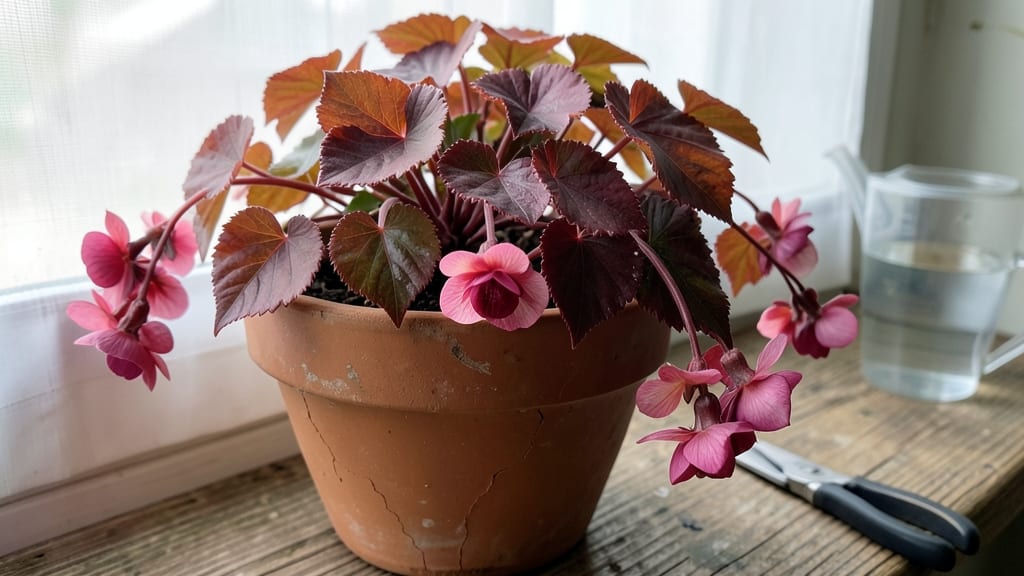
This tropical beauty thrives as a seasonal showstopper in cooler regions because its delicate foliage freezes at 32°F (0°C), while root systems struggle below 50°F (10°C). 🌿 Unlike hardy begonias that tolerate brief chills, dragon wings need consistent warmth—making them perfect for container gardening in colder areas.
The key difference? Their waxy leaves burn visibly at 45°F (7°C) before roots fail completely, unlike cane begonias that handle 30°F (-1°C) with proper mulching.
💡 In This Article
- Dragon Wing Begonia Cold Tolerance Limits
- Proven Overwintering Methods for Dragon Wing Begonias
Dragon wing Begonia cold tolerance limits
Dragon wing begonias (Begonia draco) thrive outdoors only in USDA hardiness zones 10-11, where winter temperatures rarely dip below 40°F (4°C). This tropical species lacks the cold resistance of hardy begonias like Begonia grandis, which survives to zone 6 with proper protection.
The critical threshold lies at 50°F (10°C)—below this, cellular damage begins in the fleshy stems and leaves, which contain high moisture content (about 75-80% water).
The first visible damage appears as leaf burn at 45°F (7°C), where waxy leaf surfaces develop brown, crispy edges from ice crystal formation in the cell walls. This is different from root dieback, which occurs at 40°F (4°C) when root hairs lose membrane integrity and can't absorb water.
Unlike cane begonias (which tolerate 30°F (-1°C) with mulch), dragon wings lack fibrous root systems to buffer temperature fluctuations. 🌡️
Here's what happens at different temperature stages:
- 50-60°F (10-15°C): Growth slows but no permanent damage
- 45°F (7°C): Leaf burn begins (first visible symptom)
- 40°F (4°C): Root function fails (24 hours exposure)
- 32°F (0°C): Complete cellular rupture (lethal)
Comparing to other tropical begonias reveals key differences: Rex begonias (Begonia rex) share similar cold sensitivity, while wax begonias (Begonia semperflorens) tolerate 35°F (2°C) briefly. The dragon wing's thick, wing-like leaves actually become a liability in cold—their large surface area radiates heat faster than compact foliage types. This explains why they're often grown as annuals in zones 8-9, despite being technically perennial in ideal climates.
The science behind this sensitivity lies in their C3 photosynthetic pathway, which requires consistent warmth to function. When temperatures drop, the enzyme RuBisCO (responsible for carbon fixation) becomes inactive, halting energy production. Unlike cold-hardy plants that produce antifreeze proteins, dragon wings lack these protective adaptations. 💧
What most gardeners miss is the microclimate effect—even in zone 9, dragon wings may survive if planted in south-facing containers with nighttime row covers.
The key is maintaining soil temperatures above 55°F (13°C) at all times, which explains why container culture works better than in-ground planting in marginal zones. This species truly tests the limits of tropical plant hardiness!