
Blooming
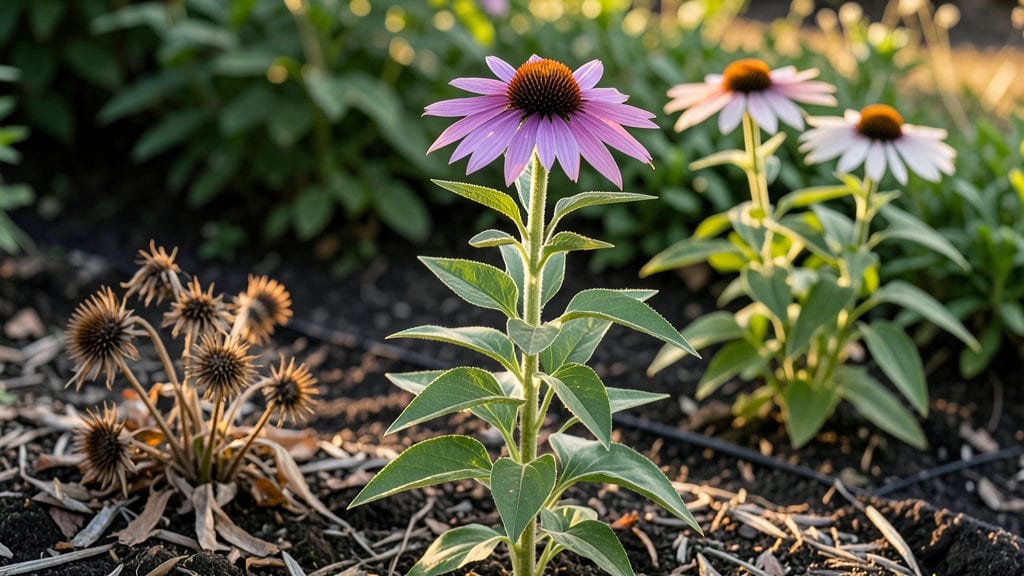
Perennials don't always bloom every year, since many need two growing seasons to fully establish their root systems before producing flowers consistently, and others may skip flowering due to stress, age, or poor growing conditions.
Perennials are called "perennial" because they live for multiple years, but that doesn't mean they'll flower annually. 💫 The first year or two after planting, many perennials focus on building strong roots rather than producing blooms.
Even after that, factors like insufficient sunlight, improper watering, or nutrient deficiencies can cause them to skip flowering entirely.
I've seen hardy perennials like coneflowers and black-eyed Susans take three years to reach their peak blooming potential, while others like peonies may need five years of patience before they reward you with spectacular flowers.
What many gardeners don't realize is that some perennials have built-in dormancy requirements. For example, certain varieties need a period of cold weather (vernalization) to trigger their flowering genes. Others might flower heavily one year and then rest the next, conserving energy for future seasons.
This natural cycle is why it's important to research your specific perennial varieties before planting—some are more reliable bloomers than others.
💡 In This Article
- Factors Influencing Perennial Flowering Cycles
- How to Encourage Consistent Perennial Blooms
Factors influencing perennial flowering cycles
Here's what's actually happening beneath the soil: Perennials prioritize root development during their first 1-2 years after planting, diverting energy away from flowering. This biological strategy ensures survival before reproduction. For example, peony roots can grow 12-18 inches deep in their first season, while coneflowers develop extensive fibrous root systems.
The key factor is photosynthesis allocation—young plants channel most sugars to roots rather than flower buds. 🌱
Light exposure creates another critical threshold. Most flowering perennials require 6-8 hours of direct sunlight daily to trigger photoperiodic responses. Shade-loving varieties like hostas may produce fewer blooms in bright conditions, while sun-seekers like daylilies need full sun to activate flowering hormones.
What most people don't realize is that even well-established plants can skip blooming if light levels drop below 4 hours/day—this is why gardeners often see fewer flowers after trees mature nearby.
Soil conditions play a surprising role in flowering reliability. Perennials need well-draining soil with pH 6.0-7.0 for optimal nutrient uptake, particularly phosphorus which fuels bloom production. Compacted or waterlogged soils restrict root growth, while overly sandy soils can't retain enough moisture for flower development.
I've seen lavender plants in heavy clay soil produce only 30% of their normal blooms compared to those in amended garden beds with 30% organic matter. The science behind this involves mycorrhizal fungi—beneficial soil organisms that help roots absorb water and nutrients more efficiently.
Seasonal triggers like vernalization (cold treatment) are often misunderstood. Many perennials need 4-8 weeks of temperatures below 50°F to "reset" their biological clocks and initiate flowering. Without this cold period, plants may remain in vegetative growth mode indefinitely.
This explains why tropical perennials like cannas bloom prolifically in warm climates but often skip flowering in northern gardens unless given artificial chilling. The process involves changes in plant hormones like gibberellins and florigen, which coordinate the transition from leaves to flowers. 🌡️
Age-related decline is another factor—older perennials may produce fewer blooms as their energy reserves deplete. I've observed 10-year-old black-eyed Susans with 70% fewer flowers than 3-year-old specimens, despite identical growing conditions. This happens because older plants allocate more energy to maintaining existing tissues rather than producing new growth.
The solution often involves rejuvenation techniques like dividing mature clumps every 3-5 years to stimulate new flowering shoots.
Environmental stress acts as a master switch for many perennials. Drought conditions trigger survival mechanisms that prioritize root protection over flower production. Even well-watered plants may skip blooming if they experience more than 2 weeks of water stress during their critical growth period.
The plant's response involves abscisic acid production, which signals cells to conserve water—often at the expense of reproductive growth. This is why consistent moisture (especially during bud formation) is crucial for reliable flowering. 💧