
Advice
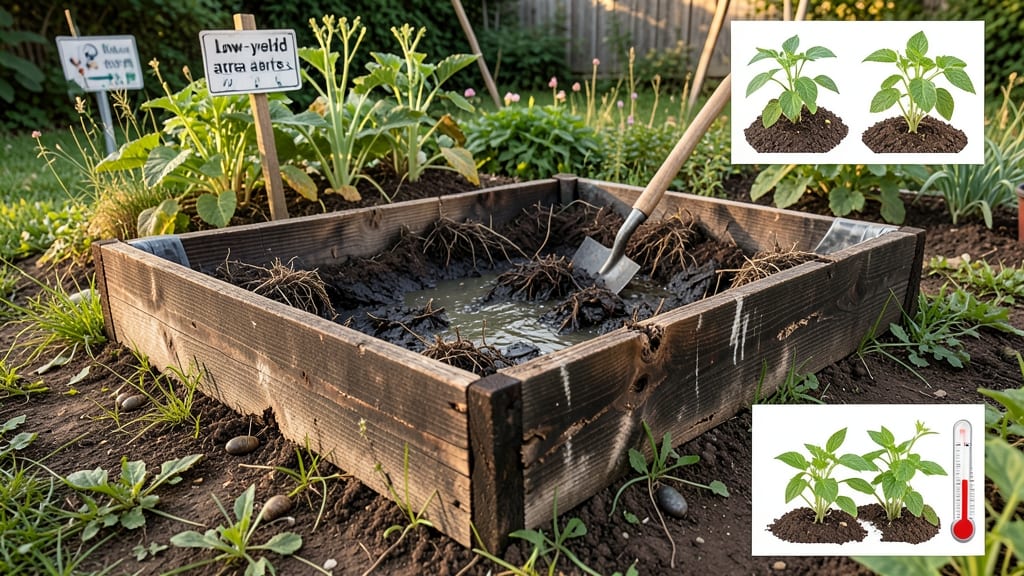
The disadvantages of raised bed gardening include higher initial costs for materials, faster soil depletion over time, and restricted root space for deep-rooted plants. You may also face drainage issues and weed control difficulties if the beds aren't properly maintained.
Raised beds dry out faster than in-ground soil, forcing you to water more frequently and potentially accelerating nutrient loss. 💫 The confined space also limits what you can grow—think twice before planting asparagus or sweet potatoes.
Plus, untreated wood can leach chemicals into your soil over time, adding another layer of maintenance. Many gardeners underestimate how quickly soil quality declines without regular amendments like compost or organic fertilizers.
Another common oversight is the cost of materials—cedar beds may resist rot but come at a premium, while cheaper options like pressure-treated wood can introduce harmful chemicals. Scaling up also means more soil, lumber, and irrigation needs, which can quickly add up.
Without proper planning, you might end up spending more than you budgeted while dealing with unexpected challenges like poor drainage or persistent weeds creeping in from the edges.
💡 In This Article
- Why Raised Beds Can Deplete Soil Faster
- Costly Mistakes to Avoid in Raised Bed Gardening
Why raised beds can deplete soil faster
Raised beds lose nutrients at a faster rate because they lack the natural moisture retention of in-ground soil. Without the insulating effect of surrounding earth, raised beds experience 20-30% more evaporation—meaning you'll need to water 2-3 times daily in hot climates compared to once daily for in-ground gardens.
This constant drying accelerates microbial activity, which breaks down organic matter 30-50% quicker than in-ground soil, depleting nitrogen and phosphorus reserves faster.
The confined space also limits root access to deeper soil layers, forcing plants to rely entirely on the top 12-18 inches of soil. This creates a "nutrient trap" where roots compete aggressively for limited resources, especially in dense plantings.
For example, tomatoes in raised beds may show yellowing leaves within 4-6 weeks if not fertilized regularly, compared to 8-10 weeks in in-ground soil. The lack of natural soil replenishment from below means you'll need to amend with compost every 6-12 months rather than every 2-3 years.
Another key factor is the soil chemistry shift caused by the lack of subsoil interaction. Raised beds often contain more sand or peat moss to improve drainage, which can lead to pH fluctuations if not balanced.
For instance, peat moss naturally lowers pH, making soil more acidic over time—this can stunt plant growth if not monitored.
Unlike in-ground gardens where subsoil buffers these changes, raised beds require monthly pH testing and lime applications to maintain optimal levels for vegetables like broccoli (pH 6.0-7.0) or blueberries (pH 4.5-5.5).
Consider this comparison: A 4'x8' raised bed filled with standard garden soil will lose 50% of its organic matter in 2-3 years without amendments, while in-ground soil might retain nutrients for 5-7 years.
The faster depletion happens because raised beds lack the natural nutrient cycling from earthworms and deep-rooted plants that enrich subsoil. For example, comfrey or clover planted in-ground would naturally fix nitrogen, but their roots can't penetrate raised bed walls.
To mitigate these issues, many experienced gardeners use a "layering" approach: Start with 6-12 inches of compost at the bottom, then alternate 4-inch layers of soil and compost every planting season.
This mimics natural soil formation but requires 3-4 times more compost than in-ground gardening. The trade-off? Your plants will grow faster initially, but the long-term maintenance becomes significantly more labor-intensive. 🌱
One often-overlooked detail is how raised beds affect soil temperature. Without the insulating earth below, soil temperatures can fluctuate 10-15°F more dramatically between day and night. This stress on plant roots accelerates nutrient uptake—meaning your soil's fertility is being "burned" faster.
For heat-sensitive crops like lettuce, this can reduce harvestable yield by 25-30% compared to in-ground planting.