
Flowers
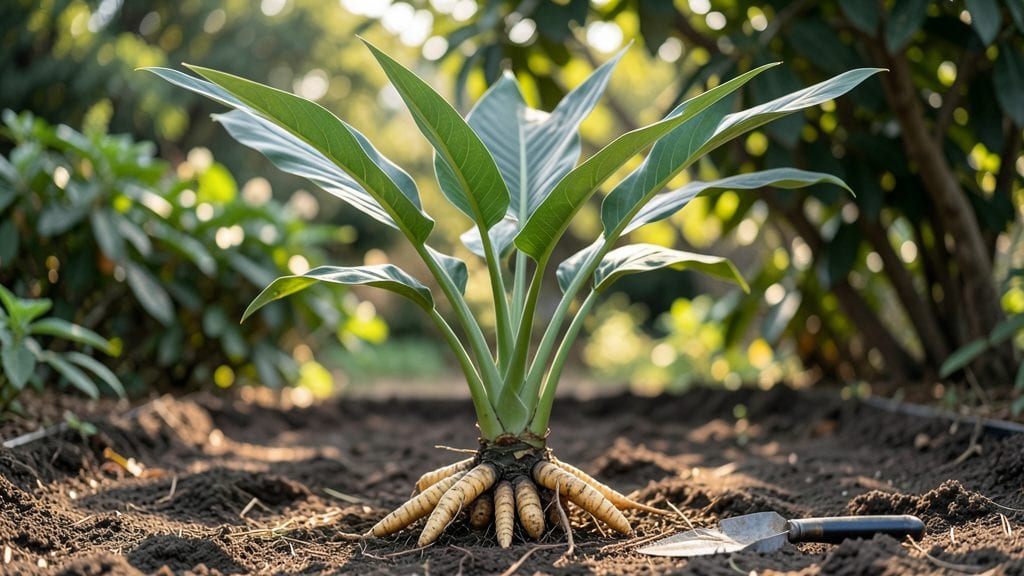
Curcuma's perennial nature comes from its unique underground structure—thick, knobby rhizomes that store energy like a natural battery. 🌱 These roots don't just survive winter; they actively prepare for regrowth, sending up fresh shoots when conditions improve.
Unlike annuals that complete their life cycle in one season, curcuma's rhizomes can live for years, producing new growth each spring if given consistent warmth and moisture. This makes it a low-maintenance garden star for those who want flavorful harvests without annual replanting.
What sets curcuma apart from true annuals is how it handles seasonal changes. While most plants die back completely, curcuma's rhizomes remain dormant but alive underground, ready to burst back to life when temperatures rise.
This resilience explains why it thrives in tropical climates but can also adapt to temperate zones with proper winter protection—like mulching or container growing. The key is never letting the rhizomes dry out completely during dormancy.
💡 In This Article
- How Curcuma Rhizomes Enable Perennial Growth
- Climate and Care Tips for Year-Round Curcuma Cultivation
How curcuma rhizomes enable perennial growth
The secret behind curcuma's perennial nature lies in its specialized rhizome system—a thick, horizontal underground stem that functions like a biological storage unit. These knobby, finger-like roots store starches, sugars, and other nutrients during active growth, building up reserves that fuel regrowth when conditions improve.
Unlike true annuals (like basil or marigolds), which complete their life cycle in one season and die entirely, curcuma rhizomes remain dormant but alive underground, capable of sprouting new shoots for 5-10 years or more with proper care. 🌱
The rhizome's structure is what makes this possible. Each segment contains 1-2 growth nodes where new shoots can emerge, while the rest of the rhizome acts as a nutrient reservoir.
When temperatures drop below 50°F, the plant enters dormancy, but the rhizome's thick, waxy coating prevents moisture loss and protects against frost. This is similar to ginger's rhizome system, though curcuma's are typically 20-30% denser, giving them superior cold resistance.
The rhizome's ability to regenerate from just a small piece (even a 1-inch fragment) is why gardeners can propagate it so easily.
What most people don't realize is how curcuma's rhizomes actively prepare for regrowth during dormancy. Studies show that even in winter, these roots maintain 5-10% metabolic activity, slowly converting stored starches into sugars that prime the growth nodes.
This pre-growth phase means that when spring arrives, shoots can emerge within 2-4 weeks—far faster than annuals that need to germinate from seed. The rhizome's vascular system also remains intact, allowing immediate transport of water and nutrients to new growth. 💫
Comparing curcuma to true annuals highlights the difference: annuals like tomatoes or peppers die completely after producing seeds, while perennials like curcuma or asparagus invest energy in underground structures that persist.
Even in tropical climates where curcuma grows wild, the rhizomes can survive 3-5 years without harvest, producing multiple harvest cycles. This makes curcuma more like a woody perennial (such as lavender) than a herbaceous one, though it lacks the hardy above-ground stems of shrubs.
The rhizome's ability to regenerate from multiple nodes also explains why curcuma can recover from partial damage. If you harvest too aggressively or pests damage the plant, new shoots often emerge from undamaged rhizome sections.
This resilience is why curcuma thrives in disturbed soils—it can regrow even if the original plant is completely removed, as long as 10% of the rhizome mass remains intact. This adaptability is one reason curcuma has been cultivated for 4,000+ years across Asia and the Pacific. ✨
For gardeners, this means curcuma's perennial nature isn't just theoretical—it's practical. With minimal winter protection (like mulch or container insulation), you can enjoy harvests for years without replanting. The trade-off?
Rhizomes left in the ground too long may become woody or produce smaller harvests, but dividing them every 2-3 years rejuvenates growth. This is the botanical equivalent of hitting the reset button on your plant's life cycle. 🔥
What's fascinating is how curcuma's rhizome system mirrors human food storage strategies. Just as we store grains in root cellars to preserve them through winter, curcuma's rhizomes act as a living pantry—storing energy, protecting against environmental stress, and ensuring the plant's survival until conditions improve.
This dual-purpose structure (storage + regeneration) is what truly sets it apart from both annuals and less resilient perennials. 🌿