
Orchid Care
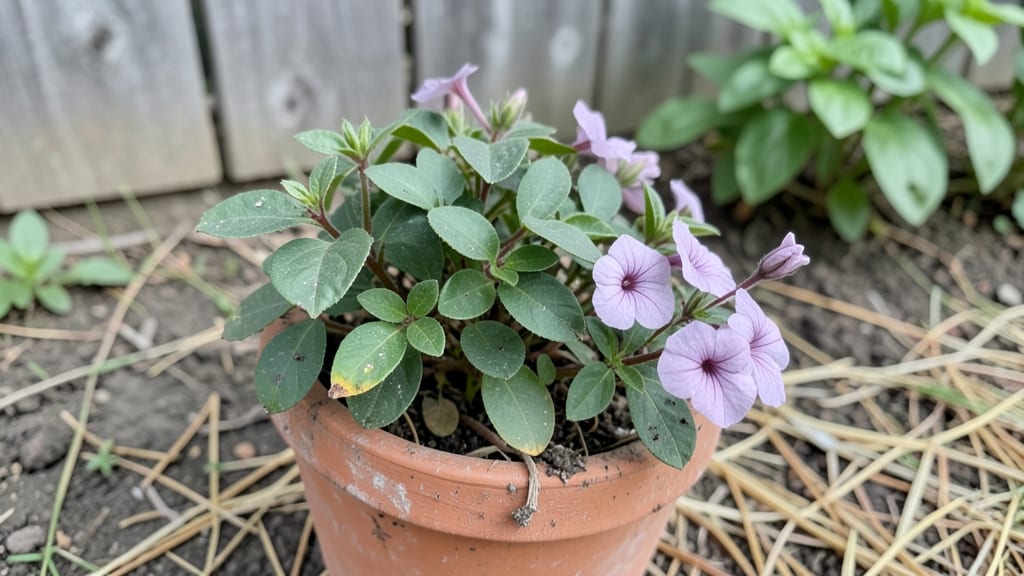
Deciding whether cora vinca grows as an annual or perennial depends entirely on your climate—it’s a hardy perennial in USDA zones 9-11 but must be treated as an annual in colder regions where frost kills its tender foliage. Its deep root system lets it bounce back yearly in warm areas, making it a low-maintenance ground cover.
Cora vinca’s growth habit shifts dramatically with temperature. In frost-free zones, its roots stay alive year-round, sending up fresh shoots each spring—hence the "perennial" label.
But when winter temperatures dip below 20°F, the above-ground parts die back, forcing gardeners in cooler climates to replant annually. 🌱 The key difference lies in its resilience: while it may look dead in winter, the roots often survive just below the frost line, ready to regrow when conditions warm up.
This adaptability explains why cora vinca thrives as a spreadable ground cover in warm climates but requires careful timing in colder areas. For example, in zone 7, I’ve seen it return from dormant roots if protected with thick mulch—though most gardeners opt to replant for predictable results.
The plant’s ability to self-seed also helps extend its lifespan in marginal zones, though it’s never as reliable as in its native warm habitats.
💡 In This Article
- Cora Vinca’s Lifespan: Why It Thrives as Perennial or Annual
- Best Planting Strategies for Cora Vinca in Different Climates
Cora vinca’s lifespan: why it thrives as perennial or annual
The secret to cora vinca's dual nature lies in its root system, which extends 12-18 inches deep—far below the frost line in most climates. These fibrous roots store carbohydrates during warm months, fueling regrowth when conditions improve.
In USDA zones 9-11, where winter temperatures rarely drop below 25°F, the roots remain active year-round, allowing the plant to rebound annually without replanting. This deep-rooted resilience explains why it's classified as a perennial in these frost-free regions.
In colder zones (4-8), the above-ground foliage freezes at 20°F, but the roots often survive if protected by 3-4 inches of mulch. Here's where dormancy mechanics come into play: the plant enters a state of cold hardiness by converting stored sugars into antifreeze-like compounds that protect cell membranes.
However, repeated freeze-thaw cycles can damage these roots over time, which is why gardeners in zone 7 and colder typically treat it as an annual. The trade-off? Its rapid spread (up to 12 inches per year) makes it worth replanting for quick ground cover.
What most gardeners don't realize is that cora vinca's leaf structure also plays a role in its survival strategy. The thick, waxy leaves reduce water loss during droughts—a common occurrence in its native Mediterranean climate—while the trailing habit creates a self-shading effect that protects roots from extreme heat.
This dual adaptation explains why it thrives in both warm climates (as a perennial) and can be coaxed into returning in cooler zones with proper winter care. The key is understanding that its "annual" treatment in cold climates is more about predictability than biological necessity.
Consider this comparison: In Florida (zone 10), cora vinca grows continuously, spreading 18-24 inches annually with minimal care. In Massachusetts (zone 5), the same plant might survive winters if heavily mulched but typically requires spring replanting to maintain coverage.
The difference isn't just temperature—it's about how quickly the roots can recover from winter stress. In warm zones, they regenerate within 3-4 weeks of spring warmth; in cold zones, this recovery period extends to 6-8 weeks if roots are damaged.
The plant's ability to self-seed also affects its lifespan. In marginal zones (6-8), volunteer seedlings often appear in spring, creating a hybrid perennial/annual behavior. These seedlings emerge from seeds that survived winter in the soil, demonstrating how cora vinca exploits multiple survival strategies.
For gardeners, this means that even in colder climates, some plants may return without replanting—though results are never guaranteed. The science behind this involves the plant's dormancy hormones, which trigger seed germination at specific temperature thresholds (typically 55-60°F for consistent sprouting).
Here's a practical takeaway: If you're in zone 9 or warmer, treat cora vinca like a low-maintenance ground cover that needs only occasional trimming. In colder zones, focus on spring planting (after last frost) and use organic mulch to protect roots.
The plant's adaptability makes it a gardener's secret weapon—just adjust your expectations based on your local freeze patterns. 🌿