
Orchid Care
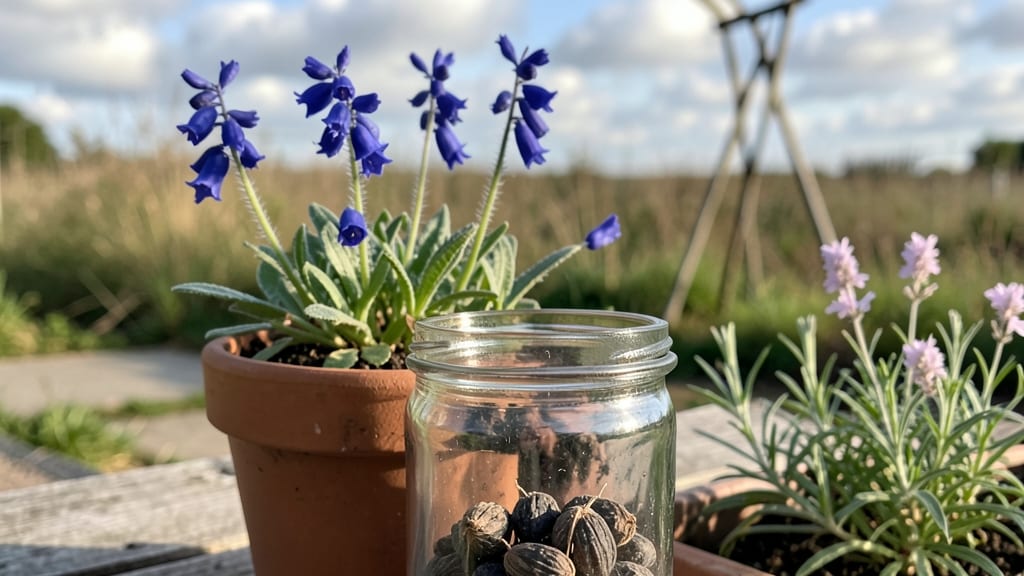
Canterbury bells are biennials, not true annuals or perennials, meaning they bloom their first year from seed, produce seeds the second year, then complete their life cycle. Their prolific self-seeding creates long-term garden displays that mimic perennials.
This unique growth pattern explains why Canterbury bells seem to "come back" year after year—though each plant only lives two seasons.
The key difference from perennials is their inability to regrow from established roots; instead, they rely on fresh seedlings. 🌱 I've found that planting them in well-drained soil with full sun maximizes both their first-year blooms and subsequent reseeding. The trade-off?
Their two-year lifecycle means you'll need to refresh older clumps every few seasons unless you embrace their natural spread.
What sets them apart from true annuals is their seed-producing phase—they don't just bloom and fade like marigolds, but actually create the next generation before dying. This makes them perfect for "plant once, enjoy for years" gardeners who want low-maintenance color without perennial commitment.
💡 In This Article
- Understanding Canterbury Bells’ Biennial Life Cycle
- Maximizing Canterbury Bells’ Self-Seeding for Year-Round Color
Understanding Canterbury bells’ biennial life cycle
The biennial life cycle of Canterbury bells begins with seed germination, where the plant enters a vegetative growth phase during its first year.
Unlike annuals that complete their entire lifecycle in one season, biennials like Canterbury bells focus on building a robust root system and storing energy in their taproot, which can extend up to 12-18 inches deep.
This deep root system allows them to access moisture and nutrients efficiently, preparing for the flowering stage in their second year.
Here's what's actually happening botanically: During the first year, the plant prioritizes leaf and root development while producing minimal flowers. This is triggered by environmental cues like day length (photoperiodism) and temperature drops, which signal the plant to shift from vegetative growth to reproductive mode.
By late winter or early spring of the second year, the plant undergoes vernalization—a cold treatment that promotes flowering. 🌱 Once triggered, the plant diverts energy from roots to flower production, resulting in those iconic bell-shaped blooms that appear in late spring to early summer.
The flowering stage is critical because it's when Canterbury bells produce seeds, ensuring the next generation. Each flower contains 10-15 seeds that mature over 4-6 weeks, with the plant often dying shortly after seed dispersal.
This two-year cycle explains why they're not classified as perennials—they lack the ability to regrow from established roots or underground storage organs like bulbs or rhizomes. Instead, their survival depends entirely on seed production and germination.
What most people don't realize is how this lifecycle differs from true annuals like marigolds, which complete their entire life cycle in one season, or perennials like peonies, which regrow from the same root system year after year.
Canterbury bells bridge this gap by producing seeds that create new plants, which can then follow the same biennial pattern. This self-sustaining mechanism is why they often appear perennial in gardens—each new generation emerges from seeds dropped by the previous year's plants.
The key factor in their biennial behavior is seed dormancy. Canterbury bell seeds require a period of cold stratification (typically 4-8 weeks at 35-45°F) to break dormancy and germinate.
This means seeds sown in fall often germinate the following spring, while those sown in spring may take 2-3 years to sprout under ideal conditions. This delayed germination is another reason why they don't behave like true annuals, which germinate and flower within the same growing season.
In my garden, I've observed that Canterbury bells planted in well-drained soil with full sun produce the most vigorous first-year growth and subsequent flowering. The trade-off is that older plants may produce fewer blooms in their second year as they divert energy to seed production.
However, their prolific self-seeding often compensates, creating dense clusters of new plants that continue the cycle. 💫