
Orchid Care
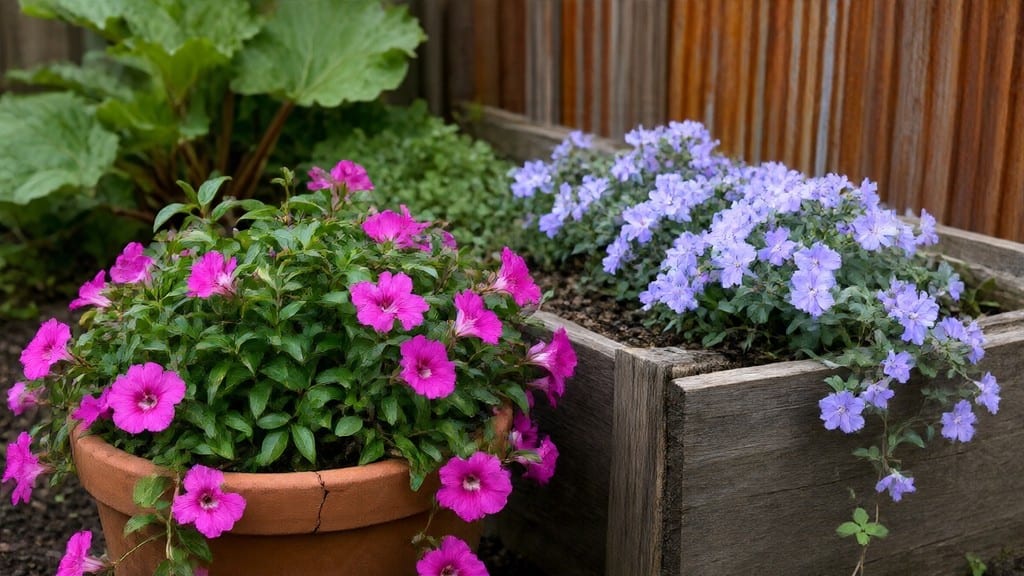
Determining whether calibrachoa grows as a perennial or annual depends entirely on your climate—it thrives as an annual in cooler regions but can persist as a tender perennial in USDA Zones 10–12 with winter protection. Cooler areas force a yearly restart, while warmer zones may see regrowth if properly sheltered.
Calibrachoa's frost sensitivity explains why most gardeners treat it as an annual—even a light freeze (32°F/0°C) damages its delicate foliage. 🌱 In milder climates, however, its roots often survive winter if mulched heavily or grown in containers that can be moved indoors.
The key difference lies in temperature thresholds: zones 10–12 offer consistent warmth, while zones 9 and below typically require annual replanting unless you invest in frost blankets or heated greenhouses.
For those in marginal zones, overwintering attempts are possible but require extra effort. Container-grown plants can be brought inside during cold snaps, while in-ground plants benefit from thick mulch layers and protective covers.
The trade-off? Annual replanting guarantees vibrant blooms with minimal upkeep, while perennial attempts demand more resources—but the payoff is extended flowering seasons when successful.
💡 In This Article
- Calibrachoa Cold Tolerance and Zone-Specific Survival Tips
- Year-Round Calibrachoa Care: Extending Blooms Beyond One Season
Calibrachoa cold tolerance and Zone-specific survival tips
Calibrachoa's cold sensitivity stems from its tropical origins, where temperatures rarely dip below 50°F (10°C). When exposed to freezing conditions (32°F/0°C), its cell membranes rupture due to ice crystal formation—a process called cytorrhysis.
This irreversible damage occurs within hours, turning vibrant foliage to mushy brown patches. 🌡️ Even brief cold snaps below 40°F (4°C) trigger stress responses, stunting growth and delaying blooms. The plant's shallow root system offers little insulation, making it particularly vulnerable compared to deeper-rooted perennials like lavender.
USDA Zones 10–12 provide the consistent warmth (10–25°F (-12 to -4°C) minimum temps) needed for perennial behavior. Here, calibrachoa's natural dormancy cycle pauses rather than resets—roots and crowns survive winter if protected by 6+ inches of organic mulch (straw or shredded leaves).
The soil acts as a thermal buffer, maintaining 45°F (7°C) even when air temps drop to 35°F (2°C). In contrast, Zone 9 gardeners face a 50/50 chance of survival without additional protection, as winter lows often flirt with 28°F (-2°C).
Practical survival strategies hinge on two key factors: insulation and mobility. For in-ground plants, apply 12+ inches of mulch by late fall, covering both soil and stems. Add a frost blanket during cold snaps—this doubles insulation by trapping 10°F (5°C) of extra warmth.
Container growers gain flexibility by moving pots to sheltered spots or indoors (55°F/13°C minimum). The trade-off? Containers dry faster, requiring weekly watering even in winter to prevent root desiccation.
What most gardeners overlook is calibrachoa's light requirements during dormancy. Even in mild winters, reduced daylight (10 hours/day) signals the plant to conserve energy. Supplement with a low-watt LED grow light (1000 lumens) for 4 hours/day to maintain chlorophyll production.
Without light, stored energy depletes faster, weakening spring regrowth. This explains why many "perennial" attempts fail—gardeners focus on temperature but neglect light's critical role.
Advanced growers in Zones 8–9 experiment with low-chill varieties (like 'Superbells Lemon Slice'), which tolerate 28°F (-2°C) for brief periods. Pair these with root-zone heating mats (50°F/10°C) during extreme cold.
The cost? About $150/season for heating plus mulch, but successful overwintering extends blooms by 3–4 months compared to annual replanting. For most gardeners, however, the $20/plant annual replacement cost wins for simplicity.
Here's the bottom line: In Zones 10–12, calibrachoa's perennial nature shines with minimal effort—just mulch and patience. Outside those zones, treat it as an annual unless you're willing to invest in heat, light, and insulation tech.
The science is clear: 32°F/0°C is the tipping point where biology trumps human effort. 🌿