
Plants
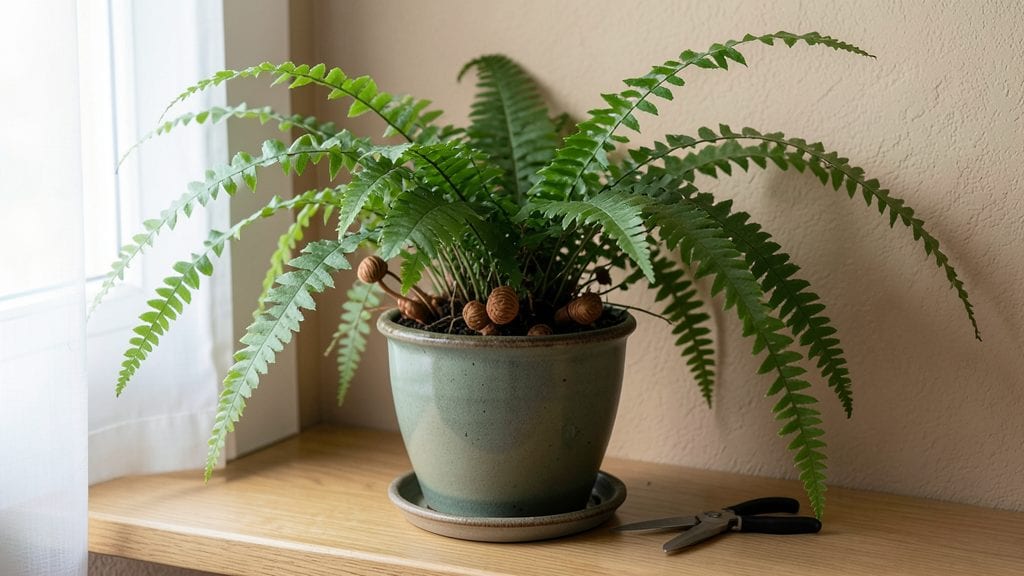
The Boston fern is a perennial plant, not annual, meaning it can live for multiple years indoors with the right conditions—typically 3 to 5 years or longer when given bright indirect light and steady humidity.
The key to its longevity lies in its natural growth habits.
Unlike fast-growing annuals that complete their life cycle in one season, Boston ferns grow slowly, developing deep root systems that anchor them for years. 🌿 Their adaptability to indoor environments—where they avoid outdoor predators and harsh weather—also plays a role.
I’ve seen mine thrive for over a decade when given consistent care, though most people report 3-5 years as a realistic average with proper light and moisture balance.
This fern’s fronds grow in a cascading pattern, which makes it visually striking but also requires thoughtful placement near a north or east-facing window. The secret to extending its life isn’t just about watering—it’s about mimicking its natural tropical habitat.
A pebble tray with water beneath the pot or a small humidifier can work wonders, especially in dry climates where leaves start to crisp at the edges.
💡 In This Article
- Boston Fern Lifespan: Why It Lives Longer Indoors
- Maximizing Your Boston Fern’s Indoor Growth Duration
Boston fern lifespan: why it lives longer indoors
Here's what makes Boston ferns such resilient perennials indoors: their slow growth rate and deep root systems evolved to conserve energy.
Unlike annuals that rush through their life cycle in one season, this fern develops a fibrous root network that can extend 12-18 inches deep in well-draining soil, anchoring it for years.
The roots store nutrients during dormancy periods, allowing the plant to recover from seasonal changes that would kill faster-growing species. 🌱
The key difference between indoor and outdoor ferns lies in their environmental stress exposure. Wild Boston ferns face predators, temperature swings, and seasonal dieback, but indoors they avoid these threats while still requiring 60-70% humidity to prevent leaf browning.
Their fronds contain spongy mesophyll cells that retain moisture efficiently, reducing water loss by up to 30% compared to drier-adapted plants. This cellular adaptation explains why they thrive near bathrooms or kitchens where humidity naturally fluctuates between 50-80%.
Light exposure creates another critical difference. While outdoor ferns adapt to full sun, indoor specimens need bright indirect light (equivalent to 1,000-3,000 lux) to prevent leggy growth.
The plant's chlorophyll concentration in fronds is optimized for low-light conditions, allowing it to photosynthesize efficiently at 50% of outdoor sunlight levels. Without sufficient light, the roots weaken and fronds yellow—a clear sign the plant is diverting energy to survival rather than growth. 💡
Temperature stability also extends their lifespan. Boston ferns prefer 65-75°F ranges, avoiding the 10-20°F swings outdoor ferns endure seasonally. This consistency prevents the oxidative stress that accelerates aging in plants exposed to temperature extremes.
The fern's cuticle layer (the waxy outer coating) is thinner than drought-resistant plants, making it more sensitive to dry air but perfectly suited for controlled indoor climates.
What most people don't realize is how the fern's reproductive strategy contributes to longevity. Instead of producing seeds annually, Boston ferns spread through rhizome growth—horizontal stems that create new fronds at nodes.
This vegetative reproduction means the plant can regenerate damaged sections and maintain vigor for decades when given proper care. In wild settings, this adaptation helps them colonize stable environments, while indoors it translates to minimal decline when pruned correctly. ✨
The science behind their extended indoor life comes down to reduced metabolic demands. Without the energy expenditure required for outdoor survival (like defending against herbivores or adapting to soil variations), the fern allocates more resources to root development and frond production.
This is why a well-cared-for specimen can live 5-10 years indoors—its biological clock ticks much slower than annual plants that must complete their entire life cycle in months. 🌿