
Light Requirements
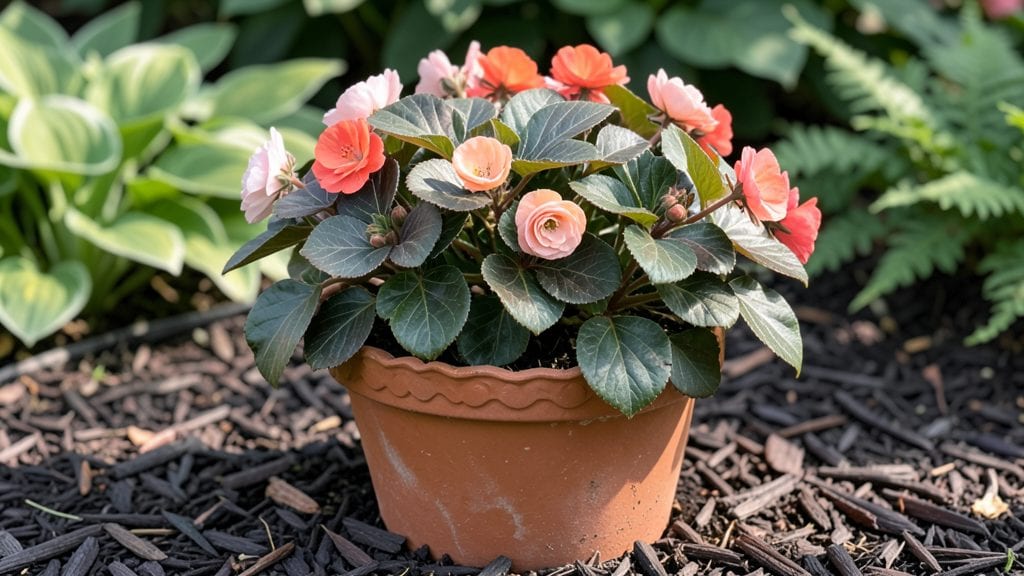
Begonia shade perennials thrive in partial to full shade, delivering vibrant blooms for 6 to 9 months annually when planted in zones 10-12. These tender perennials (or annuals in cooler regions) feature standout varieties like Begonia rex and Begonia semperflorens, which maintain colorful foliage and flowers year-round with proper care.
These shade-loving plants are perfect for gardeners seeking low-maintenance color in shady spots. 🌿 The secret to their long bloom cycles lies in their ability to thrive under dappled light—too much sun can scorch their delicate leaves, while full shade often reduces flowering.
I’ve found that container-grown begonias in zones 10-12 can even extend blooming into winter with a little extra humidity and protection from frost. For cooler climates, treating them as annuals still guarantees months of vibrant displays.
What sets begonias apart is their adaptability—whether you need trailing varieties for hanging baskets or bold foliage types like Begonia maculata for ground cover, there’s a shade-tolerant option. The key is matching the variety to your microclimate: humid tropical zones support year-round growth, while temperate gardeners should prioritize winter protection.
💡 In This Article
- How Light and Climate Affect Begonia Bloom Duration
- Top 5 Begonia Varieties for Long-Lasting Shade Color
How light and climate affect Begonia bloom duration
Begonias thrive in partial shade (3-6 hours of morning sun), where light intensity triggers photosynthesis without causing leaf burn. The ideal light spectrum for blooming falls between 10,000-20,000 lux—think dappled sunlight under trees.
Too much direct sun (above 30,000 lux) causes foliage to yellow, while full shade (5,000 lux or less) reduces flowering as the plant conserves energy for survival rather than reproduction. This is why Begonia semperflorens often blooms more prolifically in east-facing containers than in deep shade. 🌿
The temperature sweet spot for continuous blooming is 65-75°F, with nighttime temps above 55°F preventing dormancy. In zones 10-12, begonias can bloom year-round because they never experience frost. However, in temperate zones, growth slows below 50°F, and flowers may drop entirely if temps dip below 40°F.
Humidity plays a critical role too—begonias need 50-70% relative humidity; anything below 40% causes leaf edges to crisp and flowers to wilt prematurely. This is why tropical climates (like Florida or Hawaii) support 9-12 month blooming cycles while northern gardeners see 4-6 month seasons.
Light quality matters just as much as quantity. Begonias prefer blue and red light wavelengths (400-500nm and 600-700nm), which stimulate flowering hormones. Artificial grow lights with a 12-hour photoperiod can extend indoor blooming by 30-50% during winter.
For example, Begonia rex grown under LED grow bulbs (6,500K color temp) maintains vibrant foliage and occasional blooms even in full winter shade. The trade-off? Without natural light cycles, flowers may lack vibrancy compared to outdoor-grown specimens. 💡
Seasonal performance varies dramatically between climates. In tropical zones, begonias bloom continuously because they experience minimal temperature fluctuations and consistent humidity. For instance, in Puerto Rico, Begonia boliviensis trails all year with minimal care.
In contrast, temperate climates see spring-summer blooms (April-September) with a 2-3 month dormant period in winter. The key difference is day length: begonias need 12+ hours of light to trigger flowering, which naturally occurs in summer but requires supplemental lighting indoors during winter.
This explains why greenhouse-grown begonias in zone 7 can extend their season by 4-6 weeks with proper lighting.
Humidity acts as a growth regulator. In dry climates (like Arizona), begonias need daily misting or pebble trays to maintain turgor pressure in leaves and stems. Without it, flowers abort at the bud stage—a phenomenon called "bud blast".
In humid climates (like the Pacific Northwest), begonias can thrive with no additional moisture beyond regular watering. The science here involves stomatal regulation: high humidity reduces water loss through leaf pores, allowing the plant to allocate more energy to flowering rather than drought response.
This is why Begonia masoniana often produces 20-30% more flowers in coastal gardens versus inland ones. 🌧️
For gardeners in transitional zones (8-9), the solution lies in microclimate manipulation. Planting begonias near east-facing walls captures morning sun while avoiding afternoon heat. Adding 3-4 inches of mulch insulates roots, maintaining soil temps in the 60-70°F range.
In containers, using self-watering pots with 50% perlite improves drainage while retaining humidity. These adjustments can push blooming from 5 months to 8 months in marginal climates. The payoff? A near-tropical display without the tropical commitment. 🌸