
Plants
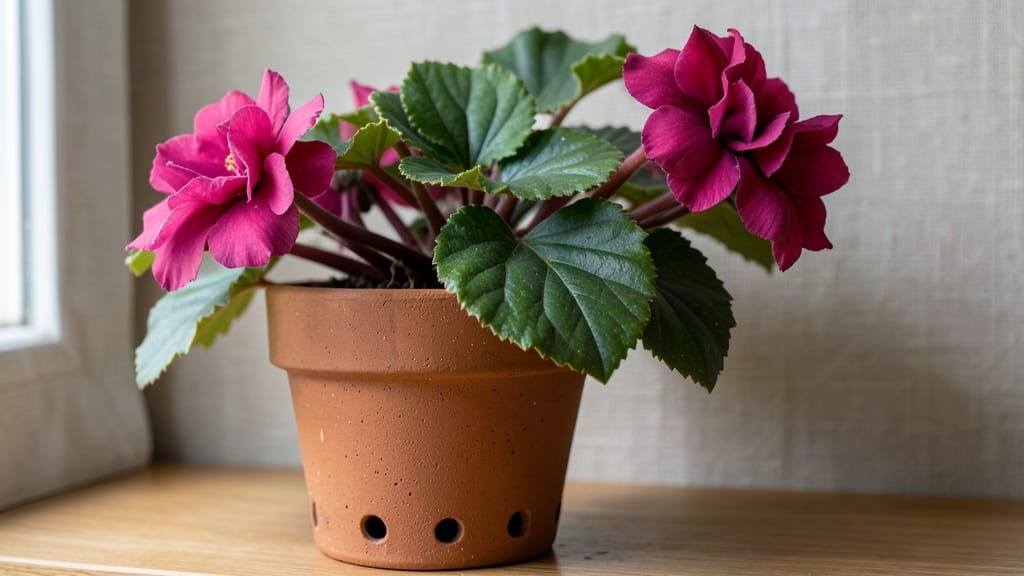
Whether begonia plants are annual or perennial depends entirely on climate—tropical varieties thrive year-round, while most cold-region begonias die back below 50°F. Tubers and rhizomatous types can overwinter indoors or with protection, but fibrous-rooted begonias typically won't return after frost.
Your growing zone makes all the difference with begonias. In warm climates like USDA zones 10-12, these plants naturally behave as perennials, blooming continuously with minimal care. 🌿 But in colder regions, even hardy tuberous types need special handling—like digging up tubers before frost or moving pots indoors.
The key distinction lies in their root structure: fibrous-rooted begonias lack the storage reserves to survive winter, which is why gardeners often replant them yearly rather than treating them as true perennials.
For those in transitional climates, a little planning can turn annual begonias into multi-year stars. I’ve had success overwintering my tuberous types in a cool, dark basement wrapped in damp sphagnum moss—they wake up ready to bloom again in spring.
Rhizomatous varieties handle this too, but fibrous-rooted ones? Forget it—they’re the true annuals of the bunch.
💡 In This Article
- Begonia Classification: Perennial vs Annual Types
- Overwintering Begonias for Year-Round Growth
Begonia classification: perennial vs annual types
Begonias fall into three distinct root types, each with its own survival strategy when temperatures dip. Tuberous begonias store energy in thick, potato-like tubers that can survive 30-40°F temperatures when dormant—this is why they're the most reliably perennial in cooler climates.
Their tubers contain starch reserves that fuel regrowth once warmth returns. Rhizomatous begonias, with their woody, horizontal root systems, also handle dormancy better than fibrous types, though they prefer slightly warmer winters (40-45°F).
The real divide comes with fibrous-rooted begonias, which lack storage organs entirely. These plants rely solely on their delicate, fibrous roots for sustenance, making them highly sensitive to frost.
When temperatures hit 32°F, their cells rupture from ice crystal formation, and even 40°F for extended periods triggers irreversible damage.
This is why gardeners in zones 7 and below typically treat them as annuals—they simply can't recover after winter's chill. 🌱 The contrast is striking when you compare tuberous types (which can survive 10°F with protection) to fibrous varieties that wilt at 45°F.
Climate plays a starring role in determining whether your begonia behaves as a perennial or annual. In USDA zones 10-12, where winters rarely drop below 40°F, even fibrous-rooted types may persist year-round with consistent moisture.
But in zones 5-8, the 50°F threshold becomes critical—most begonias enter dormancy or die back completely. This explains why tropical varieties like Begonia rex (rhizomatous) thrive as perennials in Hawaii but are grown as annuals in New England.
Here's what's actually happening during dormancy: tuberous and rhizomatous types undergo a metabolic slowdown where they redirect energy from leaves (which die back) to their storage organs. The tubers of Begonia elatior, for example, can lose up to 70% of their leaf mass during winter while maintaining root viability.
This adaptation is similar to how dahlias or cannas survive cold snaps—by storing carbohydrates in specialized underground structures. Fibrous-rooted begonias, lacking this mechanism, must complete their entire life cycle within a single growing season.
What most people don't realize is how soil temperature affects dormancy. Even if air temps stay above 50°F, cold soil (45°F or lower) can trigger premature dormancy in tuberous types.
This is why gardeners in marginal zones use 3-4 inches of mulch—it creates an insulating layer that keeps root-zone temps 5-10°F warmer than surface air.
The science here involves heat capacity: organic mulch like straw or leaves has a lower thermal conductivity than bare soil, reducing heat loss during nighttime temperature drops. 💛
Consider these key factors when classifying your begonia:
- Root type: Tubers and rhizomes = potential perennials; fibrous roots = annuals
- Winter minimum: Tubers tolerate 30°F with protection; rhizomes need 40°F minimum
- Growth zone: Zones 10-12 = true perennials; zones 7-9 = conditional perennials; zones 1-6 = annuals
- Dormancy signal: 45°F soil temp triggers metabolic shift in tuberous types
The most successful gardeners I know treat tuberous begonias like living bulbs—they dig, store, and replant them annually, which actually extends their lifespan beyond what's possible in the ground. This multi-year approach turns what would be a $5 annual plant into a $15 perennial investment over three seasons.
The secret lies in mimicking their natural tropical rhythms: 6 months of active growth followed by 6 months of dormancy at 50-60°F and 50-60% humidity. ✨