
Plants
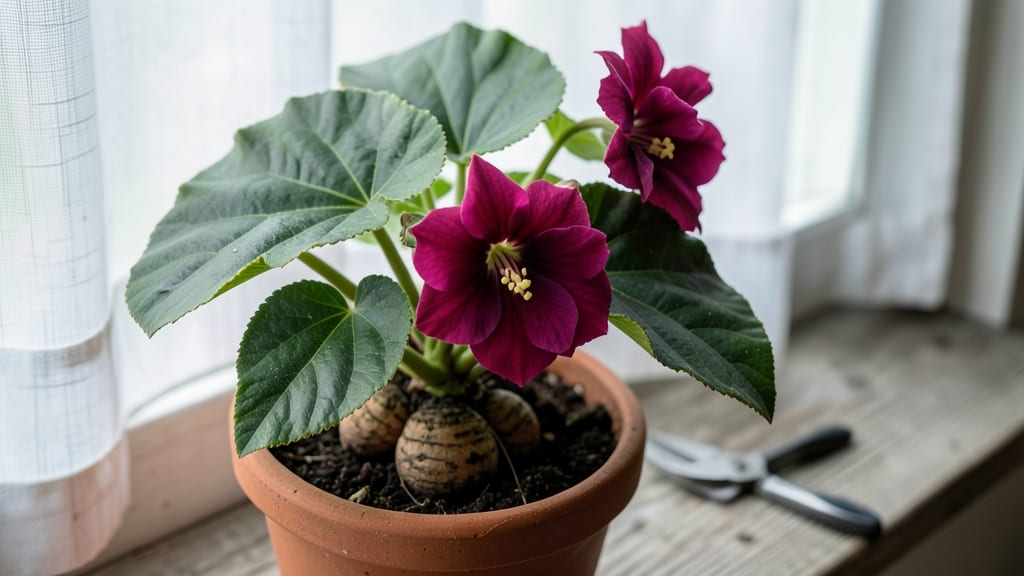
Tuberous begonias are perennials in warm climates like USDA zones 10-12, where they naturally overwinter. In colder regions (zones 3-9), gardeners must dig up and store tubers indoors to survive winter, making them behave like annuals unless protected.
Tuberous begonias thrive as perennials in frost-free regions where temperatures stay above 40°F year-round. 🌿 Their natural dormancy cycle lets them lie dormant in soil during mild winters, then regrow when warmth returns.
In colder zones, their tuberous roots—starchy storage organs—become the key to survival, requiring careful indoor storage to prevent freezing damage. This explains why many gardeners in northern climates treat them as annuals despite their perennial nature.
For those in transitional zones (7-9), mulching or using frost blankets can extend their outdoor growing season. The plant’s ability to adapt hinges on its tuber’s resilience, which stores energy for regrowth. Without proper overwintering, even hardy cultivars risk death, making climate awareness critical for long-term success.
💡 In This Article
- How Tuberous Begonias Survive Winter in Different Climates
- Tips for Overwintering Tuberous Begonia Tubers Indoors
How tuberous begonias survive winter in different climates
Tuberous begonias rely on a natural dormancy cycle triggered by temperature shifts. When nights dip below 50°F, the plant's foliage yellows and dies back as a survival mechanism. The real magic happens underground, where the tuber—an enlarged, starchy root—shifts into energy-conservation mode.
This tuber acts like a biological battery, storing carbohydrates produced during the growing season to fuel regrowth when warmth returns. 🌱 The tuber's thick, corky skin helps prevent moisture loss and protects against mild frost, but temperatures below 32°F can cause irreversible damage.
In tropical climates (zones 10-12), begonias experience only mild winters with temperatures rarely dropping below 40°F. Here, tubers remain dormant in the soil, protected by organic mulch that insulates against temperature swings.
The plant's native habitat in South America's highlands means it's adapted to short, cool seasons rather than harsh freezes. Cultivars like 'Dragon Wing' or 'Nonstop' thrive here because their tubers can withstand 35°F for brief periods, though prolonged exposure risks rot.
The key difference is that these regions lack the deep freezes of northern climates.
Cold-sensitive cultivars (like 'Illumination' series) contain higher moisture levels in their tubers, making them more vulnerable to winterkill. These varieties originated from tropical regions where consistent warmth is the norm. When exposed to 20°F or below, their cell membranes rupture, and stored nutrients break down.
This explains why gardeners in zones 3-9 must intervene—without indoor storage, even hardy begonias won't survive. The tuber's dormancy isn't just about temperature tolerance; it's a finely tuned balance of moisture retention and metabolic slowdown.
USDA hardiness zones act as a predictor of begonia survival because they account for average minimum temperatures. Zone 9 gardeners might get away with leaving tubers in the ground if winters stay above 25°F, while zone 7 gardeners need to dig up tubers by first frost.
The transition between zones 8-9 is particularly tricky because even a single hard freeze can devastate tubers. Here, gardeners use black plastic mulch or straw blankets to create a 5°F warmer microclimate around the soil.
What most gardeners miss is that tuber dormancy isn't just about cold—it's also about light deprivation. Begonias enter dormancy when daylight hours shorten below 12 hours. This photoperiod response triggers the plant to redirect energy to the tuber.
Without this cue, even warm climates can see premature dormancy or failed regrowth. In storage, gardeners mimic this by keeping tubers in a cool (45-50°F), dark environment—replicating the plant's natural winter conditions.
The science behind tuber survival involves antifreeze proteins that some cold-hardy cultivars produce. These proteins bind to ice crystals, preventing them from growing large enough to puncture cell walls. While tuberous begonias don't produce these proteins in significant quantities, their thick skin and low moisture content provide passive protection.
The real vulnerability comes from alternating freeze-thaw cycles, which cause water inside tuber cells to expand and contract, creating internal damage. 🌡️
For gardeners in marginal zones (like zone 9b), the solution often lies in cultivar selection. Some hybrids (like 'Begonia boliviensis') have evolved to handle slightly cooler temperatures, with tubers that can tolerate 28°F for short durations.
The trade-off? These may produce smaller blooms or grow more slowly. Understanding your local microclimate—including nearby bodies of water that moderate temperatures—can mean the difference between a thriving perennial and a lost investment.