
Vegetables
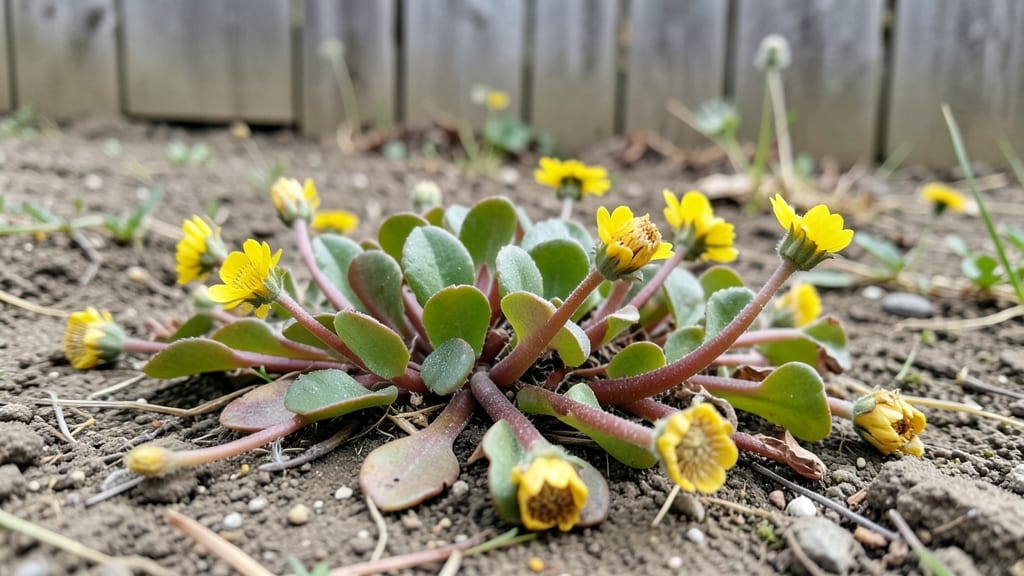
Purslane's growth cycle is tied directly to temperature—it bolts and dies when nights dip below 32°F, unlike true perennials that regrow from protected roots. 💫 In cooler zones, gardeners often treat it as a fast-growing summer crop, harvesting leaves before frost arrives.
The key to extending its season lies in protecting plants from cold snaps, whether through containers or row covers, rather than relying on natural hardiness.
What many don't realize is that purslane's seeds can sprout again in spring if left undisturbed, creating the illusion of perennial behavior. This makes it a self-seeding annual rather than a true perennial, requiring minimal effort to return each year if conditions allow.
For those in colder climates, saving seeds or starting new plants annually is the most reliable approach.
💡 In This Article
- Purslane’s Cold Tolerance and Growing Zones
- How to Extend Purslane’s Harvest Season
Purslane’s cold tolerance and growing zones
Purslane's behavior as an annual stems from its succulent physiology, which stores water in thick, fleshy leaves and stems. This adaptation helps it thrive in arid conditions but makes it extremely frost-sensitive.
When temperatures drop below 32°F, the plant's cellular structure freezes, causing irreversible damage to its delicate tissues. Unlike true perennials, purslane lacks protected underground storage organs (like tubers or rhizomes) to survive winter dormancy. 💫
The science behind this sensitivity lies in purslane's C4 photosynthetic pathway, which optimizes water efficiency but also makes it less cold-hardy than C3 plants. Its shallow root system (typically 6-12 inches deep) can't access deeper soil warmth during cold snaps.
In contrast, true perennials like portulaca (a close relative) develop more robust root systems that can regenerate after frost damage. Purslane's growth cycle is also tightly linked to daylight—it bolts and sets seed quickly when days shorten, a survival strategy for warm climates.
In USDA zones 10-11, where winters rarely drop below 32°F, purslane behaves as a short-lived winter perennial, persisting through mild winters but still dying back during heatwaves or prolonged cold.
This explains why it's often called a "winter annual" in these regions—it completes its life cycle over 12-18 months rather than the typical 6-12 months of summer annuals. The confusion arises because its self-seeding habit creates the illusion of perennial behavior, when in reality, each generation starts fresh from seed.
What sets purslane apart from true perennials is its lack of true dormancy. While plants like thyme or lavender enter a protected state during winter, purslane continues active growth until killed by frost.
This makes it more of an opportunistic annual—it takes advantage of warm seasons to complete its life cycle rapidly. In cooler zones, gardeners often treat it as a summer crop, harvesting leaves aggressively to prevent bolting before frost arrives.
Interestingly, purslane's cold sensitivity varies slightly by variety. Some modern cultivars (like 'Sunburst') show marginally better frost tolerance, surviving brief dips to 28°F if kept dry. However, these are exceptions rather than the rule.
The key difference between purslane and true perennials lies in their regeneration strategies: perennials rely on protected growth points, while purslane depends on prolific seed production to maintain its presence year after year. 🌱
For gardeners in marginal zones (like 9-10), the line between annual and perennial behavior blurs. With protection (like row covers), purslane can persist through 2-3 mild winters, but this requires active intervention rather than natural hardiness.
This explains why it's often classified as a "semi-perennial" in gardening literature—it bridges the gap between true annuals and perennials but doesn't meet the strict definition of either.