
Flowers
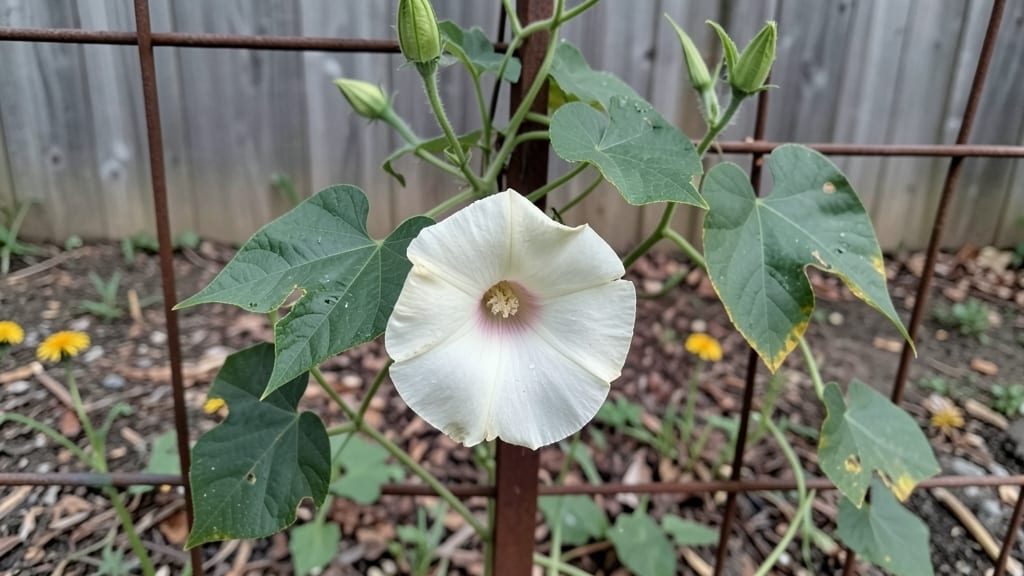
Moon flowers are not perennials—they are tender annuals that thrive in warm climates but die back with the first frost, typically surviving only one growing season unless grown as container plants in cooler regions.
Moon flowers (Ipomoea alba) behave like annuals because their tropical roots can't tolerate freezing temperatures. 🌙 Their delicate vines and shallow root systems freeze solid in below 32°F conditions, which is why they only complete one full growth cycle in most gardens.
What's interesting is how their night-blooming habit—opening after sunset—actually helps them avoid daytime heat stress, but doesn't protect them from cold snaps. This makes them perfect for summer containers where you can move them indoors before winter.
If you're in a cooler zone, you can cheat the system by overwintering cuttings in well-draining soil under grow lights. Many gardeners report success by taking stem cuttings in early fall and rooting them in water before potting up.
The key is keeping them in bright, indirect light and maintaining 60-70°F temperatures until spring planting. This way, you can enjoy their ethereal white blooms year after year without the frost risk.
💡 In This Article
- Moon Flower Lifespan and Growth Cycle Explained
- How to Extend Moon Flower Blooms Year-Round
Moon flower lifespan and growth cycle explained
Here's what's actually happening with moon flowers' lifespan: Ipomoea alba evolved in tropical climates where temperatures rarely drop below 50°F. Their entire biology—from shallow fibrous roots to thin vines—is optimized for warm-season growth, not cold survival.
The plant's life cycle mirrors its tropical origins, completing its entire growth and flowering phase in just 90-120 days when conditions are ideal. This rapid growth is possible because moon flowers are C4 plants, a photosynthetic pathway that maximizes water efficiency in hot climates.
The confusion about perennials stems from their vigorous growth habit—some varieties can reach 10-15 feet in a single season, making them appear hardy. However, their root systems rarely penetrate deeper than 12 inches, leaving them vulnerable to frost penetration.
When temperatures hit 28°F, the plant's cell membranes rupture, and the entire structure collapses. This is why even established plants in the ground won't survive winter in most climates. 🌡️ The only exception is in USDA zones 10-11, where they behave more like perennials due to consistent warmth.
What most gardeners don't realize is how their night-blooming strategy actually works against winter survival. Moon flowers open their flowers at dusk to attract nocturnal pollinators like moths, which helps them set seed before dying back.
This nocturnal habit means they're not adapted to handle even light frosts that might occur in early morning hours. The plant's energy is focused entirely on reproductive growth during its short lifespan, leaving no reserves for cold resistance.
Botanically, moon flowers belong to the morning glory family (Convolvulaceae), which contains many annual species. Their classification as annuals isn't just about lifespan—it's about their entire growth strategy. They allocate resources to rapid vine production and flower development rather than building woody stems or deep root systems for overwintering.
This is why you'll never see moon flowers developing persistent woody growth like true perennials such as roses or lavender.
Consider this comparison: While true perennials like clematis can survive winters by developing insulating bark and deep root systems, moon flowers prioritize biomass accumulation over cold hardiness. Their leaves contain 30-40% water content when mature, which makes them particularly susceptible to freezing.
Even a light frost can cause cellular damage that becomes irreversible within 24-48 hours, explaining why they never recover after winter.
The good news is that this annual nature makes them incredibly easy to grow from seed each year. Since they complete their life cycle so quickly, you can often get multiple generations in a single growing season if you start seeds early.
This rapid turnover is actually one of their most appealing traits for gardeners who want instant summer impact without long-term commitment. 🌱