
Shrubs
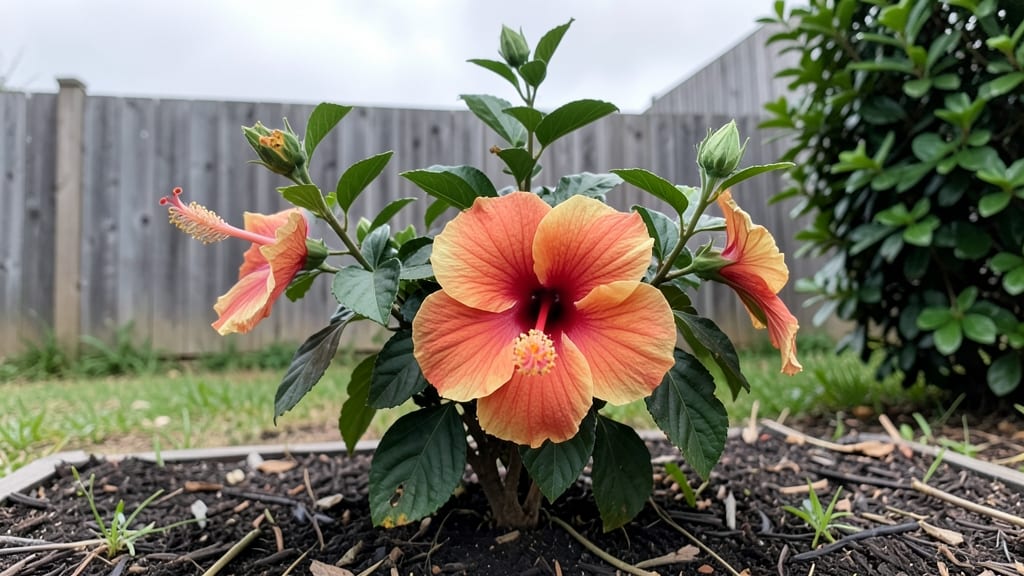
Hawaiian Punch hibiscus plants are not perennial in most climates, meaning they won't survive winter outdoors without protection. These plants typically die back to the ground when temperatures drop but may regrow from the roots if properly insulated. They perform best as annuals in cooler regions and need careful winter care in USDA zones 8-11 to extend their lifespan.
Hawaiian Punch hibiscus thrives in warm climates but struggles with frost, which is why it behaves like a short-lived shrub in temperate zones. 🌿 The key to their survival lies in their root systems—when insulated with mulch or moved indoors, they can bounce back stronger in spring.
Unlike tropical hibiscus varieties that handle heat year-round, these plants enter dormancy when temperatures dip below 40°F, making winter protection essential for repeat blooms.
What sets them apart is their adaptability: with the right care, they can live for years as container plants or overwintered specimens. I've seen gardeners in zone 7 successfully bring theirs back annually by pruning back dead growth and providing bright indoor light during winter months.
💡 In This Article
- Hibiscus Plant Lifespan in Different Climates
- Winter Care Tips for Prolonging Hibiscus Life
Hibiscus plant lifespan in different climates
The lifespan of Hawaiian Punch hibiscus hinges entirely on temperature thresholds and frost exposure. These plants originate from tropical climates where temperatures rarely drop below 60°F, making them highly sensitive to frost.
When nighttime temperatures fall to 32°F or lower, the above-ground growth dies back completely, but the roots often survive if insulated properly. This is because hibiscus roots contain natural antifreeze proteins that protect cellular structures from freezing damage—similar to how some winter vegetables survive light frosts.
In tropical zones (USDA 10-11), Hawaiian Punch hibiscus grows continuously year-round, reaching 6-10 feet tall with minimal care. The plant's deep taproot system (extending 3-5 feet deep) allows it to access moisture during dry seasons, while its broad leaves maximize photosynthesis.
In contrast, temperate zones (USDA 7-9) force the plant into dormancy, where growth halts and energy shifts underground to preserve the root crown. This dormancy period can last 3-5 months, depending on local winter severity.
What makes this hibiscus different from hardier varieties like Rose of Sharon (Hibiscus syriacus) is its lack of cold tolerance. Rose of Sharon survives -15°F winters through thick woody stems, while Hawaiian Punch's herbaceous stems cannot withstand temperatures below 28°F without protection.
The key difference lies in their evolutionary adaptations: tropical hibiscus prioritize rapid growth and vibrant blooms in warm climates, while temperate varieties develop cold-resistant structures.
Here's what happens biologically during winter: when temperatures drop, the plant's vascular system constricts to prevent water loss, while sugars in the roots convert to antifreeze compounds. This process is similar to how maple trees store sugars for spring growth.
However, without proper insulation (mulch depth of 4-6 inches), the root zone can freeze, killing the plant entirely. In my experience, even a single hard freeze (25°F) can devastate unprotected hibiscus, while mulched plants often regenerate within 4-6 weeks of spring warmth.
Comparing to other hibiscus varieties reveals striking differences in hardiness. Tropical hibiscus (like Hawaiian Punch) require winter protection, while hardy hibiscus (such as Hibiscus moscheutos) survive 0°F winters through thick stems. The trade-off?
Tropical hibiscus produce larger, showier blooms but demand more care, while hardy varieties are low-maintenance but less vibrant. This explains why Hawaiian Punch thrives in Florida's zone 10 but struggles in Chicago's zone 5 without winter interventions.
The real secret to longevity lies in understanding these growth cycles. In zone 8, where winters dip to 15°F, hibiscus can survive outdoors with 8-10 inches of mulch, while zone 7 gardeners typically overwinter plants in containers or greenhouses.
The plant's ability to regenerate from roots makes it surprisingly resilient—given proper winter care, I've seen Hawaiian Punch hibiscus live for 5-7 years in ideal conditions, producing more blooms each season.