
Vegetables
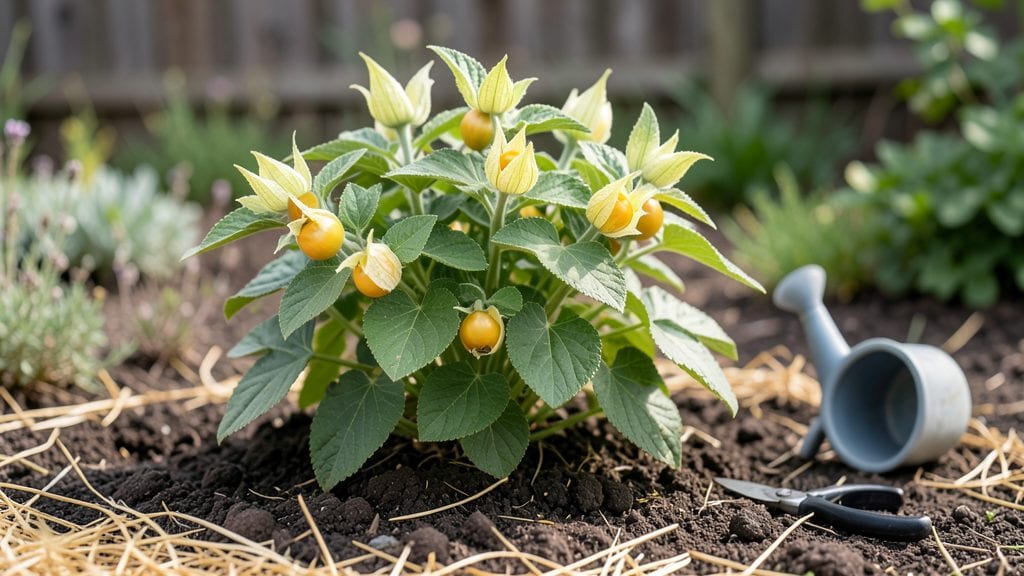
Ground cherries are not perennial—they die back after producing fruit in one growing season, though some varieties may regrow from roots under ideal conditions. Treating them as annuals ensures proper care and harvest planning.
Ground cherries behave more like tender annuals than hardy perennials, meaning their aboveground parts wither after fruiting. 🌱 Their shallow root systems often fail to store enough energy to survive freezing temperatures, which is why they rarely return in northern climates.
That said, in mild-winter zones like USDA zones 9-11, you might spot regrowth from dormant roots the following spring—though it's never guaranteed. Think of them as "semi-perennial" in the best-case scenarios.
This growth habit actually works to your advantage: since they complete their life cycle in one season, you can focus all your energy on maximizing that single harvest rather than worrying about long-term plant maintenance. 💫
💡 In This Article
- Ground Cherry Plant Lifecycle and Growth Habits
- Tips for Maximizing Ground Cherry Harvests Yearly
Ground cherry plant lifecycle and growth habits
Ground cherries (Physalis spp.) follow a one-season life cycle, much like tomatoes or peppers, because their energy reserves are entirely depleted after fruiting. The plants allocate nearly all their stored carbohydrates to fruit production, leaving little energy for root survival during winter.
Their shallow fibrous root systems—typically growing just 6-12 inches deep—lack the deep, woody roots of true perennials like raspberries, which can store starches for years. This makes them highly sensitive to frost, which can kill roots at temperatures below 25°F.
The key difference from perennials lies in their cold hardiness: strawberries (hardy to 0°F) and raspberries (hardy to -15°F) have specialized root crowns that regenerate annually. Ground cherries, however, prioritize rapid above-ground growth during their 60-90 day growing season, sacrificing root longevity.
Even in mild climates, their roots often rot if left in soggy soil over winter, as they lack the protective bark-like layers of perennial fruits. 🌱
Here’s what happens in their lifecycle: seeds germinate in spring, plants bolt to 1-2 feet tall by summer, produce fruit, then senesce by fall. Some varieties (like Physalis peruviana) may send up new shoots from residual roots in spring if winters are mild (above 28°F) and soil stays dry.
But this isn’t true perennialism—it’s more like a "false start" from leftover root fragments, not sustained regrowth. True perennials rebuild their entire structure each year; ground cherries just cheat the system.
What most gardeners overlook is how soil temperature triggers this behavior. Ground cherries’ roots remain active until soil drops below 50°F, at which point they stop photosynthesizing and redirect energy to root storage.
Without a hard freeze to signal dormancy, they’ll keep trying to grow—even in autumn—until frost finally stops them. This is why they often look "dead" by late fall, even if roots linger underground. Compare this to asparagus, which builds thick rhizomes over years to survive winters.
Exceptions exist in USDA zones 9-11, where winters rarely drop below 30°F. Here, gardeners report ground cherries returning year after year, though yields decline after 2-3 seasons. The regrowth isn’t from the same plant but from volunteer seedlings or root suckers.
For reliable harvests, treating them as annuals—planting fresh seeds each spring—guarantees peak production. The trade-off? You’ll never experience the "perennial surprise" of finding new plants popping up unexpectedly. 💫
Understanding this lifecycle explains why ground cherries thrive in short-season gardens: their entire energy goes into fruit, not survival. It’s a plant designed for one explosive harvest, not decades of gradual growth.
This makes them ideal for gardeners who want high yields with low maintenance—just don’t expect them to outlast your perennial herbs or berries.