
Orchid Care
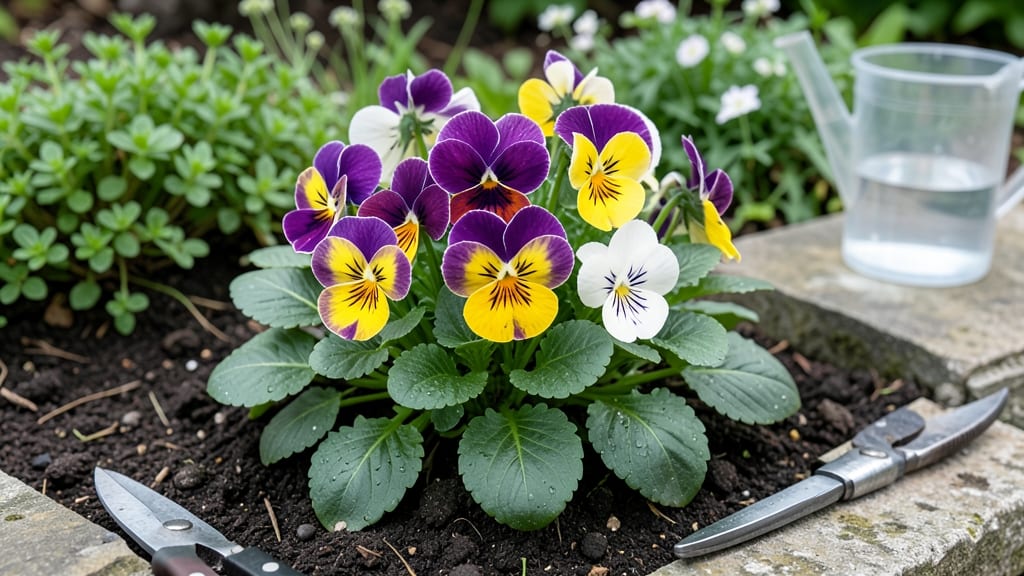
Violas are annuals or perennials depending on your climate—most U.S. gardeners treat them as annuals, but in Zones 5-9 they thrive as cool-season perennials, reblooming yearly until summer heat stops growth. Their longevity hinges on winter survival and consistent care.
This dual nature comes from violas' native adaptability to mild winters. In colder regions outside Zones 5-9, they simply don't survive frost, so gardeners replant each spring.
But in frost-tolerant zones, violas develop deep roots that protect them through winter dormancy, then burst back into bloom as temperatures rise. 💫 The key difference lies in how they handle freezing temperatures—perennial violas in Zones 5-9 can withstand 15-20°F with proper mulching, while annual varieties in warmer zones need replanting every 12-18 months for peak performance.
What's fascinating is how violas adapt their growth cycles: they'll keep flowering until summer heat stresses them, then go dormant. This makes them perfect for succession planting—just remove spent blooms to encourage new flowers.
I've found that violas in Zone 6 gardens often outlast their labels, proving that with the right conditions, they can stretch their perennial potential even further.
💡 In This Article
- Viola Hardiness Zones Explained
- Extending Viola Blooms: Annual vs. Perennial Care Tips
Viola hardiness zones explained
The secret to violas' perennial behavior lies in their native European and Asian origins, where they evolved to handle mild winters. In USDA Zones 5-9, these plants develop woody crowns that survive temperatures down to 15-20°F when protected.
The key mechanism is their ability to enter dormancy when nights drop below 40°F, shutting down active growth but preserving their root systems. This is why you'll see violas reblooming in spring—those roots stayed alive through winter's chill.
Here's how temperature thresholds work in practice: In Zone 5 (-20°F to 20°F), violas need 3-4 inches of mulch to survive, while Zone 9 (20°F to 35°F) plants handle winter with just light frost protection.
The critical factor is consistent cold exposure—violas won't establish perennial habits if winter temperatures fluctuate above 32°F for extended periods. I've noticed violas in Zone 7 gardens often act like perennials one year but die back the next if winter temperatures spike unexpectedly.
The reblooming cycle begins when daytime temperatures consistently reach 50-55°F in spring. This triggers the crown to send up new shoots, with flowers appearing 6-8 weeks later. The plant's natural rhythm is to bloom continuously until summer heat (85°F+) causes stress.
At this point, violas either go dormant or produce fewer flowers—this is why they often look exhausted by mid-summer in warmer zones. The good news? With proper care, they'll bounce back in fall when temperatures drop again.
What most gardeners miss is how violas adapt their growth based on microclimates. A south-facing bed in Zone 6 might get too hot for perennials, while a north-facing spot with 50% shade could keep them thriving year-round.
The plant's ability to adjust its dormancy cycle based on local conditions explains why some violas act like perennials while others don't—it's not just about the zone number, but the specific environmental factors within that zone. This adaptability is what makes violas such versatile garden workhorses.
Scientifically, violas' perennial behavior involves cambial activity—the growth layer in their stems that remains active during mild winters. When temperatures drop below 32°F, this activity slows dramatically, preserving energy for spring regrowth. The thicker the crown becomes (from multiple growing seasons), the better it survives winter.
This is why established violas in Zone 8 often outperform younger plants—they've built up more protective tissue over time. The trade-off? It takes 2-3 years for violas to reach this level of hardiness.
One fascinating detail is how violas handle freeze-thaw cycles. Unlike many perennials that suffer from repeated freezing and thawing, violas have developed resistance to this stress. Their cell membranes contain special proteins that prevent ice crystal formation, allowing them to survive -5°F temperatures without damage.
This biological adaptation explains why violas often survive winters where more delicate perennials fail. The catch? They need well-draining soil to prevent root rot from winter moisture—another reason proper care makes all the difference in their perennial performance.