
Orchid Care
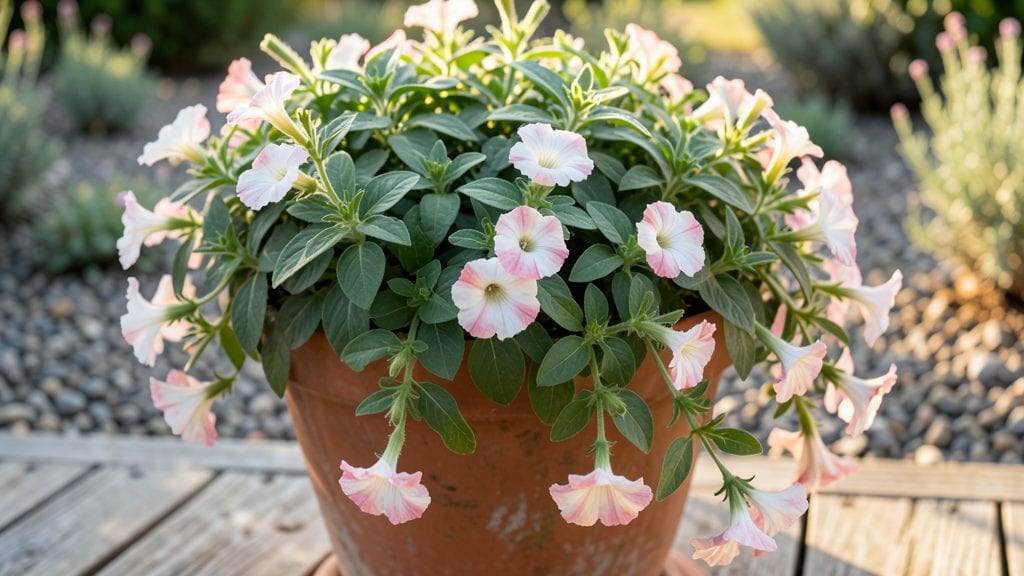
Whether firefly petunias act as annuals or perennials depends entirely on your climate zone. 🌱 In colder regions, their delicate stems can't survive winter freezes, but their seeds often germinate naturally in spring, creating a self-sustaining cycle.
The key difference in warmer zones is consistent moisture and protection from extreme temperature swings—both critical for extending their lifespan beyond a single growing season.
For gardeners in transitional zones (like zone 10), mulching with straw or leaves can help insulate roots during mild winters, while container growers might bring plants indoors before the first frost.
The real magic happens when you let them go to seed—they'll often pop up unpredictably in spring, giving you free blooms with minimal effort.
💡 In This Article
- Firefly Petunia Lifespan by USDA Hardiness Zones
- Extending Firefly Petunia Growth: Self-Seeding and Overwintering Tips
Firefly petunia lifespan by USDA hardiness zones
Firefly petunias thrive as annuals in zones 2-10 because their tender stems and foliage can't withstand prolonged exposure to freezing temperatures below 28°F. The plant's native tropical origins mean it lacks the cold-hardy adaptations of perennials like hostas or daylilies.
When frost hits, the entire above-ground structure blackens within hours, but the real story happens underground where the root system may survive if protected by organic mulch.
In zone 11 and warmer, where winter temperatures rarely drop below 40°F, firefly petunias sometimes persist as short-lived perennials. The key threshold appears to be 32°F—consistent exposure below this temperature triggers complete dieback.
What's fascinating is how these plants adapt: in marginal zones like zone 10, they may produce new growth from the base if protected by 4-6 inches of mulch during cold snaps.
The plants' ability to regenerate from the crown explains why some gardeners report "perennial-like" behavior in these transitional areas.
The science behind this involves cold acclimation—a process where plants gradually adjust to cooler temperatures. Firefly petunias simply don't have time to fully acclimate before winter arrives in colder zones. Their growth habit is another factor: they produce soft, herbaceous stems that lack the woody structure of true perennials.
Even in ideal conditions, their maximum lifespan as perennials rarely exceeds 2-3 years due to cumulative stress from heat, humidity fluctuations, and potential fungal pressures.
What most gardeners don't realize is how self-seeding behavior creates the illusion of perennial growth. When plants bolt in late summer, they produce 100-200 seeds per flower cluster that scatter widely. These seeds remain dormant through winter but germinate eagerly in spring when soil temperatures reach 60°F.
The result? New plants emerge where old ones died back, creating dense clusters that fool many into thinking they're perennials. This natural propagation explains why firefly petunias often appear "everywhere" in gardens year after year.
For visual comparison, imagine planting a single firefly petunia in zone 8 versus zone 11. In zone 8, you'll likely see one glorious summer of blooms followed by winter dieback, then spontaneous seedlings next spring.
In zone 11, that same plant might produce two full growing seasons if protected from heat stress and given consistent moisture. The difference comes down to thermal accumulation—warmer climates allow more complete growth cycles before winter stress intervenes.
Here's what happens in marginal zones like 9-10 where outcomes can vary dramatically: a single frost event below 30°F will kill back established plants, but their seeds often survive in the soil.
The secret to encouraging perennial-like behavior in these zones lies in microclimate protection—planting near south-facing walls, using black plastic mulch for root insulation, or growing in containers that can be moved indoors during cold snaps.
This is where proper care transforms what would normally be an annual into something approaching perennial behavior.