
Plants
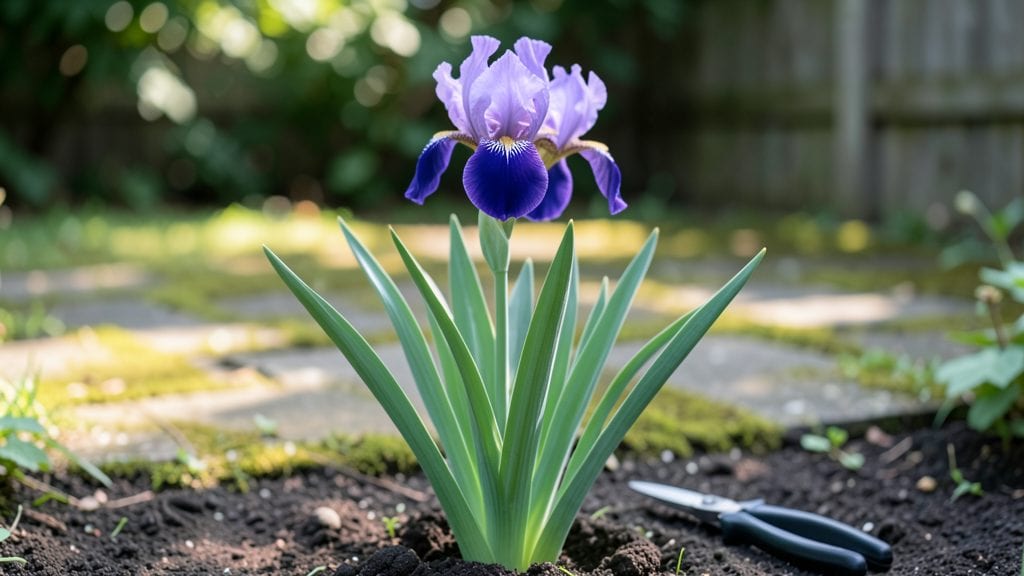
Dutch irises aren't true perennials—they behave more like annuals or short-lived perennials, typically lasting just 2–3 years before their vigor declines. Their rhizomes struggle to survive harsh winters and often fail to rebloom consistently, especially in colder regions, unlike hardier native iris varieties.
Dutch irises get their reputation as "annuals in disguise" because their rhizomes (thick underground stems) don't store enough energy to regenerate after multiple blooming cycles. 🌱 The problem worsens in colder climates where winter dieback is common—even if you see them return, the blooms may be sparse or nonexistent the next season.
For gardeners in zones 5–7, this means treating them more like seasonal plants rather than long-term perennials, though proper soil prep (like adding compost) can sometimes buy an extra year or two of decent blooms.
💡 In This Article
- Why Dutch Irises Die Back After 2–3 Years
- Best Ways to Extend Dutch Iris Blooms in Your Garden
Why Dutch irises die back after 2–3 years
Here's what's actually happening beneath the soil: Dutch iris rhizomes store limited energy reserves compared to hardy perennials like Siberian irises. These imported varieties evolved in the Netherlands' mild maritime climate, where winters rarely drop below 20°F.
When planted in colder zones (like 5–7), their rhizomes often enter a state of dormancy stress—a survival mechanism that depletes stored nutrients faster than they can replenish. 🌡️
The key factor is their shallow root system, which maxes out at 6–8 inches deep—far shallower than Siberian irises (which can reach 12+ inches). This makes them vulnerable to nutrient depletion in the topsoil and fungal infections from winter moisture.
The rhizomes also lack the protective waxy coating of native irises, making them more susceptible to Botrytis blight—a common fungal disease that thrives in damp, cold conditions.
What most people don't realize is how climate accelerates this decline. In zones 8–9, Dutch irises might rebloom for 3–4 years with minimal care, but in colder regions, their lifespan shrinks to 1–2 years without proper winter protection.
The contrast with Siberian irises is striking: those hardy varieties can thrive for decades in zone 3 with minimal intervention, thanks to their deeper roots and natural cold resistance.
There's also a biological trade-off: Dutch irises prioritize rapid flowering (producing 20–30 blooms per stem) over long-term survival.
This energy drain weakens the rhizome's ability to regenerate after each bloom cycle. 🌸 Unlike bearded irises, which produce 10–15 blooms but allocate more energy to root growth, Dutch irises essentially "burn out" faster—like a high-performance car with a small fuel tank.
Consider these biological realities when choosing varieties: Dutch irises excel as seasonal statement plants but require annual replacement in colder climates. For long-term gardens, native irises or hybrid varieties (like 'Harmony' or 'Kodiak') offer the best balance of beauty and durability.
The trade-off? You'll sacrifice some of that showy, 3-foot-tall Dutch iris drama for more reliable returns.
Here's the silver lining: With proper soil amendments (like compost-rich mixes) and seasonal mulching, you can sometimes coax an extra year out of Dutch irises—even in marginal zones. The secret lies in mimicking their native conditions: well-draining soil and moderate winters (without extreme freeze-thaw cycles). 🌱