
Flowers
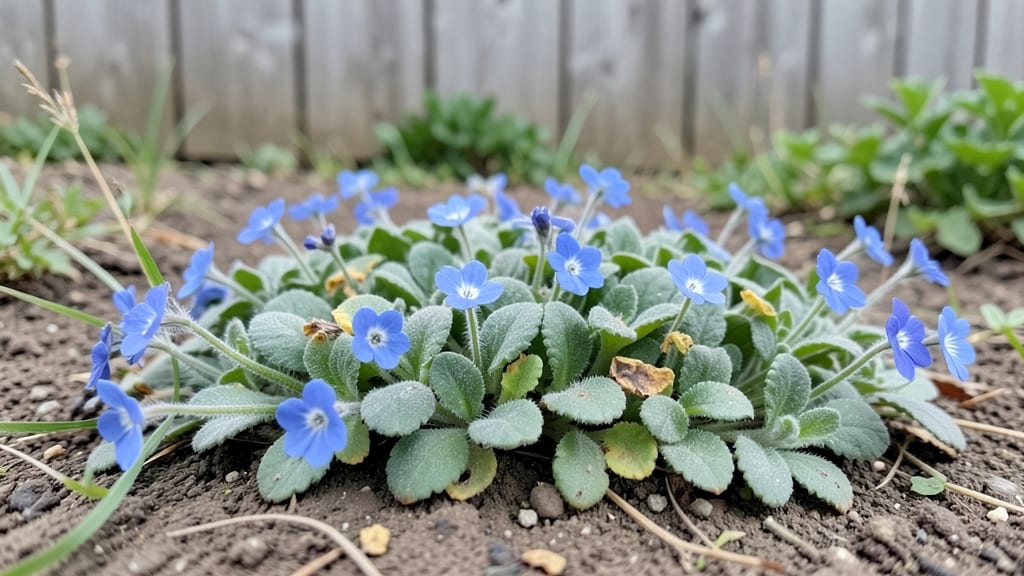
Chinese forget-me-nots (Cynoglossum amabile) are not true perennials but function as tender perennials or short-lived biennials in suitable climates, thriving in USDA zones 3-9 with cool-season blooms and aggressive self-seeding habits.
Chinese forget-me-nots behave like perennials in ideal conditions but lack the hardy, multi-year survival traits of true perennials. 🌱 Their two-year lifecycle means they often reseed themselves, creating natural renewal rather than relying on root systems to persist through seasons.
Unlike European forget-me-nots (Myosotis), which reliably return annually, these plants prioritize rapid reproduction over longevity, making them better suited for gardeners who appreciate seasonal bursts of color rather than consistent foliage.
This growth pattern explains why they thrive in cooler climates but struggle in hot summers—heat triggers dormancy or death, forcing gardeners in warmer zones to treat them as annuals. Their self-seeding nature actually works to their advantage, as new plants emerge reliably each spring from dropped seeds.
💡 In This Article
- Chinese Forget-Me-Not Growth Cycle Explained
- Extending Chinese Forget-Me-Not Blooms: Planting and Care Tips
Chinese forget-me-not growth cycle explained
The biennial lifecycle of Cynoglossum amabile begins with seed germination in early spring, triggered by soil temperatures between 50-60°F. Unlike true perennials, these plants develop a basal rosette of broad, hairy leaves during their first year, storing energy for flowering rather than establishing deep roots.
This rosette stage can last 4-6 months, during which the plant prioritizes leaf growth over vertical expansion—a strategy that distinguishes it from European forget-me-nots (Myosotis), which develop more fibrous root systems.
Flowering occurs in the second year when daytime temperatures drop below 75°F and nights remain cool (50-60°F). The plant shifts resources from leaf production to 1-2 foot tall flowering stems topped with clusters of blue-violet blooms that resemble tiny trumpets.
Each flower contains 5 petals and produces copious amounts of nectar, attracting pollinators like bees and butterflies. This cool-season trigger explains why Chinese forget-me-nots thrive in spring and fall but struggle when summer heat persists beyond 80°F.
The key difference from true perennials lies in their response to heat stress. While Myosotis species can enter summer dormancy and regrow when temperatures cool, Cynoglossum amabile often dies back completely when exposed to prolonged 85°F+ temperatures.
Their shallow root systems (6-12 inches deep) lack the insulating capacity of true perennials, making them vulnerable to drought and heat stress. This explains why they're classified as "tender perennials"—they can survive multiple years only in climates where summer temperatures don't exceed 80°F for extended periods.
What most gardeners don't realize is how their self-seeding strategy compensates for this shortcoming. Each flowering stem produces thousands of tiny seeds that disperse via wind and wildlife, creating dense colonies. These seeds remain viable in the soil for 2-3 years, ensuring new plants emerge annually in favorable conditions.
This aggressive reseeding explains why Chinese forget-me-nots often appear perennial in gardens—even though individual plants complete their lifecycle in 1-2 years.
Compare this to European forget-me-nots (Myosotis), which develop creeping rhizomes that spread horizontally underground, allowing them to persist through multiple growing seasons. The rhizomes store carbohydrates and enable rapid regrowth after winter dormancy.
Chinese forget-me-nots lack this underground network, instead relying on their prolific seed production to maintain presence in gardens. This fundamental difference in propagation strategy explains why Cynoglossum behaves more like a short-lived perennial than a true one.
The growth cycle also reveals why these plants thrive in USDA zones 3-9 but with different expectations per zone. In cooler zones (3-6), they may complete multiple biennial cycles before heat becomes problematic.
In warmer zones (7-9), they typically behave as annuals unless provided with afternoon shade during peak summer months. Their ability to self-seed means gardeners in zone 9 can still enjoy them yearly, even if individual plants don't survive the summer heat.
Understanding this lifecycle helps explain why Chinese forget-me-nots often outperform their European cousins in garden settings—they prioritize rapid reproduction over long-term survival, making them ideal for gardeners who want bold seasonal color with minimal maintenance.
The trade-off is their shorter individual lifespan, which requires gardeners to embrace their self-seeding nature rather than expecting perennial reliability. 🌿