
Pests and Diseases
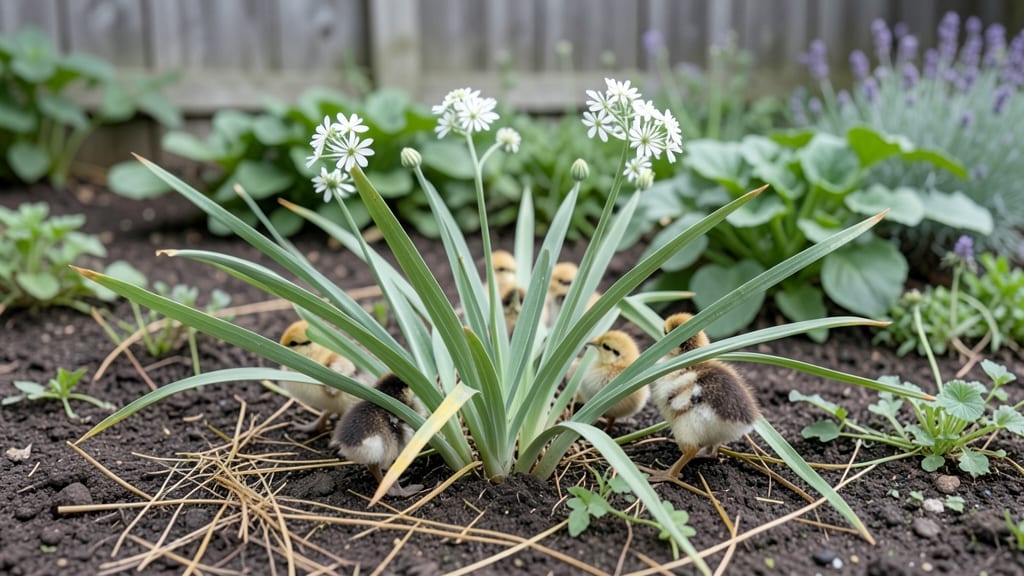
Chicks and hens are not perennials—they are annuals in poultry farming because each generation lives for only one reproductive cycle before requiring replacement, unlike perennial plants that regrow yearly. Their lifespan depends on breed, care, and purpose (egg-laying vs. meat production).
Chickens follow a different lifecycle than plants because they age rapidly and their egg production naturally declines after about 1-2 years. 🌱 Unlike perennial crops that regrow from roots, hens reach their peak productivity early before becoming less efficient.
Farmers replace flocks annually to maintain consistent output, which is why you’ll never see a "perennial" chicken operation—it’s biologically and economically unproductive.
This annual cycle isn’t just about eggs, though. Meat production also follows similar timing, with broilers reaching market weight in just 6-8 weeks. The key difference from plants is that chickens don’t regenerate—their entire lifecycle is front-loaded for maximum short-term output before requiring complete replacement.
💡 In This Article
- Why Poultry Are Annuals vs. Perennial Plants
- Managing Chicken Lifecycles for Sustainable Farming
Why poultry are annuals vs. perennial plants
Here's what's actually happening biologically: chickens follow a monocyclic reproductive strategy, meaning they produce offspring once in their lifetime before their productivity declines. This differs dramatically from perennial plants like asparagus or strawberries, which regenerate from underground roots or tubers year after year.
A hen's ovary contains a finite number of follicles—around 4,000-6,000—that mature into eggs over her lifespan, with peak production occurring at 24-36 weeks before declining by 50% annually thereafter.
The science behind this involves hormonal aging. As hens approach 2-3 years, their pituitary gland produces less follicle-stimulating hormone (FSH), which directly impacts egg quality and quantity.
Meanwhile, their muscle-to-fat ratio shifts dramatically—meat-type breeds like Cornish Cross gain 30% body fat in just 6 weeks, making them less efficient for egg production. 🌱 Perennial plants avoid this issue by dedicating energy to root systems that persist through seasons, while chickens invest everything in rapid growth and reproduction before senescence.
Economically, this annual cycle creates a forced replacement model. A commercial layer's egg production drops from 280 eggs/year at peak to just 150 eggs/year by year 2, while feed costs remain constant. Farmers calculate that replacing hens at 12-18 months yields 30-40% higher profitability than keeping them longer.
This contrasts with perennial crops where harvests increase with plant maturity—strawberry plants, for example, produce 20% more berries annually after establishment.
Consider these key differences in resource allocation:
- Energy focus: Chickens prioritize rapid growth/reproduction over longevity, while perennials invest in root systems for multi-year survival
- Productivity curve: Poultry show exponential decline after peak, while perennials often show gradual improvement
- Replacement cost: New chicks cost $0.50-$1.50 each, while perennial plants require $5-$20 initial establishment but zero annual replacement
The agricultural implications are profound. While you might harvest 3-5 crops from a perennial fruit tree over decades, a chicken flock requires complete replacement every 12-18 months.
This creates a high-turnover system where infrastructure (coops, feeders) remains constant but the animals themselves are disposable commodities—exactly the opposite of perennial plant husbandry where the plant itself becomes the asset.
What most people don't realize is how this annual cycle affects even backyard flocks. A free-range hen might live 6-8 years naturally, but her egg production becomes uneconomical after 3 years.
This biological constraint forces farmers—whether commercial or small-scale—to treat chickens as seasonal resources rather than perennial assets, fundamentally reshaping how we think about animal agriculture compared to plant cultivation.