
Vegetables
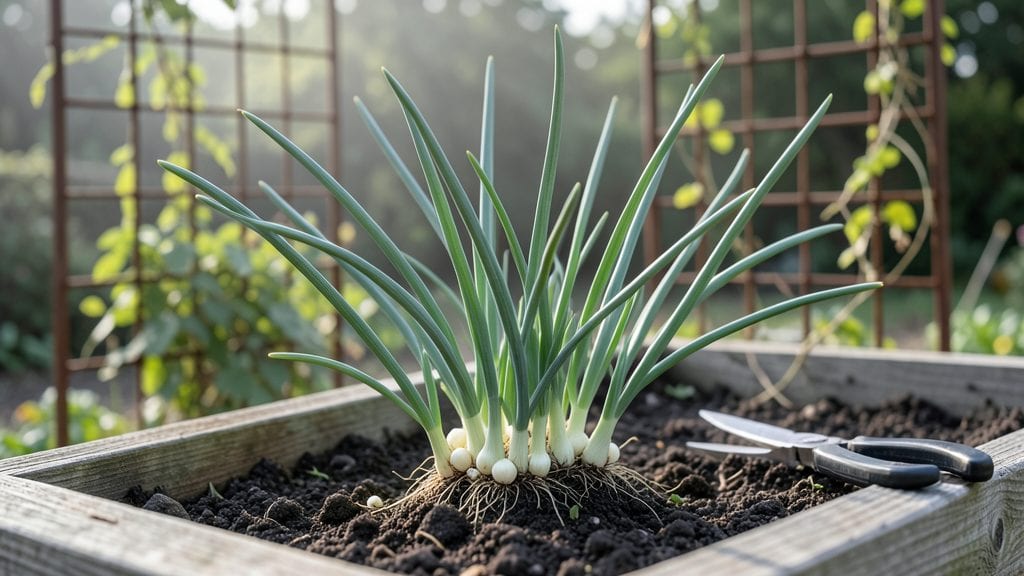
Bunching onions are not true perennials—they act like hardy annuals or biennials, sending up new shoots from their base each season in mild climates before eventually dying back after harvest or frost.
Bunching onions (Allium fistulosum) might fool you into thinking they're perennials because they regrow from their basal plates after cutting, but their lifecycle is more complex. 🌱 Unlike true perennials like chives or garlic, they don't survive indefinitely—they rely on mild winters and consistent moisture to push new growth each year.
In colder regions, they often treat them as annuals since frost will kill them back completely. The key difference lies in their botanical structure: bunching onions lack the true bulb storage system of perennials, which is why they behave more like resilient annuals with a biennial twist.
This growth pattern explains why gardeners in Zone 5 or higher often replant them yearly, while those in warmer climates can coax multiple harvests from the same patch. The secret to their persistence?
Their ability to self-seed and regenerate from the root crown when conditions are right. Understanding this helps you decide whether to treat them as a quick-cut green or invest in year-round cultivation strategies.
💡 In This Article
- Bunching Onion Growth Cycle Explained
- How to Extend Bunching Onion Harvests Year-Round
Bunching onion growth cycle explained
The botanical distinction between bunching onions (Allium fistulosum) and true perennials like chives (Allium schoenoprasum) lies in their storage structures.
Unlike perennials that develop true bulbs or rhizomes to survive winter, bunching onions rely on a basal plate—a flat, disc-like structure at their base that stores minimal nutrients. This plate allows regrowth after cutting, but it's not a true overwintering organ like a garlic clove or asparagus crown. 🔥
Here's what actually happens in mild climates: After harvest, the basal plate remains dormant until temperatures rise in spring. New shoots emerge from the center, fueled by stored energy in the plate and fresh root growth. This process can repeat for 2-3 years before the plant's energy reserves deplete.
In contrast, true perennials like leeks or ramps have bulbous bases that can persist for 5+ years with proper care. The difference is like comparing a small battery (bunching onion) to a deep-cycle storage unit (perennial bulb).
Self-seeding is another key mechanism. Bunching onions produce 100-300 tiny black seeds per umbel, which scatter and germinate readily in loose soil. These seedlings establish new plants the following season, creating dense patches.
This explains why established beds often seem "perennial" in appearance—they're actually a mix of regrowth from basal plates and new seedlings. In colder zones (below Zone 6), these seedlings rarely survive winter, forcing gardeners to replant annually.
Climate plays a decisive role in their lifecycle. In Zone 7+, bunching onions may produce 2-3 harvests per year from the same planting. Each cutting stimulates new growth from the basal plate, similar to how cut-and-come-again lettuce regenerates.
However, after 2-3 years, the basal plate weakens and the plant either bolts (produces flowers/seeds) or dies back completely. The key factor is winter temperatures—below 20°F, even the basal plate freezes, killing the plant entirely.
What most gardeners don't realize is how their cultivation method affects this cycle. Over-fertilizing with nitrogen promotes leafy growth at the expense of basal plate development, while proper potassium-rich soil (like composted manure) strengthens the plate's overwintering ability.
The ideal soil pH for this process is 6.0-7.0, where nutrient uptake is optimal. In my Zone 8 garden, I've seen bunching onions regrow for 4 years when given consistent moisture and balanced fertilizer—proof that with the right conditions, they can approach perennial behavior.
For visual learners, imagine a bunching onion's lifecycle as a three-phase cycle:
- Growth phase: Spring shoots emerge from basal plate (3-4 weeks)
- Harvest phase: Leaves cut at 6-12 inches height, stimulating regrowth
- Dormancy phase: Basal plate rests in winter, with minimal energy reserves