
Plants
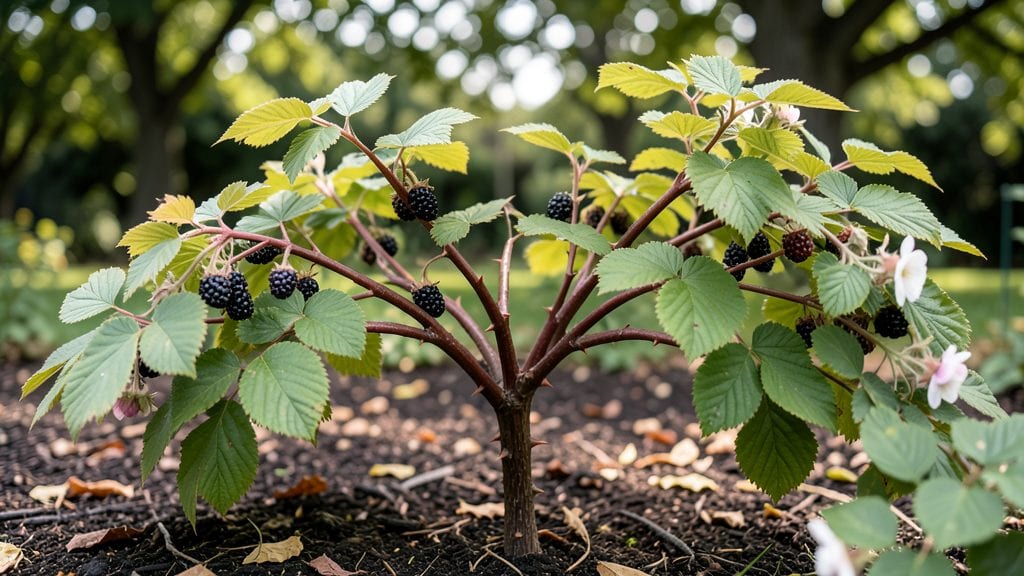
Yes, blackberries are perennials that regrow each year from their roots, producing canes and berries annually with proper care, though some varieties may decline after 3-5 years without renewal. Cold-hardy types thrive in zones 5-8, while everbearing types offer extended harvest seasons.
Blackberries thrive as perennials because their root systems store energy year-round, allowing them to send up new canes each spring.
The two types of canes—primocanes (first-year growth) and floricanes (second-year fruiting)—create a biennial cycle where you get two harvests per plant over two years. 🌱 This means with the right care, your blackberry patch can keep producing for decades, though some varieties benefit from renewal every few years to maintain vigor.
What makes this especially useful is how adaptable blackberries are to different climates. The everbearing varieties produce fruit on both primocanes and floricanes, giving you a longer harvest window, while traditional types focus on one flush per season.
Whether you're in a cold northern zone or a warmer southern region, choosing the right variety ensures you'll have berries to pick for months.
💡 In This Article
- How Blackberry Perennial Growth Works
- Best Practices for Year-Round Blackberry Care
How blackberry perennial growth works
Blackberries grow through a fascinating two-year cycle involving two distinct types of canes: primocanes (first-year growth) and floricanes (second-year fruiting). The root system, which can live for decades, stores carbohydrates and nutrients during dormancy, fueling new growth each spring.
Primocanes emerge in early spring, growing vigorously throughout the season—these won't produce fruit their first year. Instead, they undergo a transformation into floricanes the following year, when they bear fruit before dying back to the roots. 🌱 This biennial cycle ensures continuous production when managed properly.
The root system's longevity comes from its ability to regenerate. Blackberry roots can extend up to 6 feet deep and spread horizontally through underground runners, creating a dense network. In colder climates (zones 5-8), roots enter dormancy when temperatures drop below 32°F, protecting them from winter damage.
The crown—where roots meet canes—contains meristematic cells that remain active, allowing new shoots to emerge each spring. This is why proper winter mulching (with 4-6 inches of organic matter) is critical: it insulates roots while preventing extreme temperature fluctuations.
Temperature plays a crucial role in this cycle. Primocanes require 60-70°F for optimal growth, while floricanes need cooler nights (50-60°F) to set fruit properly. Pruning at the right time—removing dead floricanes after harvest and thinning primocanes in late winter—redirects energy to healthier canes.
Everbearing varieties break this cycle by producing fruit on both primocanes and floricanes, creating two harvests per season. However, this requires more frequent pruning to maintain balance, as overcrowded canes compete for resources. 🌿
What most gardeners don't realize is how pruning influences the next year's harvest. When you remove old floricanes, you're not just cleaning up—you're signaling the plant to focus energy on new primocane growth.
Studies show that plants with 10-15 healthy primocanes per square yard produce the most robust floricanes the following year. The key is timing: prune in late winter (just before buds swell) to avoid stimulating early growth that could be damaged by late frosts.
This precision ensures the plant's energy goes toward root storage and cane development rather than wasted growth.
Dormancy is another critical phase. During winter, blackberry roots reduce metabolic activity but continue to respire slowly, consuming stored carbohydrates. This is why heavy mulch is essential—it minimizes root stress from temperature swings.
In warmer climates (zones 8-10), roots may stay semi-active year-round, but they still benefit from a 3-4 month dormant period to reset their growth cycle. Without this break, plants can become stressed, leading to reduced fruit production or susceptibility to diseases like cane blight. 🌡️
Consider this example: A Thornless Evergreen blackberry plant in zone 6 will produce primocanes in spring 2024, floricanes in summer 2025, and then die back. If you prune aggressively in winter 2025, the roots will push out new primocanes by spring 2026, ready to repeat the cycle.
This predictable pattern is why blackberries are such reliable perennials—with proper care, they'll keep producing for 10-15 years before needing renewal. The secret lies in understanding this cycle and working with it, not against it.