
Flowers
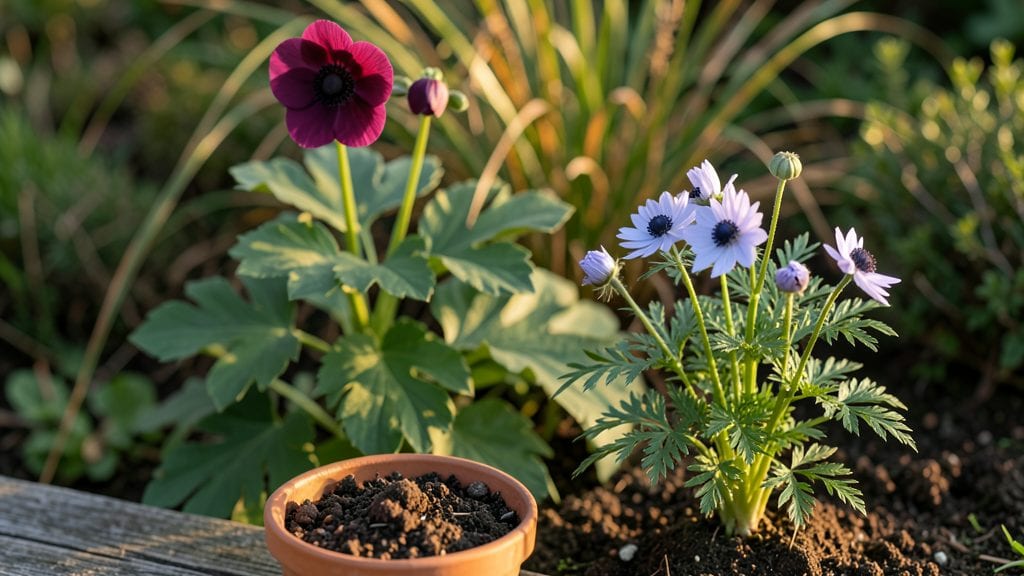
Determining whether anemones are annual or perennial depends on the variety—most thrive as hardy perennials across multiple seasons, while types like Anemone blanda may behave as short-lived perennials or self-seeding annuals in warmer regions. Their blooming cycles typically span spring or fall, with proper care ensuring yearly returns.
Anemones' lifespan hinges on their root system and climate. 🌱 Tuberous varieties like Anemone coronaria often return annually in cooler zones, while rhizomatous types (Anemone hupehensis) establish deeper roots for long-term growth.
Warmer climates may push some species toward annual behavior, but most anemones reward patience with reliable spring or fall blooms—given the right soil and sunlight conditions.
For gardeners, the key to perennial success lies in mimicking natural dormancy. Mulching in winter protects roots from freeze-thaw cycles, while dividing mature clumps every 3-4 years prevents overcrowding.
The trade-off? Annual varieties like Anemone blanda might self-seed prolifically, creating naturalized displays—but their fleeting nature makes them ideal for seasonal color bursts.
💡 In This Article
- Lifespan Variations Among Anemone Species
- Tips to Extend Anemone Blooms Year-After-Year
Lifespan variations among Anemone species
The key difference between anemone varieties lies in their root systems and how they handle seasonal changes. Anemone coronaria relies on thick, fleshy tubers that store energy for regrowth each spring, making it a reliable perennial in USDA zones 6-9.
These tubers can survive winter dormancy when protected by 4-6 inches of mulch, though they may need replanting every 2-3 years as they decline. In contrast, Anemone hupehensis spreads via creeping rhizomes that form dense colonies, allowing it to persist for decades with minimal intervention. 🌿
Climate plays a critical role in determining whether an anemone behaves as a perennial or annual. Anemone blanda, native to Mediterranean regions, often acts as a short-lived perennial in cooler climates but may complete its entire lifecycle as an annual in hotter areas where summer heat stresses its delicate foliage.
The distinction comes down to cold hardiness—most anemones enter dormancy when soil temperatures drop below 40°F, but prolonged exposure to 90°F+ temperatures can exhaust their energy reserves faster. This is why Anemone coronaria thrives in coastal gardens where summer heat is moderated by ocean breezes.
Dormancy patterns reveal why some anemones return year after year while others fade. Tuberous varieties like Anemone coronaria shed their foliage in late summer, conserving energy until cool weather triggers new growth.
Rhizomatous types (Anemone hupehensis) maintain some green growth through winter in milder zones, demonstrating their superior cold tolerance (-20°F resistance). The trade-off? Rhizomatous varieties spread aggressively and may require division every 4-5 years to prevent overcrowding, while tuberous types offer cleaner, more controlled growth. 🌱
Here's what most gardeners overlook: soil moisture during dormancy makes or breaks perennial success. Anemone coronaria tubers rot if kept too wet during winter, while Anemone hupehensis rhizomes appreciate consistent moisture year-round.
In zone 5, where winters dip below -10°F, adding a 12-inch layer of straw mulch creates the ideal insulation barrier. The science? Proper mulching maintains soil temperatures between 32-40°F, preventing freeze-thaw damage that would otherwise kill emerging shoots in spring.
For those in warmer climates (zones 8-10), the annual vs. perennial debate hinges on summer conditions. Anemone blanda often self-seeds prolifically here because its natural Mediterranean habitat experiences hot, dry summers.
What appears as annual behavior is actually an adaptation—these plants complete their lifecycle quickly when faced with summer stress, then rely on seed dispersal for survival. The solution?
Plant in partial shade where afternoon sun doesn't exceed 85°F soil temperatures, and water deeply once weekly during dry spells to mimic their native rainfall patterns.
Understanding these variations lets you choose the right anemone for your climate. Tuberous types excel in cooler, continental climates where winters are distinct, while rhizomatous varieties dominate in humid continental zones.
The perennial champions? Anemone hupehensis var. japonica and Anemone × hybrida—both form robust root systems that outlast most gardeners' patience. For annual behavior, embrace Anemone blanda as a seasonal spectacle rather than a long-term investment. 💫