
Orchid Care
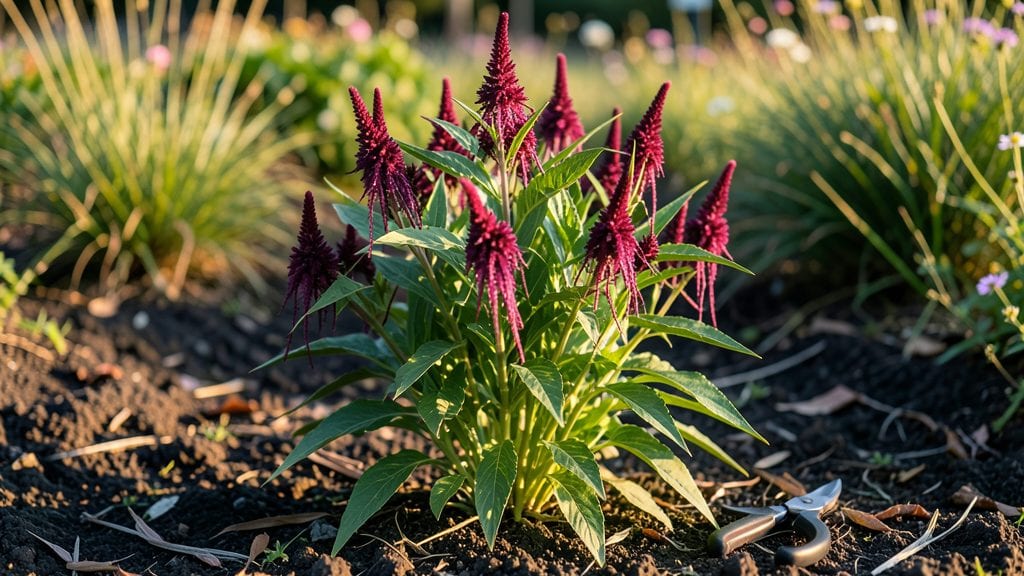
Deciding whether amaranth is annual or perennial depends on the variety: most types are annuals, finishing their life cycle in one season, but some tropical varieties can resprout if pruned back early or thrive in ideal growing conditions.
Amaranth’s classification as an annual stems from its rapid growth cycle—typically 60 to 180 days—where most varieties bolt, flower, and die after producing seeds. 🌱 However, the key to "perennial-like" behavior lies in selective pruning and climate: cutting back foliage before seed formation can trigger regrowth in heat-loving species like Amaranthus tricolor, especially in regions with mild winters.
This isn’t true perennialism, but it extends harvests significantly for patient gardeners.
For example, my tropical amaranth plants in Zone 9 resprouted twice after I trimmed them back in late summer—something that wouldn’t happen with cold-hardy annuals like Swiss chard.
The trick is balancing growth signals: too much stress (like frost) shuts down regrowth entirely, while consistent warmth and moisture keeps the plant flexible.
💡 In This Article
- Amaranth Growth Cycle Explained
- Maximizing Amaranth Regrowth in Your Garden
Amaranth growth cycle explained
Amaranth’s life cycle unfolds in four distinct stages, each governed by photoperiodism—the plant’s response to daylight length. It begins with germination, where seeds sprout within 5-14 days under optimal conditions (warm soil at 70-80°F and consistent moisture).
The seedling phase lasts 2-3 weeks, during which the plant develops its first true leaves and establishes a shallow but extensive root system, often spreading 12-18 inches wide by maturity. 🌱 This rapid root development explains why amaranth thrives in poor soils—its fibrous roots access nutrients efficiently.
The vegetative growth stage dominates the first 6-8 weeks, where amaranth shifts into high gear, growing 1-2 feet per week under ideal conditions. This is when gardeners harvest leaves for greens, as the plant prioritizes leaf production over flowering.
Unlike perennials like basil (which grows continuously), amaranth’s growth is fueled by stored energy from its taproot, allowing it to reach 5-7 feet in height within 8-10 weeks.
The key difference here is that perennials allocate energy to underground storage organs (rhizomes, bulbs), while amaranth directs all resources toward above-ground biomass.
Flowering begins when daylight shortens, triggering the plant’s reproductive phase—a process called bolting. Most varieties flower in 8-12 weeks, producing dense, feathery seed heads that can reach 12-18 inches long.
This shift from leaf to flower production is why amaranth is classified as an annual: once it bolts, the plant’s primary goal shifts from growth to seed production, which signals the end of its vegetative life. 🌿 The seed heads contain thousands of tiny, nutrient-rich seeds, but the plant’s energy reserves are nearly exhausted by this stage, leading to senescence (the dying-back process).
What sets amaranth apart from true perennials like dill (which regrows from a persistent root crown) is its lack of dedicated overwintering structures.
Instead, tropical varieties exploit their fast growth cycle: if you prune back the flowering stalks before seed set, the plant may redirect energy to lateral shoots, producing a second flush of leaves. This isn’t true perennialism—it’s more like a reset button.
For comparison, basil (a perennial in warm climates) grows from a woody stem base, while amaranth relies on basal meristems (growth points at the plant’s base) that can reactivate under ideal conditions.
The seed set stage is the final act, where the plant’s energy is entirely focused on seed production. A single amaranth plant can yield 50,000-100,000 seeds, which explains its invasive potential in some regions.
These seeds contain 16-18% protein and are a staple in traditional diets, but their production marks the plant’s biological endpoint. Unlike perennials, which store energy for next year’s growth, amaranth’s life cycle is a sprint—not a marathon.
This is why most gardeners treat it as an annual, despite the occasional regrowth trick.
Here’s where the science gets fascinating: amaranth’s rapid growth is tied to its C4 photosynthesis pathway, which is more efficient in hot, dry conditions than the C3 pathway used by most perennials.
This adaptation allows amaranth to outcompete slower-growing plants in poor soils, but it also means the plant’s entire energy budget is spent on current-year growth rather than long-term survival. 💫 In contrast, perennials like dill invest in root systems that persist year after year, while amaranth’s strategy is to reproduce quickly and abundantly before its environment changes (e.g., cooler temperatures or drought).
Understanding these stages helps explain why amaranth behaves differently from true perennials. While you won’t get multiple harvests from a single plant like you would with asparagus, selective pruning can extend the leaf-producing phase—especially in tropical varieties. The trade-off?
You’re essentially resetting the plant’s clock, not creating a perennial. For gardeners in mild climates, this means amaranth can be treated as a semi-perennial with careful management, but it’s still fundamentally an annual in its botanical classification.