
Plants
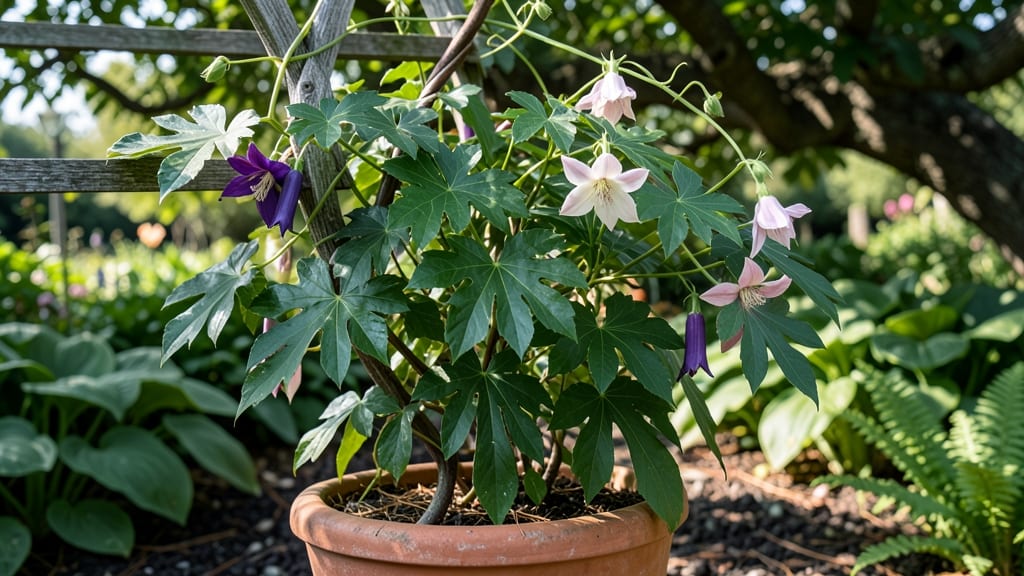
That five-lobed leaf vine climbing your trellis isn’t just fast—it’s a sun-loving powerhouse that transforms bare walls into lush green curtains in weeks. 🌿 I’ve grown Cobaea scandens (cup-and-saucer vine) and Cardiospermum halicacabum (balloon vine), and both deliver those signature deep green, maple-like leaves paired with dramatic flowers.
The secret to their rapid growth? Full sun, consistent moisture, and a sturdy support system that won’t snap under their weight. The balloon vine produces paper-thin seed pods that look like tiny parachutes, while Cobaea offers bell-shaped white flowers that glow at dusk.
Both thrive in well-draining soil and moderate water—never soggy roots. If your vine slows down, it’s likely thirsty or root-bound, not lazy. A quick check of the soil and a gentle prune can send it back into turbo-growth mode.
By summer’s end, you’ll have a 10-foot vertical garden teeming with life, attracting hummingbirds and butterflies. The key is pruning in early spring to shape growth and fertilizing lightly during bloom season. Even in cooler climates, these vines bounce back year after year with minimal fuss.
Perfect for trellises, arbors, or even balcony railings—just give them 6+ hours of sun and watch them race upward like nature’s own green curtain.
Unusual Leaf Shapes Explained
Understanding why your 5-lobed leaf vine (likely a Parthenocissus quinquefolia or similar) develops irregular or unexpected leaf patterns starts with recognizing the plant’s natural growth triggers. While these vines are prized for their bold foliage, environmental and biological factors can influence leaf shape—sometimes in surprising ways.
Let’s break down the key reasons behind these variations, so you can address them with confidence.
Not all vines are created equal—even within the same species! Genetic diversity plays a huge role in leaf morphology.
If your vine’s leaves deviate from the classic five-lobed pattern (think fewer lobes, jagged edges, or asymmetrical shapes), it may simply be expressing a natural genetic trait passed down from its parent plant or seed source.
- Wild vs. Cultivated Varieties: Some vines grown from wild seeds or heirloom cuttings may exhibit more irregular shapes than hybrid or commercially bred plants. - Hybrid Influence: If your vine was propagated from a grafted cutting (common in nurseries), it might carry traits from both parent plants, leading to unexpected leaf structures. - Actionable Tip: If you’re growing from seed, expect more variability.
For consistent foliage, opt for named cultivars or rooted cuttings from a trusted source.
As a sun-loving climber, your vine thrives in bright conditions—but too much (or too little) sunlight can warp its growth patterns. Leaf shape adjustments are a survival mechanism when the plant experiences stress.
- Excessive Sunlight:
- Leaves may develop smaller, thicker lobes or even sunburnt edges (brown or crispy tips).
- Why? The plant reduces surface area to minimize water loss in harsh conditions.
- Fix: Provide afternoon shade (especially in hot climates) or use a light sheer curtain for young vines.
- Insufficient Light:
- Leaves might grow larger, fewer lobes, or stretch toward light sources (etiolation).
- Why? The vine prioritizes reaching light over energy-intensive leaf development.
- Fix: Relocate to a sunnier spot (6+ hours of direct sun) or supplement with a grow light indoors.
Water and soil nutrients are the backbone of healthy leaf formation. When either is off-kilter, your vine may respond with abnormal lobing, yellowing, or stunted growth.
- Overwatering or Poor Drainage:
- Leaves may develop mushy, distorted lobes or yellow patches (a sign of root rot).
- Why? Excess moisture suffocates roots, starving the plant of oxygen and nutrients.
- Fix: Ensure pots have drainage holes and use a well-draining soil mix (e.g., 60% potting soil + 30% perlite + 10% compost).
- Underwatering or Drought Stress:
- Lobes might curl inward or appear dry and brittle.
- Why? The plant conserves water by reducing leaf surface area.
- Fix: Water deeply 1–2 times per week (adjust for climate) and mulch to retain moisture.
- Nutrient Deficiencies:
- Nitrogen (N) deficiency: Pale green or yellow leaves with fewer lobes (the vine can’t support complex growth).
- Magnesium (Mg) deficiency: Interveinal yellowing (between lobes) and weak structure.
- Fix: Fertilize with a balanced 10-10-10 formula in spring/summer or use Epsom salt (for magnesium) every 4–6 weeks.
Pests and pathogens don’t just damage leaves—they alter growth patterns as the vine diverts energy to recovery.
Common culprits include: - Spider Mites: Feed on leaf sap, causing stippled, distorted lobes and webbing. - Japanese Beetles: Chew irregular holes in leaves, leading to asymmetrical regrowth. - Fungal Infections (e.g., Powdery Mildew): Create white, crusty patches that disrupt normal lobing. - Fix: - Preventively: Spray leaves with neem oil or insecticidal soap weekly during peak pest seasons. - Treat Infestations: Use horticultural oil for mites or fungicide (like copper-based sprays) for mildew.
Extreme temperatures—whether heatwaves or early frosts—can shock your vine into producing stress leaves with irregular shapes.
- Heat Stress (Above 90°F/32°C):
- Leaves may bleach, scorch, or develop fewer lobes as the plant conserves water.
- Fix: Provide dappled shade and increase watering frequency.
- Cold Stress (Below 32°F/0°C):
- New growth might emerge smaller or lobeless until temperatures stabilize.
- Fix: Protect young vines with frost cloth or grow in microclimates (e.g., near south-facing walls).
- Seasonal Transition:
- In fall, some vines naturally produce simpler leaves as they prepare for dormancy.
- Fix: Prune back irregular growth in late winter to encourage fresh, healthy foliage in spring.
Accidental harm—whether from wind, animals, or improper trimming—can trigger compensatory growth with odd leaf shapes.
- Broken or Torn Leaves:
- The vine may regrow smaller, less lobed leaves to minimize damage.
- Fix: Avoid heavy pruning during active growth; opt for light shaping in early spring.
- Over-Pruning:
- Cutting back too aggressively can stimulate "water sprouts" (fast, weak growth with simple leaves).
- Fix: Prune no more than 1/3 of the vine at a time, and always cut just above a leaf node.
External chemicals or internal hormonal shifts can also tweak leaf development.
- Herbicide Drift:
- If nearby lawns or gardens use glyphosate or 2,4-D, your vine may absorb residues, leading to deformed or stunted leaves.
- Fix: Move the vine at least 10 feet away from treated areas.
- Hormone Imbalances:
- Overuse of rooting hormones (e.g., on cuttings) or growth regulators can cause abnormal lobing.
- Fix: Use hormones sparingly and follow label instructions.
Most leaf shape irregularities in your 5-lobed vine are correctable with targeted care. Start by assessing:
- Light levels (too much or too little?).
- Watering habits (drought or soggy soil?).
- Pest/disease signs (check undersides of leaves).
- Pruning history (overdone or timed poorly?).
By addressing the root cause, you’ll help your vine bounce back with bold, symmetrical foliage—just as nature intended! 🌿✨
Quick Fixes for Common Vine Issues
Growing a 5-lobed leaf vine (like Cobaea scandens or Parthenocissus quinquefolia) is rewarding, but pests, diseases, and environmental stressors can slow its sun-loving climb. Here’s how to diagnose and solve the most common problems—plus tips to keep your vine thriving.
If your vine’s leaves look ragged, sticky, or covered in webbing, pests are likely the culprit. Act fast to prevent spread.
🔥 Aphids or Spider Mites
Signs: Curling leaves, sticky residue (honeydew), or fine webbing. Fix:
- Spray with neem oil (1 tsp per quart of water) or insecticidal soap (follow label rates).
- Blast off pests with a strong spray of water to dislodge them.
- Introduce natural predators like ladybugs or lacewings if the infestation is mild.
Prevention: ✔ Inspect new plants before bringing them home. ✔ Encourage beneficial insects by planting marigolds or basil nearby. ✔ Prune regularly to improve airflow and reduce hiding spots.
🍳 Caterpillars or Leaf Beetles
Signs: Large holes in leaves, frass (chewed-up debris), or adult beetles crawling on foliage. Fix:
- Handpick larvae (drop them in soapy water) during early morning when they’re sluggish.
- Use Bt (Bacillus thuringiensis)—a natural bacterial spray safe for pets and pollinators.
- Apply diatomaceous earth (food-grade) around the base to deter crawling insects.
Prevention: ✔ Install row covers if planting seeds outdoors to block egg-laying adults. ✔ Remove fallen leaves where larvae might overwinter.
Your vine may be struggling if it’s not getting the right conditions—especially since it’s a sun-loving climber.
💧 Overwatering or Poor Drainage
Signs: Yellowing leaves, mushy stems, or roots sitting in water. Fix:
- Check soil moisture—stick your finger 1–2 inches deep; water only if dry.
- Repot or amend soil with perlite or sand to improve drainage.
- Ensure pots have drainage holes if growing in containers.
Prevention: ✔ Water deeply but infrequently—let the top 2 inches of soil dry out between waterings. ✔ Use raised beds or containers if your garden retains too much moisture.
☀️ Too Much or Too Little Sun
Signs: Bleached leaves (sunburn) or leggy, weak growth (etiolation). Fix:
- Move potted vines to a spot with morning sun + afternoon shade (or dappled sunlight).
- Prune leggy stems to encourage bushier growth.
- Use shade cloth (30–50%) if growing in intense afternoon sun.
Prevention: ✔ Choose the right location—most 5-lobed vines thrive in partial shade to full sun (adjust based on your climate). ✔ Train vines on a trellis to avoid overcrowding, which can block light.
Fungal issues thrive in humid, stagnant conditions. Catch them early to save your vine.
🍎 Powdery Mildew or Leaf Spot
Signs: White powdery coating, brown spots with yellow halos, or leaf drop. Fix:
- Spray with a baking soda solution (1 tsp baking soda + 1 tsp dish soap + 1 quart water).
- Apply copper fungicide (like Bordeaux mixture) for severe cases.
- Remove and destroy infected leaves to prevent spread.
Prevention: ✔ Space plants 3–4 feet apart for airflow. ✔ Water at the base (avoid wetting foliage) and water early in the day so leaves dry quickly.
🌱 Root Rot or Stem Rot
Signs: Black, mushy stems, wilting despite moist soil, or foul odor. Fix:
- Trim away rotted sections with sterilized scissors, leaving healthy tissue.
- Repot in fresh, sterile potting mix with added perlite.
- Hold off on watering until the soil dries out completely.
Prevention: ✔ Avoid overpotting—use containers with adequate drainage. ✔ Mulch lightly (1–2 inches) to retain moisture without suffocating roots.
- 🌿 Prune in early spring to shape the vine and encourage flowering.
- 🍂 Winter prep: Mulch heavily around the base if in a cold climate (most vines are hardy but benefit from protection).
- 🌱 Fertilize lightly in spring with a balanced, slow-release fertilizer (10-10-10).
Pro Tip: 💡 When in doubt, mimic the vine’s natural habitat—moist but well-drained soil, partial shade to full sun, and support for climbing! Most issues stem from mismatched growing conditions, so observe and adjust.
Frequently asked questions
What are the most common types of 5-lobed leaf vines?
The two most popular varieties are Cobaea scandens (cup-and-saucer vine) with its striking bell-shaped white flowers, and Cardiospermum halicacabum (balloon vine) known for its unique seed pods. Both feature those signature deep green, maple-like leaves and thrive as fast-growing climbers.
How fast do these vines grow in ideal conditions?
Under perfect conditions—full sun, consistent moisture, and sturdy support—these vines can grow 10+ feet per season. The cup-and-saucer vine often reaches maturity faster, while balloon vine may take slightly longer to establish its full vertical reach. Regular pruning can help maintain a manageable size.
Can I grow a 5-lobed leaf vine indoors?
Yes, but with limitations! Place your vine near a south-facing window or supplement with a grow light for 6+ hours daily. Use a trellis or sturdy support, and keep the soil consistently moist. Expect slower growth indoors compared to outdoor conditions.
How do I prune to encourage more flowers?
Prune in early spring before new growth begins, cutting back 1/3 of the vine to a healthy leaf node. This stimulates bushier growth and more abundant flowering. Avoid heavy pruning in late summer, as it may reduce fall blooms. Always use sterilized tools to prevent disease.
Are these vines toxic to pets or humans?
Both Cobaea scandens and Cardiospermum halicacabum are considered non-toxic to humans and pets. However, always supervise pets around new plants, as some animals may nibble on leaves. The vines are safe for edible gardens and family-friendly landscapes.