
Flowers
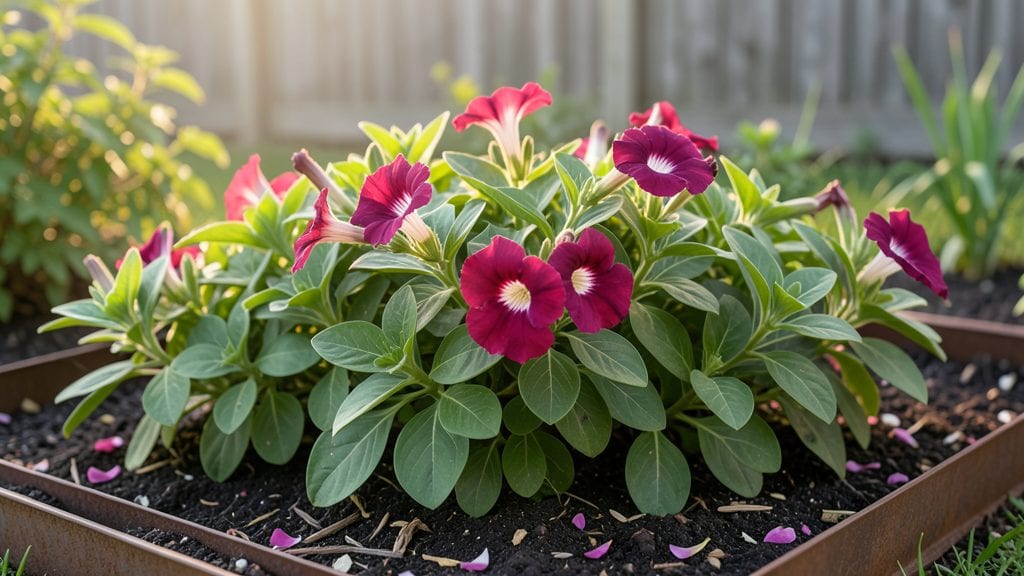
Four o’clock flowers perennials thrive in warm climates, blooming late afternoon to evening with vibrant trumpet-shaped blossoms in shades of pink, red, or yellow. They prefer full sun, well-drained soil, and moderate watering, making them ideal for USDA zones 9-11 with winter protection in cooler regions.
These striking perennials earn their name from their unique habit of opening only when the sun begins to set, typically between 4 PM and 6 PM. 🌅 The reason behind this behavior is fascinating: their blooms are highly sensitive to light and temperature shifts, which trigger the opening mechanism.
This nocturnal display attracts evening pollinators like moths and bats, giving them a competitive edge in their natural habitat. What's even more interesting is that they close again by morning, conserving moisture—a smart adaptation for arid climates.
Beyond their dramatic blooming schedule, these plants are surprisingly low-maintenance once established. The key to keeping them thriving lies in mimicking their native conditions: bright sunlight, fast-draining soil, and infrequent but deep watering.
In regions outside their preferred zones, gardeners often overwinter them by digging up tubers or providing heavy mulch to protect against frost. Their ability to bounce back year after year makes them a favorite among gardeners seeking both beauty and resilience.
💡 In This Article
- Understanding Four O’Clock Flower Bloom Cycles
- Planting and Maintaining Four O’Clock Flowers Year-Round
Understanding four o’clock flower bloom cycles
Here's what's actually happening with those iconic trumpet-shaped blooms: four o'clock flowers use a biological clock tied to photoperiodism—their response to daylight duration. The key trigger is the gradual drop in light intensity as the sun sets, combined with rising evening temperatures (typically between 75-85°F).
Their petals contain specialized cells that expand when exposed to warmth after a period of light deprivation, causing the buds to unfurl dramatically. This process is called thermonasty, where heat acts as the catalyst for opening, while cooler morning temperatures cause the flowers to close again.
Their evening bloom schedule isn't random—it's an evolutionary adaptation to attract nocturnal pollinators like sphinx moths and bats. Studies show these flowers produce stronger fragrances after sunset (up to 30% more volatile compounds) to lure night-flying visitors.
Morning-closing conserves moisture in their native arid habitats, where daytime temperatures can exceed 100°F—preventing water loss through transpiration. The contrast between their daytime dormancy and evening display creates one of nature's most striking circadian rhythms, similar to how moonflowers time their blooms but with a heat-sensitive twist.
Seasonally, these perennials follow a clear growth pattern: they emerge from dormancy in early spring (when soil temps reach 60°F), develop foliage through summer, then focus energy on flowering from late spring to early fall.
The blooming peak occurs during long summer days (14+ hours of light) because the plants need sufficient daylight to build energy reserves. What most people don't realize is that their underground tubers store nutrients year-round—this explains why they can rebound so quickly after winter dormancy in cooler zones.
Temperature plays a critical role in their flowering triggers. Below 65°F, buds remain closed even at dusk, while consistent 80°F+ evenings guarantee full blooms. This explains why they struggle in marginal zones (like USDA 8) unless protected—cooler nights prevent the necessary heat shock.
The flowers' color intensity also shifts with temperature: red varieties deepen in heat, while pinks may lighten, creating a visual spectrum that changes throughout the day. This thermal sensitivity makes them excellent bioindicators for climate studies.
Comparing their blooms to morning flowers like lilies reveals fascinating differences: while lilies open with sunlight (using phototropism), four o'clock flowers rely on thermotropism—their response to temperature changes after dark.
This dual sensitivity explains why they're often found in semi-arid regions where daytime heat would dry out morning bloomers. Their trumpet shape funnels pollen directly to moths' bodies, creating an efficient transfer system that morning flowers can't match.
Their seasonal cycle also includes a clever moisture-conservation strategy: after blooming, the plants drop their flowers by late afternoon the next day, preventing water loss through evaporation.
This rapid senescence (programmed death of flowers) is another heat adaptation—it redirects the plant's energy back to root and tuber development for winter survival. Gardeners in cooler climates can exploit this by harvesting tubers before first frost, then storing them at 50-55°F with minimal moisture until replanting in spring.