
How To
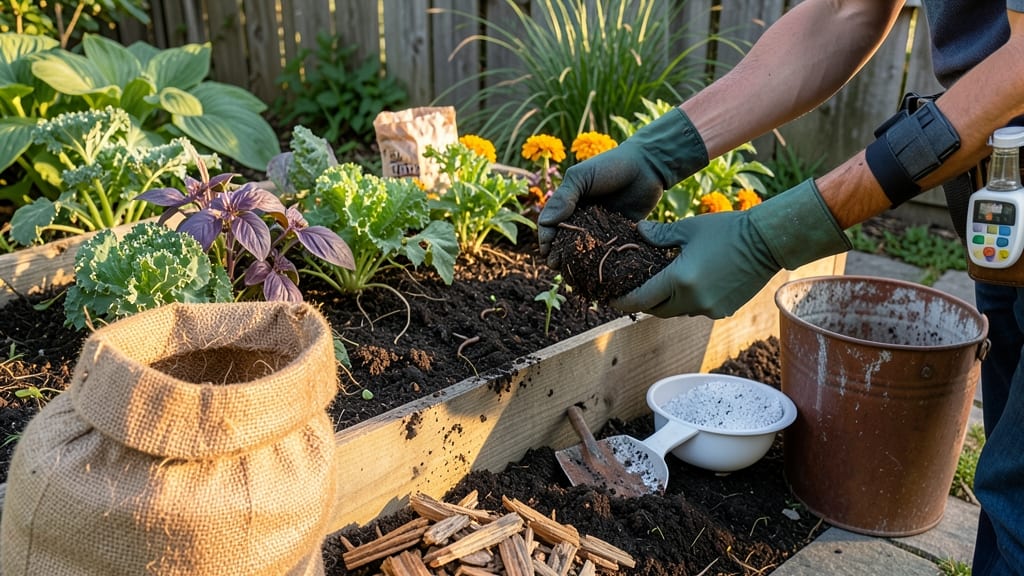
Adding the right mix to raised bed soil means incorporating compost (30-50%) for nutrient density, aged manure (10-20%) for long-term fertility, and sand or perlite (10-15%) to improve drainage—adjust these ratios based on what you're growing, whether it's heavy feeders like tomatoes or moisture-sensitive crops such as carrots.
Raised bed soil thrives when you customize the mix to match your plants' needs. 🌱 Compost acts like a nutrient powerhouse, feeding microbes that break down organic matter into plant-accessible forms, while aged manure provides slow-release nitrogen without burning roots.
For plants that hate soggy soil—like carrots or radishes—adding perlite or coarse sand creates air pockets that prevent compaction. I've found that layering these amendments (starting with compost at the bottom) helps create a stable foundation while giving roots room to grow downward.
Don't forget about texture—heavy clay soil benefits from more sand, while sandy soil needs extra compost to hold moisture.
For acid-loving plants like blueberries, mix in pine needles or sulfur to adjust pH. The key is testing your soil first: a simple pH kit or visual inspection (dark, crumbly soil is ideal) will tell you where to focus your amendments.
💡 In This Article
- How Organic Matter Ratios Affect Raised Bed Soil Health
- Plant-Specific Soil Mixes for Raised Beds
How organic matter ratios affect raised bed soil health
Compost transforms raised bed soil by reviving microbial ecosystems. When you mix in 30-50% compost, you're essentially feeding billions of beneficial bacteria and fungi that break down organic matter into plant-accessible nutrients like nitrogen, phosphorus, and potassium.
These microbes also produce enzymes that unlock additional nutrients from the soil itself. Think of compost as a living ecosystem—it doesn't just add nutrients, it creates the conditions for soil to become more fertile over time.
The dark, crumbly texture of well-aged compost also improves soil structure, creating tiny air pockets that roots can explore.
Manure works differently by providing a steady supply of nitrogen through slow decomposition. Cow or horse manure (aged for at least 6 months) adds organic matter while releasing nutrients gradually, preventing the rapid nutrient spikes that can burn young plants.
The key is using 10-20% aged manure—fresh manure can overheat the soil and harm roots. For nitrogen-loving plants like leafy greens or corn, you might increase this to 25%, while fruiting plants like tomatoes benefit more from balanced compost ratios.
The difference in texture is noticeable too—manure contributes to a looser, more friable soil structure compared to the fine particles of compost.
Sand or perlite serves a completely different purpose by improving soil aeration. When you incorporate 10-15% perlite, you're creating air channels that help roots breathe, especially important in heavy clay soils where compaction is a problem.
The porous nature of perlite also helps with moisture retention without creating waterlogged conditions. For sandy soils, you'd reduce this to 5-10% since they already drain too quickly.
The visual difference is striking—soil with proper aeration has a lighter, almost fluffy appearance when tilled, compared to dense, compacted soil that resists breaking apart.
Plant type dramatically affects these ratios. Heavy feeders like tomatoes need more compost (40-50%) and balanced nutrients, while moisture-sensitive crops like carrots benefit from more perlite (15-20%) to prevent rot. Flowers often prefer lighter mixes with 20-30% compost and 20% perlite to encourage root spread.
The science here involves understanding each plant's root structure—deep-rooted plants need more organic matter for volume, while shallow-rooted plants benefit from finer textures that hold moisture near the surface.
Don't overlook the importance of layering. Start with 4-6 inches of compost at the bottom for nutrients, then add 2-3 inches of manure mixed with native soil, and top with 1-2 inches of perlite or sand**. This creates a stable foundation while allowing roots to penetrate different soil layers.
The microbial activity increases most dramatically in the top 6 inches, which is why most plant roots concentrate there. For container gardens or small raised beds, you can even pre-mix these ratios before planting to ensure consistency throughout the growing season.
Testing your soil's current composition makes all the difference. A simple jar test (fill a jar with soil and water, then observe settling patterns) reveals texture—sandy soil settles quickly, clay stays suspended.
For pH adjustments, consider adding lime for acidity or sulfur for alkalinity, especially for acid-loving plants like blueberries. The goal is creating a soil profile that mimics the natural forest floor—rich in organic matter, well-aerated, and teeming with microbial life that continuously improves soil health over time.