
Companion Plants
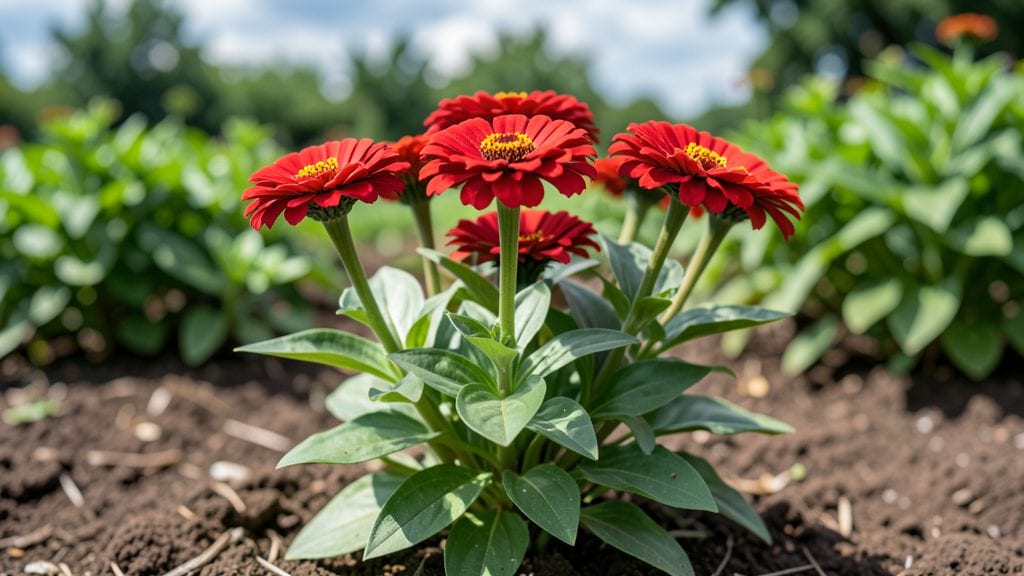
Annual and perennial plants mean their growth patterns differ completely: annuals live, bloom, and die in a single season, while perennials return year after year from their roots, often growing stronger with age.
Understanding these terms helps you plan your garden like a pro. Annuals like zinnias or basil deliver quick color and harvests but require replanting each spring, while perennials such as peonies or coneflowers establish themselves over time, rewarding you with decades of blooms. 🌱 The tradeoff?
Annuals give you instant gratification, while perennials offer long-term beauty with less annual maintenance. Many gardeners mix both for seasonal variety and low-effort structure.
Here's the kicker: perennials store energy underground during winter, letting them bounce back stronger each year, while annuals focus all their energy on producing seeds before dying. This biological difference affects everything from planting schedules to soil prep—knowing which is which can save you time and frustration.
💡 In This Article
- Annual vs Perennial Plant Life Cycles Explained
- Best Annual and Perennial Plants for Your Garden
Annual vs perennial plant life cycles explained
Here's what's actually happening beneath the soil: annuals follow a fast-track life cycle that prioritizes rapid growth and seed production within 90-180 days, depending on the species. Their entire energy goes into developing flowers, fruits, or seeds before winter kills them.
Take sunflowers as an example—they can grow 10-12 feet tall in just 3 months, all while storing minimal energy underground. This aggressive growth strategy makes them ideal for short-season climates where plants must complete their cycle before frost.
The key difference lies in their root systems. Annuals typically develop shallow, fibrous roots that focus on quick nutrient absorption rather than long-term storage. Perennials, however, invest heavily in deep taproots or rhizomes that can store 30-50% more carbohydrates than annual roots.
These underground reserves act like a biological battery, fueling regrowth each spring. Consider peonies—their thick roots can live for decades, producing flowers for 50+ years with proper care, while their annual counterparts would need replanting every year.
What most people don't realize is how temperature triggers these different survival strategies. Annuals rely on cold-sensitive seed dormancy—their seeds lie dormant until warm soil signals spring, then germinate rapidly.
Perennials, however, use cold stratification to break dormancy in their buds, which is why many perennials bloom earlier than annuals in spring. This biological timing explains why perennials often establish themselves before annuals even sprout in cooler climates.
The tradeoff becomes clear when examining energy allocation. Annuals dedicate 80-90% of their energy to above-ground growth and reproduction, while perennials split their resources between foliage, flowers, and root storage.
This explains why perennials like lavender have woody stems that persist year-round—they're essentially storing water and nutrients in their structural tissues. Annuals, meanwhile, prioritize seed production over structural resilience, which is why they collapse after setting seed.
Consider the gardening implications: annuals give you immediate visual impact (think marigolds blooming in 6-8 weeks), while perennials offer long-term landscape structure.
The science behind this involves photosynthesis efficiency—annuals maximize leaf surface area for quick energy capture, while perennials develop evergreen or semi-evergreen foliage that continues photosynthesizing even in mild winters. This explains why perennials like hostas can thrive with minimal spring care while annuals require constant replanting.
One fascinating exception is biennials, which blend both strategies—they grow leaves in their first year (like perennials) but flower and die in the second (like annuals).
This hybrid approach shows nature's flexibility in survival strategies. 🌱 For gardeners, recognizing these patterns means you can design gardens that combine the quick rewards of annuals with the low-maintenance beauty of perennials, creating layers of interest across seasons.