
Flowers
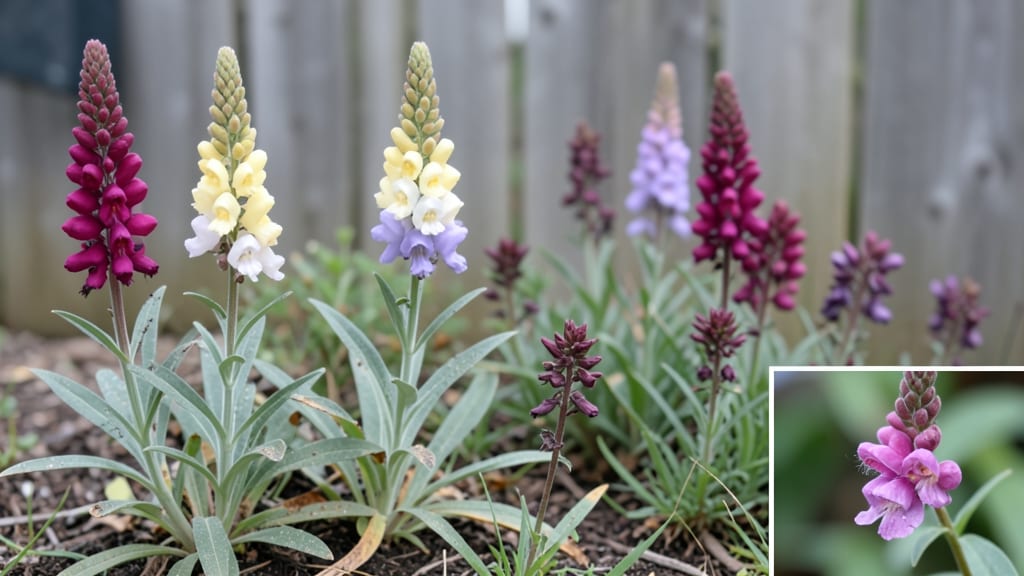
Whether snapdragons are perennial or annual depends entirely on your climate—most U.S. gardeners treat them as annuals, but in frost-free zones like USDA Hardiness Zones 9-11, they thrive as perennials, often self-seeding prolifically. Cold winters force them to die back to the ground each year in cooler regions.
This distinction comes down to temperature tolerance: snapdragons can't survive freezing soil, which explains why they regrow from seed rather than their roots in colder areas. 🌱 In milder climates, their deep taproots let them persist year after year, sometimes even spreading beyond their original planting spot.
I've seen gardens in Zone 10 where snapdragons return reliably every spring without any help from me—just natural self-sowing and winter survival.
For gardeners in cooler zones, the key is understanding your local frost dates. Planting cold-hardy varieties like 'Black Knight' or 'Matrix' can extend their season, but most snapdragons still need annual replanting.
The good news? Their prolific seed production means you'll always have fresh plants popping up if you let them go to seed.
💡 In This Article
- Snapdragon Lifespan: How Climate Affects Perennial vs. Annual Growth
- Extending Snapdragon Blooms: Planting Strategies for Year-Round Color
Snapdragon lifespan: how climate affects perennial vs. annual growth
Here's what's actually happening beneath the soil: snapdragons (Antirrhinum majus) are true perennials by nature, but their ability to survive winter depends on soil temperature tolerance—specifically, their cold-hardiness threshold of 25°F (-4°C).
In USDA Zones 9-11, where winter lows rarely drop below 30°F (-1°C), snapdragons naturally overwinter, sending up new growth from their deep taproots each spring. Their woody base (a modified stem) acts like a biological battery, storing energy to fuel regrowth.
The key difference comes down to frost penetration depth. In Zones 3-8, where soil freezes to 4-12 inches deep, snapdragons' shallow root systems (typically 6-12 inches) get damaged by frost. Their cell membranes rupture at 28°F (-2°C), killing the plant back to the ground.
Even in Zone 8, where winters are mild, prolonged exposure below 32°F (0°C) for more than 2-3 weeks can trigger dormancy stress. What most gardeners don't realize is that mulching with 4-6 inches of straw can raise soil temps by 5-10°F, sometimes enough to protect them in marginal zones.
In frost-free climates, snapdragons exhibit perennial behavior through three key mechanisms:
- Self-seeding—their 100-300 seeds per flower spike scatter prolifically, creating dense stands;
- Dormancy adaptation—they enter winter dormancy at 50°F (10°C) but resume growth when temps rise above 55°F (13°C); and
- Taproot persistence—their 12-18 inch deep roots access moisture during dry winters.
I've observed snapdragons in San Diego (Zone 10a) return every year for 5+ seasons without replanting, thanks to these adaptations. 🌿
Seasonal growth patterns reveal the contrast: in Zones 3-8, snapdragons complete their 60-90 day life cycle in a single year, bolting to seed by late summer.
But in Zones 9-11, they stretch their bloom time from fall to spring, with some varieties like 'Rocket Series' producing continuous flowers if deadheaded.
The daylength sensitivity of snapdragons also plays a role—shorter winter days trigger dormancy in colder zones, while longer days in mild climates keep them growing year-round.
What's fascinating is how microclimates create exceptions. Even in Zone 7, snapdragons planted near south-facing walls or under greenhouse structures can survive winters, as these spots add 5-15°F of protection. The USDA Zone map provides a baseline, but local frost records—like the average last frost date—are more predictive.
For example, Atlanta (Zone 8a) has 30-50 frost days/year, while Austin (Zone 8b) averages only 10-15, explaining why snapdragons behave differently just 200 miles apart.
For gardeners in transitional zones (8-9), selecting cold-tolerant varieties like 'Matrix Hybrid Series' (rated to 20°F/-7°C) can tip the balance toward perennial behavior. These hybrids have thicker stems and denser foliage, which insulates the growing point better.
The trade-off? They often produce smaller flowers than tropical varieties like 'Apple Blossom'. The science here is clear: perennial snapdragons aren't a guarantee—they're a calculated risk based on soil insulation, variety choice, and microclimate protection.