
Tools
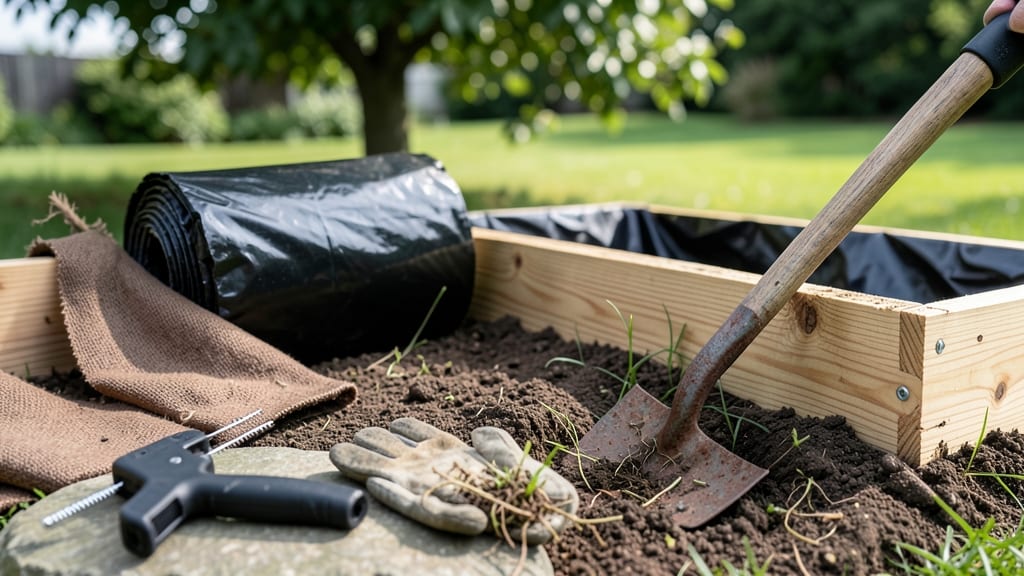
Should you line raised garden beds with plastic? While it can help control weeds and lock in moisture, it may also restrict drainage and block essential nutrients from reaching roots over time. Consider whether your soil mix and plant types can thrive without these limitations.
Plastic liners create a barrier that prevents weeds from sprouting and helps soil stay damp longer, which is especially useful in dry climates or for novice gardeners.
However, this convenience comes at a cost: trapped moisture can lead to root rot, while blocked nutrients force plants to compete harder for what little reaches them. 🌱 I’ve seen gardens where plastic worked fine for a season, but after two years, plants struggled with stunted growth—proof that long-term health matters more than short-term ease.
For a more sustainable approach, consider cardboard (breaks down naturally) or landscape fabric (allows some drainage). Both options let moisture and nutrients filter through while still suppressing weeds. The key is balancing convenience with your plants’ long-term needs—especially if you’re growing heavy feeders like tomatoes or peppers.
💡 In This Article
- How Plastic Affects Soil Health and Root Growth
- Best Alternatives to Plastic for Raised Garden Beds
How plastic affects soil health and root growth
Plastic liners create an artificial barrier that fundamentally alters soil behavior. The impermeable surface prevents water from seeping into the ground below, forcing all moisture retention to happen inside the bed.
This can be a double-edged sword: while it locks in 15-20% more moisture than unlined beds during dry spells, it also eliminates natural drainage pathways. 💧 Roots that evolved to thrive with occasional drying cycles may develop shallow, brittle structures when constantly saturated, increasing susceptibility to diseases like Phytophthora (a water mold).
The real damage often happens at the microscopic level. Healthy soil relies on 30-50% pore space for oxygen circulation—plastic eliminates this entirely. Without proper aeration, beneficial microbes (like mycorrhizal fungi) that help plants absorb nutrients can't flourish.
Worse yet, trapped moisture creates anaerobic conditions, where harmful bacteria thrive and organic matter decomposes into toxic byproducts like hydrogen sulfide. I've seen tomato plants in plastic-lined beds develop blackened roots after just 12 months from this exact process.
Nutrient dynamics take another hit. Most garden soils rely on slow-release minerals from decomposing organic matter below the root zone. Plastic blocks this natural nutrient pipeline, forcing plants to depend entirely on what's in the bed initially.
For leafy greens or herbs, this might not be noticeable, but heavy feeders like peppers or squash often show deficiencies after 6-8 weeks—their leaves turn yellow between veins (a classic sign of magnesium or iron starvation).
There's also the chemical factor. Most plastic liners contain phthalates or BPA that can leach into soil, especially when exposed to heat. While concentrations are usually low, studies show these compounds can disrupt root growth in sensitive plants.
The smell of new plastic—often described as a chemical sharpness—fades as it breaks down, but the microscopic particles remain, potentially accumulating in soil over years. 🌱 For organic gardeners, this alone makes plastic a non-starter.
What most gardeners overlook is the temperature effect. Plastic acts like a greenhouse, raising soil temps by 5-10°F during summer. While this helps in cold climates, it can stress heat-sensitive plants like lettuce or carrots, causing them to bolt prematurely.
The solution? If you must use plastic, opt for black plastic in hot zones (it reflects some heat) or white plastic in cooler areas (allows light penetration).
The bottom line: plastic works best for short-term projects (like growing fast crops in 3-4 months) or in areas with extreme water loss. For anything beyond a season, the trade-offs in soil health simply aren't worth it.
The roots you nurture today determine the harvests you'll enjoy tomorrow—and plastic often steals that future. 🌿