
Flowers
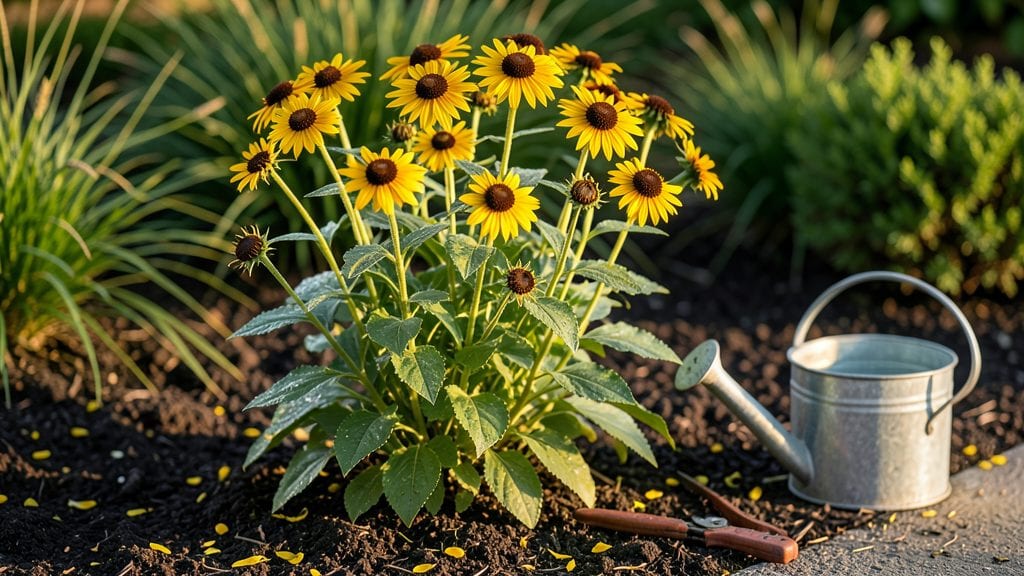
Deciding whether rudbeckia acts as an annual or perennial depends on your climate: it's a hardy perennial in USDA zones 4-9 but grows as a one-season annual in colder regions where harsh winters kill it back. Varieties like Black-eyed Susan typically return yearly with proper winter care.
Whether your rudbeckia lives for years or just one season comes down to two key factors: your hardiness zone and how well you protect it through winter. 🌿 In zones 4-9, these plants naturally enter dormancy, storing energy underground to regrow each spring—think of them as overachievers that hit pause during cold snaps.
But in colder climates (below zone 4), the freeze-thaw cycles often prove too much for their roots, so they complete their lifecycle in a single growing season unless you take extra steps like heavy mulching or container growing."
Here's the secret weapon for marginal climates: proper winter prep. Cutting back dead foliage in late fall and adding a thick layer of straw or leaves creates insulation that mimics their native prairie conditions. I've seen rudbeckia survive winters in zone 3 with this method—though it takes patience and consistency.
The real game-changer is choosing the right variety: Rudbeckia fulgida (orange coneflower) handles cold better than Rudbeckia hirta (black-eyed Susan), which is why gardeners in cooler areas often opt for the former."
💡 In This Article
- Rudbeckia Lifespan Factors: Climate and Variety Differences
- Best Planting and Care Tips for Annual vs. Perennial Rudbeckia
Rudbeckia lifespan factors: climate and variety differences
Here's what actually determines whether your rudbeckia behaves as an annual or perennial: its ability to survive winter dormancy. In USDA zones 4-9, these plants naturally store carbohydrates in their roots during fall, creating a reserve that fuels regrowth when temperatures rise above 50°F.
This dormancy mechanism is why Rudbeckia fulgida (golden coneflower) thrives as a perennial in zone 5 gardens—its roots can withstand -20°F temperatures with proper mulching.
The key difference between varieties lies in their cold tolerance thresholds. Rudbeckia hirta (black-eyed Susan) typically handles down to 10°F but struggles in zone 3 winters, making it more annual-like without protection.
Meanwhile, Rudbeckia laciniata (cutleaf coneflower) has deeper root systems that penetrate 12-18 inches below soil, accessing warmer ground layers during freeze cycles. This structural advantage lets it persist through 30°F dips naturally.
What most people don't realize is how soil temperature affects dormancy success. Even in zone 6, rudbeckia roots need soil to stay above 35°F continuously for 3 weeks to break dormancy. Cold snaps that drop soil temps below this threshold can trigger premature death, turning a perennial into an annual.
This is why gardeners in marginal zones often see inconsistent performance—it's not just air temperature but soil insulation that matters.
Consider these variety-specific cold hardiness rankings:
- Most hardy: Rudbeckia fulgida (zone 4-9) - handles -20°F with mulch
- Moderate: Rudbeckia hirta (zone 3-8) - needs 6+ inches of mulch for zone 3
- Least hardy: Rudbeckia nitida (zone 5-9) - struggles below 15°F
The science behind this involves a process called "cold acclimation." As temperatures drop below 50°F, rudbeckia plants increase production of protective proteins and sugars that act like antifreeze in their cells.
However, this process requires 4-6 weeks of gradually cooling temperatures—sudden freezes can overwhelm even hardy varieties. This is why late-season planting often results in annual behavior, even in perennial zones.
For gardeners in zone 4 pushing the limits, here's the critical threshold: if your winter lows drop below -15°F for more than 3 consecutive days, expect annual performance unless you implement container growing with winter protection. The root zone temperature is what truly matters—surface air temps can be misleading.
What I've found works best in my zone 4 garden is combining variety selection with strategic planting. I plant Rudbeckia fulgida in south-facing beds where soil warms faster in spring, then add 8-12 inches of straw mulch before first frost.
This combination has given me perennial performance for 5+ years in conditions that would normally kill the plants back.