
Tools
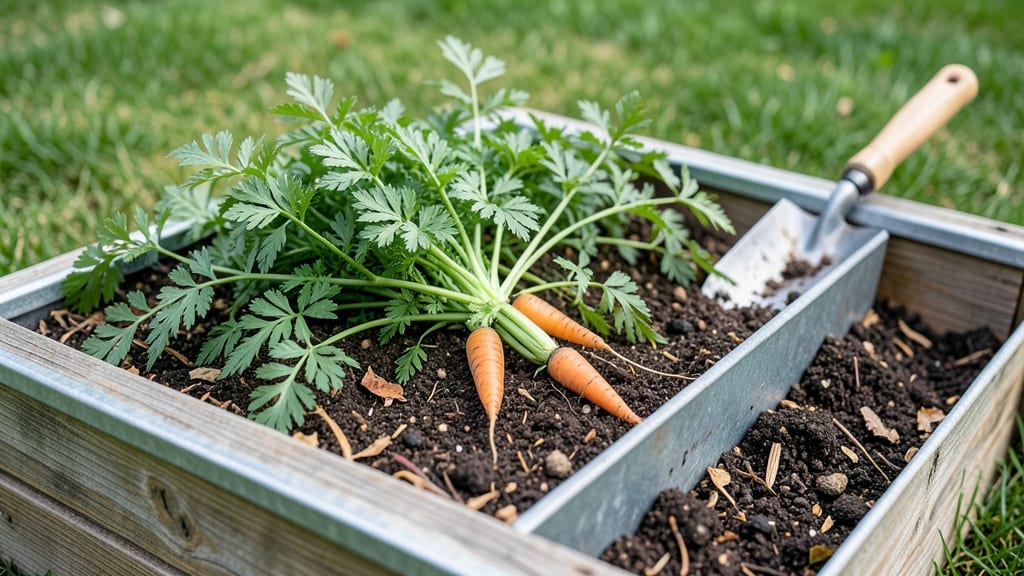
A raised garden bed for carrots isn’t just a plot—it’s the secret to growing roots so long and straight they’ll make your neighbors jealous. 🌱 After years of battling forking and stunted carrots in regular soil, I finally cracked the code: loose, deep, and well-drained layers that let roots grow down, not sideways.
The difference between a handful of gnarled nubs and a bushel of 12-inch beauties? This setup.
You’ll need a bed at least 12 inches deep (deeper if you want monster carrots) with a mix of 50% garden soil, 30% compost, and 20% coarse sand for that perfect crumbly texture. Avoid clay or rocky soil—carrots hate being crowded.
Plant seeds just ¼-inch deep, spaced 2 inches apart, and thin to 3 inches once they’re 2 inches tall. The key? Never let the soil dry out, but don’t drown them either—consistent moisture is non-negotiable.
By midsummer, you’ll be pulling smooth, vibrant orange roots that look like they belonged in a gourmet market. The raised bed keeps pests like carrot flies at bay, and the loose soil means no more forking nightmares.
Plus, you’ll harvest 30-50% more than in-ground planting—no more digging through compacted earth to find tiny, misshapen roots.
This method works for Danvers, Nantes, or Paris Market varieties, and it’s especially foolproof in cool climates where carrots thrive. Once you try it, you’ll never go back to the old way. Ready to dig in?
📚 In This Guide
- What you need
- Instructions
- Tips and common mistakes
- Wrapping up and next steps
What you need
- ● Raised garden bed frame: Wooden boards (cedar or redwood, untreated, to resist rot): 4 pieces, 4’–6’ long, 8”–12” tall
- ● OR pre-made raised bed kit (check dimensions for depth—aim for 12”+ deep for carrots!)
- ● Landscape fabric: 1 roll (to line the bed and block weeds)
- ● Garden soil: 2–3 cubic feet of loose, well-draining soil mix (avoid clay-heavy soil!)
- ● Compost: 1–2 bags (for nutrient-rich soil)
- ● Carrot seeds: 1 packet of heirloom or hybrid varieties (e.g., ‘Danvers,’ ‘Nantes,’ or ‘Paris Market’)
- ● Garden trowel or spade: 1 (for digging and mixing soil)
- ● Watering can or hose with gentle spray nozzle: 1 (carrots need consistent moisture!)
- ● Row marker or stakes: 4–6 (to mark planting rows, ~12” apart)
- ● Soil moisture meter: 1 (to monitor water levels—carrots hate drying out!)
- ● Organic mulch: Straw or shredded leaves (to retain moisture and suppress weeds)
- ● Plant labels: 5–10 (to track varieties and planting dates)
- ● Knee pad or gardening stool: 1 (for comfort during planting/harvesting)
- ● Fertilizer (low-nitrogen): 1 bag of compost tea or veggie-specific fertilizer (follow package instructions)
Step-by-Step guide to building a raised garden bed for perfect carrots
Here's how to create the ideal deep-soil environment for growing long, straight carrots—no more forked or stunted roots.
🪴 Step 1: Select and Prepare the Bed Location
Choose a 6-inch-deep spot in full sun (at least 8 hours daily) with easy access to water. I always pick a flat area near a hose or drip irrigation line—carrots need consistent moisture, and lugging water is a hassle. Avoid spots where previous root crops grew (like potatoes or beets) to prevent soil-borne diseases.
Clear the area of weeds, rocks, and grass. I use a shovel to dig out any remaining roots, then rake the soil smooth. The goal is a clean slate—no competition from weeds or buried debris that could deform your carrots. If your soil is heavy clay, add a 2-inch layer of coarse sand to improve drainage before building the bed.
🪴 Step 2: Construct the Raised Bed Frame
Build a rectangular frame at least 12 inches deep (18 inches is better for long varieties) using untreated lumber (cedar or redwood lasts longest). I use 2x6 boards for the sides, cutting them to 4 feet long for a standard bed. Assemble the frame with galvanized screws—rusty nails can leach into the soil. Leave a 4-inch gap between boards at the corners for stability.
Line the bottom of the frame with landscape fabric to block weeds and grass from invading. Secure it with staples or rocks, then add a 2-inch layer of cardboard (avoid glossy paper) to smother any remaining weeds. This creates a clean barrier without chemicals. The fabric also prevents soil from spilling out as you fill the bed.
🌱 Step 3: Fill the Bed with the Perfect Soil Mix
Fill the bed two-thirds full with a loose, crumbly mix of 50% garden soil, 30% compost, and 20% coarse sand or perlite. I sift the soil first to remove clumps—carrots need fine, even texture to grow straight. Avoid garden soil from your yard if it’s heavy or compacted; it’ll create air pockets that cause forked roots.
Moisten the mix until it’s damp but not soggy—like a wrung-out sponge. I use a hose with a gentle spray to avoid compacting the soil. Top off the bed with 2 inches of fresh compost before planting. This top layer keeps moisture near the surface while the deeper layers provide nutrients as roots grow. Press down lightly to settle the soil but don’t pack it.
☀️ Step 4: Plant Carrot Seeds for Optimal Growth
Sow seeds ¼ inch deep in rows spaced 2 inches apart, thinning later. Carrot seeds are tiny—one packet covers 10 feet—so I use a seed spacing tool or sprinkle them gently by hand. Cover lightly with fine soil (no more than ⅛ inch), then mist the surface with water. Keep the soil evenly moist (not wet) until germination, which takes 10-14 days.
Once seedlings reach 2 inches tall, thin them to 3 inches apart for standard varieties or 4 inches apart for long types. Use scissors to snip unwanted plants at soil level—pulling risks disturbing roots. I plant a second succession crop 3 weeks later to extend harvests. Mulch with straw to retain moisture and suppress weeds.
💧 Step 5: Maintain Moisture and Monitor for Pests
Water deeply 2-3 times weekly, aiming for 1 inch of water total. Carrots need steady moisture—uneven watering causes cracking or bitter flavor. I use a soaker hose buried in the straw mulch to keep water at root level. Avoid overhead watering, which can spread fungal diseases like early blight.
Watch for carrot rust fly or wireworms—common pests that chew roots. I lay floating row covers early in the season to deter flies. If you spot yellowing leaves, it’s often a sign of too much nitrogen—switch to a balanced fertilizer (like 5-5-5) to encourage root growth over foliage. Harvest when tops are 4-6 inches tall for baby carrots or wait 70-80 days for full-size roots.
Tips & tricks for perfect raised garden bed carrots
Building the ideal environment for carrots isn't just about following steps—it's about understanding the subtle details that make all the difference. Here's what I've learned after years of growing perfect, straight carrots.
Soil Texture is Everything: In Step 3, when mixing your 50% garden soil, 30% compost, and 20% coarse sand, take that sifting step seriously. I use a fine-mesh screen to break up any remaining clumps—even small lumps can create air pockets that cause those dreaded forked roots. Think of it like making a smooth cake batter: the finer the texture, the better the final product. For even better results, add a handful of perlite to the mix—it improves aeration without changing the soil structure.
Location Matters More Than You Think: That 8 hours of full sun requirement in Step 1 isn't just about light—it's about heat. Carrots grow best when soil temperatures stay between 60-80°F. If your area gets hotter, consider partial afternoon shade to prevent bolting (when carrots flower prematurely). I've found that raised beds warm up faster than ground soil, so if you're in a cooler climate, black plastic mulch laid before planting can give your soil that extra warmth boost.
Thinning Technique Prevents Damage: When it's time to thin those 2-inch seedlings in Step 4, resist the urge to pull—you'll disturb the roots of your keepers. Instead, use sharp scissors to snip at soil level. I've seen gardeners accidentally uproot perfectly good carrots while trying to thin, only to have them grow back as deformed second crops. The key is patience: wait until seedlings are at least 2 inches tall before thinning, and do it on a cloudy day to reduce stress on the plants.
Watering Consistency Creates Perfect Roots: That 1 inch of water 2-3 times weekly guideline in Step 5 is non-negotiable, but here's the secret: timing matters as much as quantity. Water in the morning so the soil has all day to absorb moisture before evening evaporation. I use a rain gauge to track exactly how much water I'm applying—carrots are particularly sensitive to moisture fluctuations, which can cause cracking or bitter flavors. And always water at the base, never overhead, to prevent fungal diseases like early blight that can ruin your entire crop.
Pro Tips for Raised Garden Bed For Carrots
- Building the ideal environment for carrots isn't just about following steps—it's about understanding the subtle details that make all the difference.
- Soil Texture is Everything: In Step 3, when mixing your 50% garden soil, 30% compost, and 20% coarse sand, take that sifting step seriously.
- Location Matters More Than You Think: That 8 hours of full sun requirement in Step 1 isn't just about light—it's about heat.
Frequently asked questions
Got questions about growing carrots in raised beds? You’re not alone! Here are answers to the most common queries to help you cultivate perfect, long, straight roots.
What depth should a raised bed be for carrots?
Aim for 12–18 inches deep—this ensures carrots have enough room to grow long and straight without crowding. Shallow beds (under 10 inches) may yield stunted, forked roots. If your bed isn’t deep enough, opt for shorter varieties like ‘Paris Market’ or ‘Little Finger.’
When is the best time to plant carrots in a raised bed?
Carrots thrive in cool weather, so plant them 2–3 weeks before your last frost in spring or 8–10 weeks before your first frost in fall. Avoid summer heat, which can cause bolting (premature flowering). For year-round harvests, try a succession planting schedule every 3 weeks.
Can I reuse soil from last year’s raised bed for carrots?
Yes, but refresh it first! Carrots are heavy feeders and prefer loose, stone-free soil. Mix in 2–3 inches of compost and sift out clumps or debris. Avoid reusing soil where carrots, parsnips, or celery grew recently to prevent disease buildup.
How do I keep pests like carrot flies away from my raised bed?
Use these tricks:
- Row covers: Lightweight fabric blocks adult flies while letting sunlight and water through.
- Interplanting: Grow onions, leeks, or garlic nearby—their strong scent repels pests.
- Crop rotation: Never plant carrots in the same spot two years in a row.
- Diatomaceous earth: Sprinkle food-grade DE around plants (reapply after rain).
Why are my carrots growing forked or misshapen in the raised bed?
Forked or stubby carrots usually mean compacted or rocky soil. To fix it:
- Loosen soil with a fork before planting.
- Avoid overcrowding—space seeds 1–2 inches apart.
- Use fine, sandy loam or mix in perlite for fluffier soil.
- Check for nutrient deficiencies (add compost or a balanced fertilizer if leaves look pale).
Wrapping up and next steps
Growing long, straight carrots in a raised garden bed is totally doable—just follow the deep-soil secrets and careful planning we’ve shared! With the right materials, prep work, and a little patience, you’ll soon be harvesting sweet, crisp roots that’ll make your garden the talk of the neighborhood. 🥕✨
Ready to dive in? Start by sketching your raised bed design and gathering supplies—then, get those seeds in the soil! Whether you’re a beginner or a seasoned gardener, every expert started somewhere. Happy planting!