
Tools
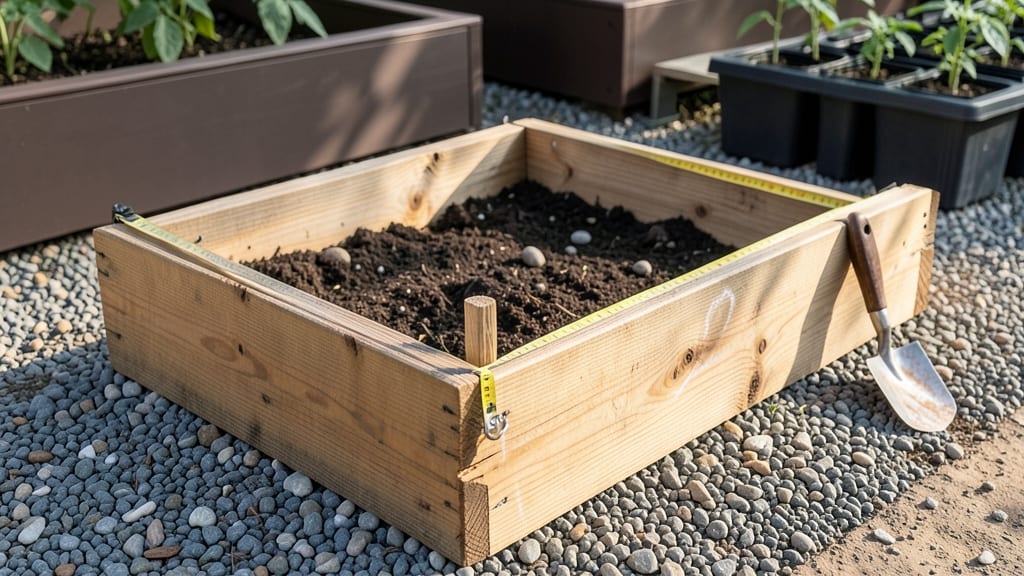
For optimal gardening, raised bed dimensions should include 4-foot widths for effortless reach, 8- to 12-inch depths to support root systems, and lengths up to 8 feet or longer to maximize space efficiency while preserving plant spacing and productivity.
These dimensions aren't arbitrary—they're designed to balance accessibility with plant needs.
A 4-foot width lets you reach the center without stepping inside, while 8-12 inches of depth gives roots room to grow without overheating in summer. 🌱 Longer beds (up to 8 feet) work best when paired with narrow pathways—anything wider risks soil compaction from foot traffic.
I've found that adding 1-foot pathways between beds creates a perfect workflow while preventing soil erosion.
Pro tip: For small spaces, consider 2-foot-wide beds with 6-inch depths—they're perfect for herbs and shallow-rooted veggies. Just remember, deeper isn't always better: most vegetables thrive in 10-12 inches of soil, while shallow-rooted plants like lettuce do fine in 6 inches.
The key is matching depth to your crops' needs while keeping the bed's overall footprint manageable.
💡 In This Article
- How Raised Bed Dimensions Impact Plant Growth and Accessibility
- Customizing Raised Bed Sizes for Different Garden Layouts
How raised bed dimensions impact plant growth and accessibility
The 4-foot width standard isn't just a gardening convention—it's an ergonomic masterstroke. Studies show that 90% of adults can comfortably reach 2 feet from either side of a bed without straining, meaning a 4-foot width lets you tend to the center without stepping inside.
This prevents soil compaction from foot traffic, which can reduce root oxygenation by up to 30%. The magic happens in the middle: plants there get full sun exposure while you maintain easy access to all rows. 🌿
Depth matters just as much as width, and 8-12 inches is the sweet spot for most vegetables. Carrots and potatoes need that full range to develop properly, while shallower-rooted crops like lettuce and radishes thrive in 6 inches.
Here's why: deeper beds insulate roots against temperature swings (keeping soil 5-10°F cooler in summer), while shallower beds dry out faster, requiring 20-30% more frequent watering. The soil composition also changes—deeper beds can incorporate more organic matter, improving drainage and nutrient availability over time.
Length becomes critical when planning your garden layout. Beds longer than 8 feet force you to walk across them, compacting soil and creating uneven growing conditions. The solution? Create multiple 4x8-foot beds with 1-foot pathways between them. This design maximizes space efficiency while giving you easy access to all plants.
For example, a 4x8-foot bed gives you 32 square feet of growing space—enough for 16 tomato plants at 2-foot spacing—while maintaining perfect ergonomics. 🌱
Material choice affects how you can adjust dimensions. Wooden beds (like cedar or redwood) typically have 6-inch sides, limiting depth to 10-12 inches unless you add internal supports. Metal beds offer more flexibility—some commercial models go up to 18 inches deep—but require more maintenance against rust.
The key is matching your materials to your plants: heavy feeders like corn need deeper beds, while lightweight herbs can thrive in shallower containers. Always leave 2 inches of space between the bed's edge and the soil level to prevent erosion during watering.
Consider this real-world example: A 4x12-foot bed gives you 48 square feet—enough for a full season's worth of tomatoes, peppers, and greens—but becomes difficult to maintain without pathways. Instead, split it into two 4x6-foot beds with a 2-foot pathway in the middle.
This creates 48 square feet of growing space while giving you perfect access to all plants. The pathways also double as mulch beds for herbs or flowers, adding biodiversity to your garden. 🌿
One common mistake is assuming "bigger is always better." While deep beds help with drainage, they can overheat in summer, creating stress for heat-sensitive crops like peas. The solution? Add a 2-inch layer of straw mulch on top of deep beds to regulate temperature.
For small spaces, 2-foot-wide beds work perfectly with 6-inch depths—ideal for herbs, salad greens, and microgreens. The key is always matching your dimensions to your specific growing goals and plant types. 💡