
Landscaping
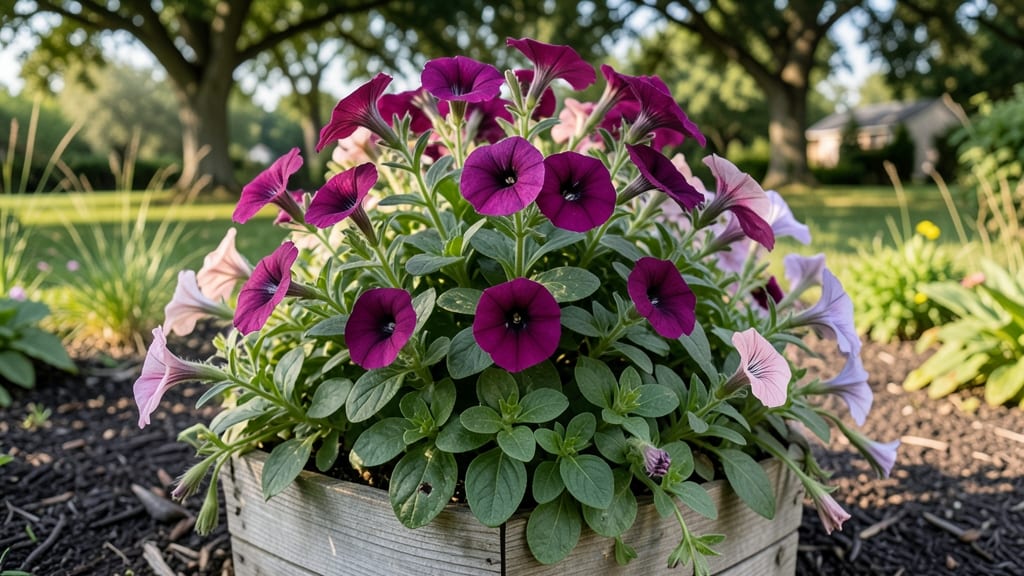
My petunia flower bed ideas never look the same from one season to the next—because I layer them with fragrant companions and bold colors that keep blooming until frost. 🌸 The secret isn’t just choosing petunias; it’s pairing them with plants that extend the show from early spring to late fall, while keeping maintenance simple.
Last year’s lavender-and-purple bed with trailing petunias and sweet alyssum drew neighbors to my front door all summer long. Start with 3-5 petunia varieties—mix spreading types like ‘Wave’ for edges with upright varieties like ‘Mitchell’ for height.
Add 2-3 inches of mulch to retain moisture and suppress weeds, then tuck in drought-tolerant companions like lantana or salvia for texture. The key is spacing: plant petunias 12-18 inches apart so they fill in quickly but don’t crowd each other.
By mid-July, you’ll have a nonstop bloom machine that smells like a summer garden at dusk. The trailing petunias spill over edges, while the upright varieties create a lush, fragrant backdrop. Even better?
Deadheading spent blooms keeps them producing until first frost, and the roots often return the next year if you protect them with mulch. For modern gardens, try geometric patterns with white petunias and silver foliage plants.
Cottage-style beds shine with mixed colors and textures, while container arrangements let you rotate displays seasonally. The best part? Petunias thrive in partial shade, so you can create stunning displays even in spots where other flowers struggle.
📚 In This Guide
- What you need
- Instructions
- Tips and common mistakes
- Wrapping up and next steps
What you need
- ● Petunia plants: 10–20 plants per square foot (adjust based on bed size and variety—dwarf types need more spacing, while trailing types can be planted closer).
- ● Pro tip: Mix upright varieties (like 'Madness' or 'Dreamies') with trailing types (such as 'Tumbling Waters' or 'Supertunia') for texture and depth! 🌿
- ● Soil: 1–2 cubic yards of well-draining potting mix or garden soil amended with compost (for in-ground beds).
- ○ Optional: Perlite or vermiculite (1–2 cups per plant) to improve aeration.
- ● Fertilizer: Slow-release balanced fertilizer (10-10-10) or a tomato/flower-specific formula (follow package rates).
- ○ Optional: Fish emulsion or seaweed extract (1 tbsp per gallon of water) for a natural boost.
- ● Mulch: 2–3 inches of organic mulch (shredded bark, pine straw, or cocoa hulls) to retain moisture and suppress weeds.
- ● Garden trowel or hand shovel
- ● Gloves (to protect your hands from thorns or soil)
- ● Watering can or hose with a gentle spray nozzle
- ● Pruners (for trimming dead blooms or shaping plants)
- ● Measuring tape or ruler (for spacing plants evenly)
- ○ Optional: Edging tools (to define borders neatly) or container pots (if planting in raised beds or hanging baskets).
- ● Sunlight: Full sun (6+ hours daily) for most petunias; some varieties tolerate partial shade.
- ● Location: Choose a spot with good airflow to prevent fungal diseases.
- ● Drainage: Avoid soggy soil—petunias hate "wet feet"! Elevate containers or amend heavy clay soil.
- ● Timing: Plant after the last frost (spring) or in late summer for fall blooms.
Step-by-Step design for fragrant petunia flower beds
Here's how to create a layered, fragrant petunia display that blooms continuously from spring to frost.
🌿 Step 1: Plan Your Fragrance Layers by Height
Design your bed in three distinct tiers: tall back row (3-4 feet), mid-height center (2-3 feet), and spilling front edge (12-18 inches). I always start with scented petunia varieties like 'Mitchell Diploid' (rose fragrance) and 'Sweetheart Cherry' (berry-like aroma) for the mid-height zone—they're the stars of your fragrance show.
For the back row, pair petunias with scented salvias or lavender to create vertical interest. The front edge should feature trailing petunias like 'Supertunia Black Velvet' that cascade over edges. This arrangement ensures every visitor gets a whiff of your fragrant masterpiece from any angle.
☀️ Step 2: Choose the Perfect Sun Exposure
Petunias demand full sun—at least 6-8 hours daily—for continuous blooming. I test my site by marking the sunniest spot with a stake and observing it for a week. If shadows appear after 10 AM, move your design 2-3 feet west to capture more afternoon sun.
Morning sun alone won't cut it—petunias need that midday heat to trigger blooming. If your only option is partial shade, select 'Wave' series petunias which tolerate 4-6 hours of sun but still produce fragrance. Just don't expect the same volume of blooms.
🪴 Step 3: Prepare Soil for Heavy Bloomers
Amend your native soil with 2-3 inches of compost and a slow-release fertilizer (10-10-10) mixed into the top 6 inches. Petunias are heavy feeders, and fragrant varieties need extra nutrients to maintain their aromatic oils. I always work in a 5-gallon bucket of aged compost per 4-foot section of bed.
Test your soil's drainage—petunias rot quickly in soggy conditions. If water pools after 30 minutes, add 1 part perlite to 3 parts soil in the planting hole. The goal is soil that drains within 2 hours but holds moisture for 2-3 days between waterings.
🌱 Step 4: Plant in Staggered Rows for Continuous Bloom
Space plants 12-18 inches apart in staggered rows (like bricks) to prevent disease spread and ensure no gaps when blooms fade. I plant fragrant varieties in the center where visitors will brush against them, surrounded by non-scented filler petunias like 'Cascadia' for visual contrast.
Plant 1-2 inches deeper than the nursery pot to encourage strong root development. Water immediately after planting to settle soil and remove air pockets. The first flush of blooms will arrive in 4-6 weeks, but you'll get continuous fragrance once established.
💧 Step 5: Water and Feed for Fragrance Intensity
Water deeply twice weekly (or daily in 90°F+ weather) until top 6 inches of soil feel moist. Fragrant petunias need consistent moisture to produce their aromatic oils—let them dry out, and the scent fades dramatically. I water in early morning to prevent fungal issues.
Feed every 2-3 weeks with a balanced liquid fertilizer (20-20-20) during bloom season. The key to maintaining fragrance is phosphorus—it boosts flower production, which directly correlates with scent intensity. Watch for dark green leaves as your signal that feeding is working.
Tips & tricks for perfect fragrant petunia flower beds
Transforming your garden into a fragrant sanctuary takes more than just planting—here’s how to maximize scent and beauty with these insider tips.
Fragrance Placement Strategy: In Step 1, when arranging your three-tiered design, position the most heavily scented varieties like 'Mitchell Diploid' petunias in the mid-height center where foot traffic will brush against them. This creates a "scent corridor" that releases aroma with every passerby. I’ve found that placing these fragrant stars 12-18 inches apart in the center row ensures maximum fragrance impact without overwhelming the space.
Sunlight Optimization: The 6-8 hours of daily sun requirement in Step 2 is non-negotiable for fragrance production, but here’s the secret: morning sun (before 10 AM) is great for growth, but it’s the midday heat that triggers aromatic oil production. If your garden gets afternoon shade, consider using a portable grow light for 2-3 hours daily during peak blooming season to maintain scent intensity. This is especially critical for fragrant varieties that need that extra energy boost.
Soil Science for Scent: When amending soil in Step 3, don’t just focus on the 2-3 inches of compost—pay attention to the slow-release fertilizer (10-10-10) ratio. The phosphorus component is what fuels flower production, which directly correlates with fragrance. I’ve seen gardens where petunias bloom profusely but lack scent because the nitrogen was too high. Aim for a 5-gallon bucket of compost per 4-foot section and mix in 1 cup of bone meal (optional) for an extra phosphorus kick that enhances aromatic oils.
Watering Wisdom: The deep watering twice weekly guideline in Step 5 is perfect, but timing matters just as much. Water in early morning to prevent fungal issues, but also consider a second watering in late afternoon during 90°F+ weather. This mimics natural rainfall patterns and helps maintain consistent moisture in the top 6 inches of soil, which is where those aromatic roots are working hardest. Overwatering? Look for yellowing leaves—this is your plant’s way of saying "back off for a day."
Pro Tips for Petunia Flower Bed Ideas
- Transforming your garden into a fragrant sanctuary takes more than just planting—here’s how to maximize scent and beauty with these insider tips.
- This creates a "scent corridor" that releases aroma with every passerby.
- If your garden gets afternoon shade, consider using a portable grow light for 2-3 hours daily during peak blooming season to maintain scent intensity.
Frequently asked questions
Got questions about creating your dream petunia flower bed? You’re not alone! Here are some of the most common queries—and their easy answers—to help you design with confidence.
When is the best time to plant petunias for year-round blooms?
For season-long magic, plant petunias in early spring (after the last frost) and again in late summer for a fall rebloom. In warm climates, you can even plant year-round! Just ensure soil temps are above 50°F (10°C) for best success. Pro tip: Use slow-release fertilizer at planting to kickstart growth.
How often should I water my petunia flower bed?
Petunias love moisture but hate soggy roots! Water deeply 2-3 times per week (or daily in extreme heat) to keep soil evenly damp but not waterlogged. Morning watering is ideal—it reduces evaporation and fungal risks. Mulch with 2-3 inches of organic mulch (like straw) to retain moisture and suppress weeds.
What pests or diseases should I watch for in petunia beds?
Common culprits include aphids, spider mites, and whiteflies, which suck plant juices. For diseases, powdery mildew (white fungal spots) and bacterial wilt (yellowing leaves) are red flags. Troubleshoot: Spray plants with neem oil or insecticidal soap for pests. Improve airflow by pruning crowded plants and avoid overhead watering to prevent mildew.
Can I mix petunias with other flowers, or do they need their own space?
Petunias thrive in companion plantings. Pair them with marigolds (pest-repellent), salvias (drought-tolerant), or calibrachoas (spiller plants) for a lush, layered look. Avoid planting with mint or invasive ground covers, which can crowd them out. For height variety, tuck tall snapdragons behind petunias and low-growing ajugas in front.
Will petunias survive winter in my climate?
Most petunias are annuals and won’t survive frost, but you can extend their life! In USDA Zones 8-10, mulch heavily and protect with burlap wraps during cold snaps. For perennial varieties (like Petunia × atkinsiana), plant in containers and bring indoors before winter. Start seeds indoors in late winter for an early spring jumpstart!
Are there petunia alternatives for low-maintenance flower beds?
If petunias feel high-maintenance, try these low-fuss, long-blooming alternatives:
- Impatiens: Shade-tolerant and self-cleaning (deadhead automatically).
- Begonias: Drought-resistant with bold foliage and vibrant blooms.
- Zinnias: Heat-loving annuals that attract pollinators.
- Lantana: Drought-proof and deer-resistant with clusters of tiny flowers.
For a petunia-like spill, lobelia or verbena are great fillers!
Wrapping up and next steps
Transforming your garden into a vibrant petunia paradise is easier—and more rewarding—than you think! 🌸 Whether you’re layering fragrant blooms for seasonal magic, experimenting with bold colors, or creating a low-maintenance retreat, these ideas will inspire you to get your hands dirty. Start small, dream big, and let your creativity bloom!
Ready to take the next step? Sketch your design, gather supplies, and dive in—your future flower bed is waiting!