
Flowers
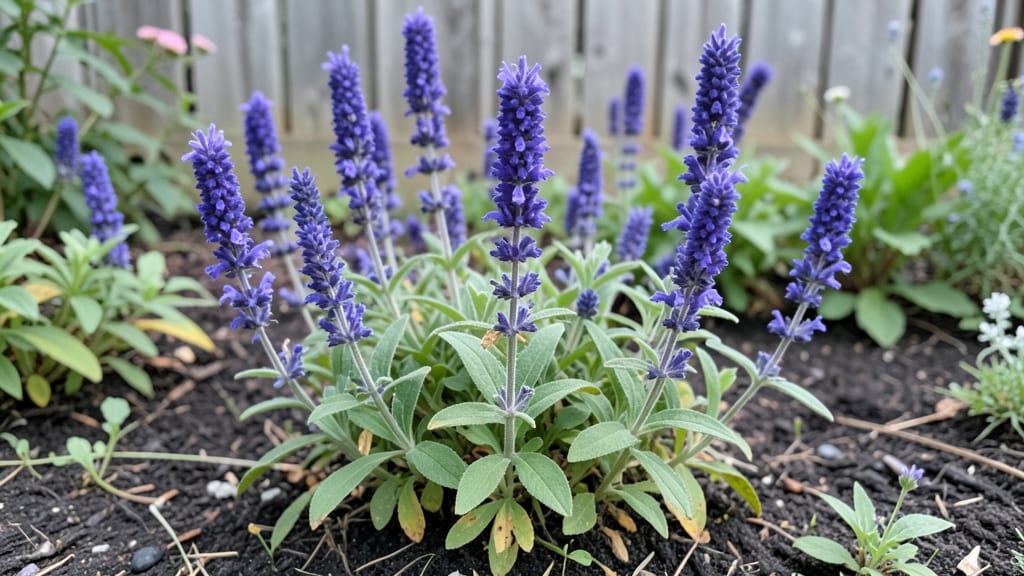
Growing purple perennial salvias is like inviting a drought-proof showstopper into your garden—these hardy plants reward you with vibrant blooms from early summer through fall while demanding almost no fuss. 💚 I’ve been growing them for years, and they’ve never failed me, even during dry spells when other plants wilted.
The key lies in their love of sun, well-draining soil, and minimal water once established.
These salvias thrive in full sun to partial shade, making them perfect for borders, cottage gardens, or even container plantings on patios. They’re fuss-free once planted, needing only occasional deadheading to keep flowers coming.
My favorite varieties, like ‘May Night’ and ‘Bee’s Bliss,’ attract hummingbirds and butterflies, turning my garden into a buzzing paradise.
By late summer, you’ll have a lush, purple-hued display that lasts well into autumn, with some varieties even providing winter interest. The secret to their longevity? Pruning back in early spring and avoiding soggy soil. They’re the kind of plant that makes gardening feel effortless—beautiful without the drama.
Pair them with lavender, Russian sage, or ornamental grasses for a low-maintenance yet striking garden combination. Once you try them, you’ll wonder how you ever lived without these tough, colorful workhorses in your landscape.
📚 In This Guide
- What you need
- Instructions
- Tips and common mistakes
- Wrapping up and next steps
What you need
- ● Perennial Salvia Plants: 1–3 Salvia nemorosa or Salvia officinalis (purple varieties) – Choose healthy, disease-free plants with vibrant foliage.
- ○ Seeds (optional): 1–2 packets of Salvia seeds (germination can take 10–30 days).
- ● Soil: 1–2 cubic yards of well-draining, sandy loam soil (mix in perlite or coarse sand if your soil is heavy). Aim for a pH of 6.0–7.5.
- ● Fertilizer: 1 bag of slow-release granular fertilizer (10-10-10 or 5-10-10 ratio, 1 lb per 100 sq ft).
- ○ Compost (optional, 2–3 gallons per plant for nutrient boost).
- ● Garden Tools: 1 trowel or transplant spade.
- ● 1 pruning shears (for trimming dead growth).
- ● 1 garden fork (for aerating soil).
- ● Watering Supplies: 1 watering can or hose with a gentle spray nozzle (avoid overhead watering to prevent fungal issues).
- ○ Drip irrigation system (optional, for consistent moisture).
- ● Protective Gear: 1 pair of gardening gloves.
- ● 1 sun hat or umbrella (for long planting sessions).
- ● ✅ Sunlight: A full-sun location (6+ hours of direct sunlight daily).
- ● ✅ Spacing: 18–24 inches apart for mature plants (check variety-specific needs).
- ● ✅ Drought Tolerance: Once established, these beauties need minimal watering (water deeply 1–2 times per week in dry spells).
- ● ✅ Hardiness Zone: USDA Zones 4–9 (verify your zone here).
How to plant and maintain drought-tolerant purple salvias
Here’s the straightforward approach I’ve used to keep these hardy perennials thriving for years.
🪴 Step 1: Select the Perfect Location and Soil
Purple salvias crave full sun to partial shade—at least 6 hours of direct sunlight daily—but they’ll tolerate 4 hours minimum if summers are scorching. I always plant mine where they get morning sun and afternoon shade in hot climates, which prevents leaf scorch while still encouraging vibrant blooms.
Amend the soil with 3-4 inches of compost before planting to improve drainage, since these plants despise soggy roots. Work the compost into the top 12 inches of soil—this ensures roots have room to spread without hitting compacted layers. A soil test reveals whether you need extra phosphorus for better flowering, but most gardeners skip this step and just add a balanced 10-10-10 fertilizer at planting time.
🌱 Step 2: Plant at the Right Depth and Spacing
Dig holes twice as wide as the root ball but only as deep—never deeper—than the container’s base. This prevents burying the crown, which can rot over time. Gently tease apart any circling roots before placing the plant in the hole to encourage outward growth.
Space plants 2-3 feet apart for smaller varieties like Salvia nemorosa or 3-4 feet apart for larger types like Salvia officinalis. Crowding leads to weak stems and fewer blooms, so don’t skimp on space. Backfill the hole with native soil, pressing lightly to remove air pockets, then water deeply to settle everything in place.
☀️ Step 3: Water Deeply but Infrequently
After planting, water once a week for the first month to help roots establish, then taper off to every 10-14 days once established. Purple salvias are drought-resistant, but they need deep watering—1-1.5 gallons per plant—to encourage deep root growth. Shallow watering keeps roots near the surface, making them more susceptible to drought stress.
Check soil moisture by sticking your finger 2 inches down—if it’s dry, water again. Overwatering is the biggest mistake gardeners make; these plants thrive with neglect once established. Mulch with 2-3 inches of shredded bark to retain moisture and suppress weeds, but keep mulch 6 inches away from the stem to prevent rot.
✂️ Step 4: Prune for Health and More Blooms
Deadhead spent blooms throughout the growing season to encourage continuous flowering. I snip off faded flower spikes just above the next set of leaves with clean pruners, which redirects the plant’s energy into new growth. Avoid heavy pruning in late summer—this can prevent next year’s blooms from forming.
In early spring, cut back one-third of the plant’s height to shape it and remove any dead or diseased stems. This also stimulates fresh, vigorous growth. Never prune in fall, as the plant needs foliage to store energy for winter. Wear gloves—salvia leaves can be slightly rough and may irritate sensitive skin.
Tips & tricks for perfect purple salvias
These hardy perennials reward patience and precision—here’s how to maximize their drought-resistant beauty.
The Light Factor: Purple salvias thrive with 6 hours of direct sunlight daily, but in scorching climates, morning sun paired with afternoon shade prevents leaf scorch while maintaining vibrant blooms. If your garden has intense afternoon heat, consider partial shade to protect delicate foliage during peak hours.
Soil Prep Secret: The 3-4 inches of compost mixed into the top 12 inches of soil isn’t just about drainage—it’s about creating an ideal root zone. For clay-heavy soils, add perlite or coarse sand to prevent compaction. If your soil test shows phosphorus deficiency, a 10-10-10 fertilizer at planting time gives a subtle but noticeable boost to flowering.
Root Ball Technique: When planting, gently tease apart circling roots before placing the plant in the hole—this encourages outward growth rather than a tangled root ball. The hole should be twice as wide as the root ball but only as deep, never deeper, to avoid burying the crown. A quick finger test after backfilling ensures no air pockets remain.
Watering Wisdom: The 1-1.5 gallons per plant deep watering isn’t about frequency—it’s about encouraging roots to grow deep. Water only when the soil 2 inches down is dry, and always water at the base to prevent fungal issues from overhead moisture. Mulching with 2-3 inches of shredded bark (kept 6 inches away from the stem) helps retain moisture while preventing soil-borne diseases.
Pro Tips for Perennial Salvias Purple
- These hardy perennials reward patience and precision—here’s how to maximize their drought-resistant beauty.
- The Light Factor: Purple salvias thrive with 6 hours of direct sunlight daily, but in scorching climates, morning sun paired with afternoon shade prevents leaf scorch while maintaining vibrant blooms.
- Soil Prep Secret: The 3-4 inches of compost mixed into the top 12 inches of soil isn’t just about drainage—it’s about creating an ideal root zone.
Frequently asked questions
Got questions about growing and caring for perennial salvias purple? You're in the right place! Here are some common queries—plus straightforward answers—to help you nurture these stunning, low-maintenance plants with confidence.
How do I encourage my purple salvia to bloom more?
Prune back spent blooms in early spring to stimulate new growth. Pro tip: Deadhead flowers regularly during the blooming season (spring to fall) to redirect energy to producing more vibrant blooms. Purple salvias also love full sun—6+ hours daily—and well-draining soil. If blooms taper off, a light fertilizer (low in nitrogen) in early spring can give them a boost!
Are perennial salvias purple frost-tolerant?
Most varieties handle light frosts (down to 15–20°F), but heavy freezes can damage foliage. Mulch around the base in winter to insulate roots. If you live in a colder zone (Zone 5 or below), opt for hardier types like Salvia nemorosa or plant in a sheltered spot. Pro tip: Purple salvias often regrow from the base after frost—don’t panic if they look crispy!
How often should I water purple salvia?
These drought-resistant stars thrive on infrequent, deep watering. Water when the top 1–2 inches of soil are dry (about once a week in summer, less in winter). Overwatering is the #1 killer—ensure pots or garden beds have excellent drainage. Pro tip: Let the soil dry completely between waterings to prevent root rot.
Can I grow purple salvia in containers?
Choose a pot with drainage holes and use a fast-draining mix (like cactus/succulent soil). A 12–18 inch diameter container works well for one plant. Place in full sun and water sparingly. Pro tip: Group containers to create a "micro-climate" that retains warmth and humidity, encouraging more blooms.
What pests should I watch for with purple salvia?
Purple salvias are generally pest-resistant, but keep an eye out for aphids or spider mites (especially in hot, dry conditions). Blast off pests with a strong water spray or use neem oil for stubborn infestations. Pro tip: Healthy plants with good airflow rarely attract pests—so prioritize sun and drainage!
What are some great purple salvia alternatives if mine struggles?
If your salvia isn’t thriving, try these low-maintenance, drought-tolerant swaps:
- Lavender – Fragrant, purple blooms, and thrives in poor soil.
- Russian Sage (Perovskia) – Silvery foliage, blue-purple spikes, and heat-loving.
- Catmint (Nepeta) – Soft purple blooms, deer-resistant, and blooms all season.
- Ice Plant (Delosperma) – Succulent-like, vibrant purple flowers, and ultra-drought tolerant.
Wrapping up and next steps
Incorporating perennial salvias purple into your garden is a game-changer—offering stunning color, low maintenance, and resilience that even beginners can master. 🌿 Their drought tolerance and pollinator appeal make them a win-win for eco-friendly landscapes, while their long bloom season ensures year-round charm.
Whether you’re a seasoned gardener or just starting, these beauties prove that spectacular gardens don’t require constant effort.
Ready to transform your outdoor space? Start small—plant a few salvias in a sunny spot, observe their progress, and let their magic inspire bigger ideas! 🌸