
Flowers
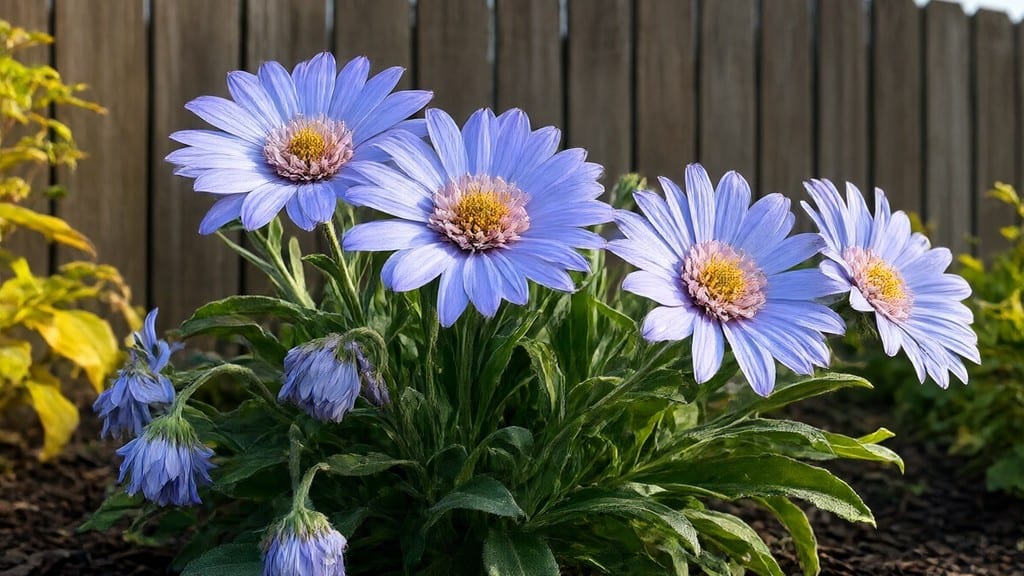
Osteospermum behaves as a tender perennial in USDA zones 8-11 but isn't a true perennial in most climates, often self-seeding annually or requiring winter protection. In colder areas, it’s typically grown as an annual or overwintered indoors.
This South African native thrives where winters are mild but struggles in freezing temperatures. 🌱 The key to treating it as a perennial lies in protecting it from frost—whether through mulching, container moves, or indoor overwintering.
Many gardeners in zones 7 and below still grow osteospermum by collecting seeds or taking cuttings each fall, ensuring fresh blooms the following spring. Its ability to self-seed also means you might find unexpected volunteers popping up year after year, even in less ideal climates.
For those in warmer zones, osteospermum’s perennial-like behavior makes it a low-maintenance choice. The secret is deadheading spent blooms regularly to encourage continuous flowering and providing well-draining soil. With the right care, you can enjoy its cheerful daisy-like flowers for multiple seasons without replanting.
💡 In This Article
- Osteospermum’s Cold Tolerance and Hardiness Zones Explained
- Year-Round Osteospermum Care: Overwintering and Propagation
Osteospermum’s cold tolerance and hardiness zones explained
Here's what's actually happening with osteospermum's cold sensitivity: its native South African habitat experiences mild winters with rare freezes, so its cells lack the frost-hardiness mechanisms found in true perennials like peonies.
When temperatures drop below 32°F, the plant's water content freezes, causing cell damage that leads to blackened leaves and stem collapse. This is why osteospermum thrives in USDA zones 8-11—areas where winter lows rarely fall below 10°F.
The key factor is its dormancy pattern: unlike true perennials that enter deep dormancy, osteospermum remains semi-active until hit by frost.
This explains why it often self-seeds—when frost kills the parent plant, seeds already in the soil germinate in spring. 🌱 In zone 8, where winters average 25-30°F, osteospermum can survive with 3-4 inches of mulch protecting the crown, while zone 9's 20-25°F winters require minimal protection.
The difference between these zones comes down to 100 hours of chilling—below 40°F—which triggers dormancy in true perennials but stresses osteospermum.
What most people don't realize is how this compares to other South African natives. Geraniums (like Pelargonium) handle 20°F with ease, while gazanias die back at 28°F—similar to osteospermum's threshold. The science behind this involves antifreeze proteins that true perennials produce; osteospermum simply lacks these adaptations.
This is why gardeners in zone 7 often treat it as an annual despite its perennial-like growth habit.
Temperature fluctuations create another challenge: osteospermum's roots are particularly sensitive to rapid temperature swings. A 50°F daytime high followed by 25°F nights causes root shock, stunting regrowth. This is why container-grown osteospermum survives better in colder climates—pots insulate roots and allow easy movement to sheltered spots.
The plant's 3-4 month flowering cycle also explains why it's often grown as an annual in colder zones: the energy required to regrow after frost damage exceeds the benefits of keeping it alive.
Consider these zone-specific survival strategies: in zone 8, cut plants back to 2 inches before 30°F hits and cover with burlap and straw; in zone 9, mulch heavily with pine needles to insulate roots.
The 2-3 week window between first frost and 20°F is critical—this is when osteospermum's cells begin irreversible damage. For comparison, zone 10's 30-40°F winters allow osteospermum to remain outside year-round with only light pruning.
Here's a practical insight: osteospermum's self-seeding habit is nature's workaround for its lack of true hardiness. When you see "volunteer" plants appearing each spring, they're from seeds that survived winter in the soil.
This adaptation explains why osteospermum often outlasts other tender perennials in marginal climates—its seeds remain viable for 2-3 years in the soil bank, ready to germinate when conditions improve. 💫