
Flowers
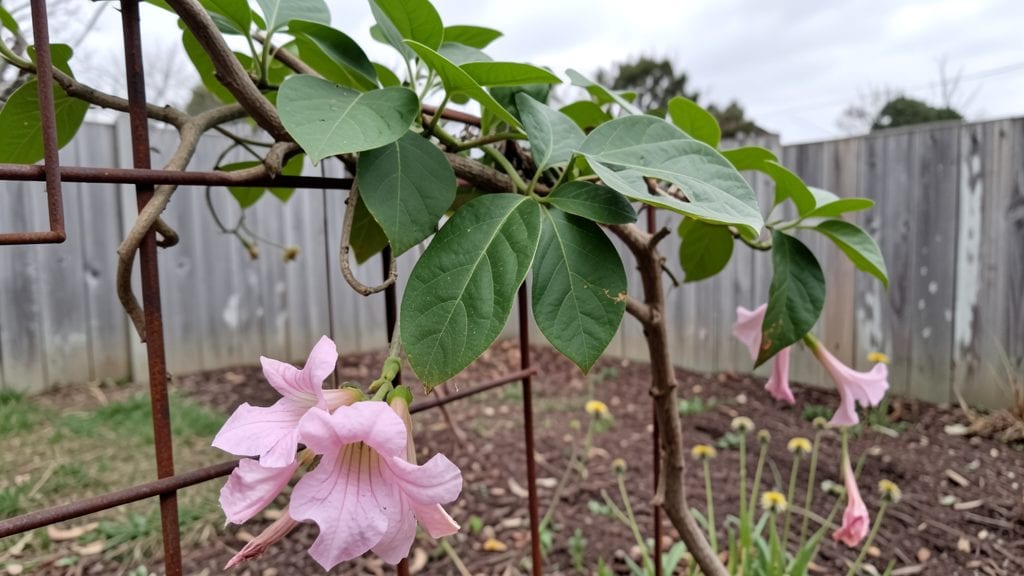
Whether mandevilla flowers are annual or perennial depends on climate: they thrive as perennials in frost-free zones but die back as annuals when temperatures fall below 30°F (-1°C). Extending their lifespan requires protection during cold months.
Mandevilla's classification shifts because it's a tropical plant at heart—its woody stems can't survive freezing temperatures, unlike true perennials. 🌡️ In zones 9-11, they naturally regrow each spring, but gardeners in colder areas must intervene to preserve them.
The key difference lies in their growth habit: while they may look like annuals outdoors, their roots can often survive if protected, allowing regrowth when conditions warm again.
This adaptability makes mandevilla unique among tropical plants. Unlike bougainvillea (which handles brief cold snaps better) or hibiscus (which can tolerate slightly cooler nights), mandevilla demands consistent warmth.
That's why overwintering indoors becomes essential for multi-year growth in frost-prone regions—it's not just about saving the plant, but about maintaining its vigor for next season's spectacular blooms.
💡 In This Article
- Mandevilla Cold Tolerance Limits and Survival Zones
- Overwintering Mandevilla Indoors for Multi-Year Growth
Mandevilla cold tolerance limits and survival zones
Mandevilla's cold sensitivity stems from its tropical origins and semi-woody growth habit. Unlike true perennials with deep root systems, mandevilla develops a semi-woody stem that lacks the protective bark of temperate plants.
When temperatures dip below 30°F (-1°C), the plant's cellular structure freezes, causing irreversible damage to the vascular system that transports water and nutrients. This threshold is critical because it's where ice crystals form within the plant's cells, rupturing them like a frozen balloon.
The USDA hardiness zones 9-11 represent mandevilla's natural comfort range, where winter temperatures rarely drop below 30°F (-1°C). In these zones, mandevilla behaves as a perennial, dropping leaves in winter but regrowing from the roots when temperatures rise.
The plant's native habitat in South America explains this sensitivity—it evolved in regions where nighttime temperatures never fall below 50°F (10°C). Even brief exposure to 25°F (-4°C) can kill the above-ground growth, though the roots may survive in sheltered microclimates.
Comparing mandevilla to other tropical plants reveals its delicate nature. Bougainvillea, for example, can tolerate brief dips to 20°F (-7°C) thanks to its thicker stems, while hibiscus handles 25°F (-4°C) with proper mulching.
Mandevilla's lack of protective adaptations makes it more vulnerable—its stems contain 30-40% moisture by weight, which freezes and expands catastrophically. This moisture content also explains why mandevilla's flowers wilt dramatically when nighttime temperatures drop below 55°F (13°C), even without frost.
What most gardeners don't realize is that mandevilla's survival depends on more than just temperature—it's about duration of exposure. A single night at 28°F (-2°C) might cause leaf drop, but prolonged cold below 30°F (-1°C) kills the plant's growth points.
This creates a paradox: while mandevilla can't survive winter outdoors in most of the U.S., its roots sometimes persist in protected microclimates like against south-facing walls or under dense mulch. This explains why some gardeners report "spontaneous" regrowth in spring after what appeared to be total frost damage.
The science behind this involves mandevilla's cambium layer—the growth tissue responsible for producing new stems and leaves. When frozen, this layer becomes non-functional, preventing regrowth until new shoots emerge from dormant buds (if any survive).
This is why proper overwintering techniques focus on protecting these critical growth zones. In contrast, plants like oleander (which share similar zones) have evolved thicker cambium layers that can withstand brief cold snaps.
Understanding these mechanisms helps explain why mandevilla's classification changes by region. In Florida's zone 10, it's a true perennial that may bloom year-round. But in zone 8, where winter lows reach 10°F (-12°C), it must be treated as an annual unless carefully overwintered.
The 30°F (-1°C) threshold isn't just a random number—it's the point where mandevilla's biological systems begin to fail permanently.