
Shrubs
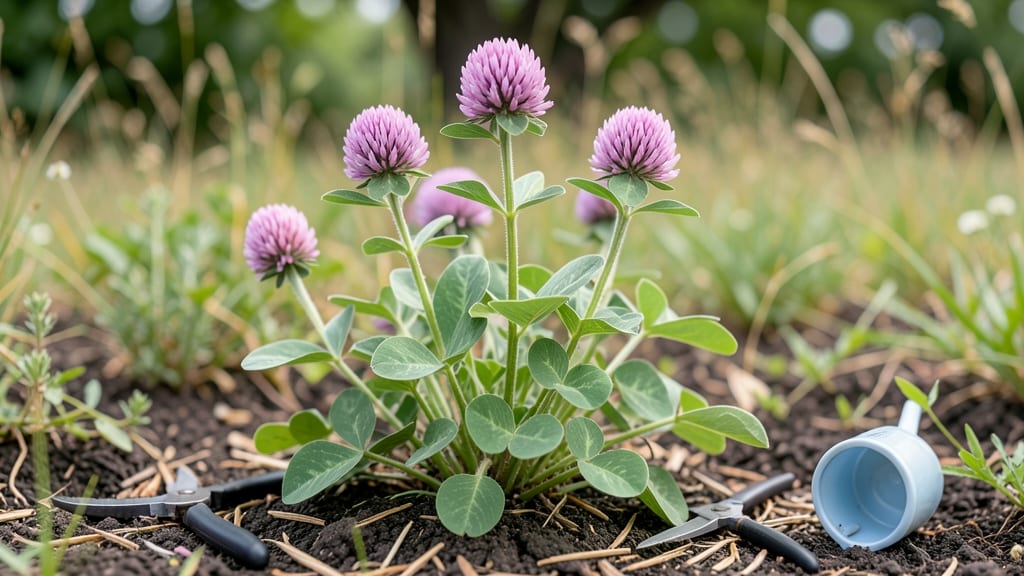
Red clover is a perennial that thrives for 2-3 years across most climates, regenerating from its deep taproot after mowing or frost, while some varieties reseed prolifically to prolong flowering.
This hardy plant earns its perennial status through its robust root system, which can penetrate 12-18 inches deep—far deeper than many annual flowers. 🌱 The deep roots anchor the plant while storing nutrients for regrowth, and its ability to fix nitrogen in the soil actually improves surrounding plant health over time.
Unlike annual clover varieties that die back completely each winter, red clover's cold hardiness (USDA Zones 4-9) lets it bounce back year after year, making it a low-maintenance choice for pollinator gardens.
What sets red clover apart is its dual growth strategy: established plants regrow from their roots, while many varieties also self-seed prolifically. This means you'll often see new plants popping up even after the original clump declines—nature's way of extending the plant's lifespan beyond just three years in ideal conditions.
💡 In This Article
- How Red Clover’s Root System Supports Perennial Growth
- Tips for Maximizing Red Clover’s Lifespan in Gardens
How red clover’s root system supports perennial growth
The secret behind red clover's perennial nature lies in its specialized root structure. Unlike annual clover varieties that develop shallow fibrous roots, red clover grows a robust taproot system that can extend 12-18 inches deep into the soil.
This deep root system serves two critical functions: it anchors the plant firmly against wind and weather, and it stores carbohydrates and nutrients during dormancy periods. 🌱 The taproot's ability to penetrate compacted soils also gives red clover an advantage in poor-quality soils where many perennials struggle.
What makes this root system truly remarkable is the presence of nitrogen-fixing nodules formed through symbiotic relationships with Rhizobium bacteria. These nodules, which appear as small bumps along the roots, convert atmospheric nitrogen into a form plants can use.
Red clover can fix up to 200 pounds of nitrogen per acre annually, dramatically improving soil fertility—a process annual clovers simply can't match. This nitrogen enrichment creates a positive feedback loop where the soil becomes more fertile year after year, supporting the plant's long-term survival.
The plant's cold hardiness comes from its ability to overwinter successfully in USDA Zones 4-9, thanks to several physiological adaptations. During winter, red clover enters a state of dormancy where its deep roots continue to store energy while above-ground growth halts.
The root system remains active enough to absorb moisture even when surface soils freeze, preventing desiccation. This contrasts sharply with annual clovers that must regrow completely from seed each spring, leaving them vulnerable to early frosts or poor germination conditions.
When comparing regrowth patterns, red clover demonstrates superior resilience. After mowing or frost damage, established plants typically regenerate within 3-6 weeks from their deep root reserves, producing new shoots from the crown. Annual clovers, by contrast, must rely entirely on seed germination, which is far less reliable in fluctuating conditions.
Some red clover varieties also exhibit prolific self-seeding, where mature plants produce thousands of seeds that germinate in subsequent seasons—effectively extending the plant's presence beyond its typical 2-3 year lifespan.
The combination of these factors creates what botanists call a "perennial growth cycle" that annual plants simply can't replicate. The deep root system provides both physical stability and nutrient storage, while the nitrogen-fixing ability creates a self-sustaining ecosystem.
This biological advantage explains why red clover often outlasts its annual counterparts by several years in the same growing conditions, making it an exceptionally hardy perennial choice for both agricultural and ornamental landscapes.