
Flowers
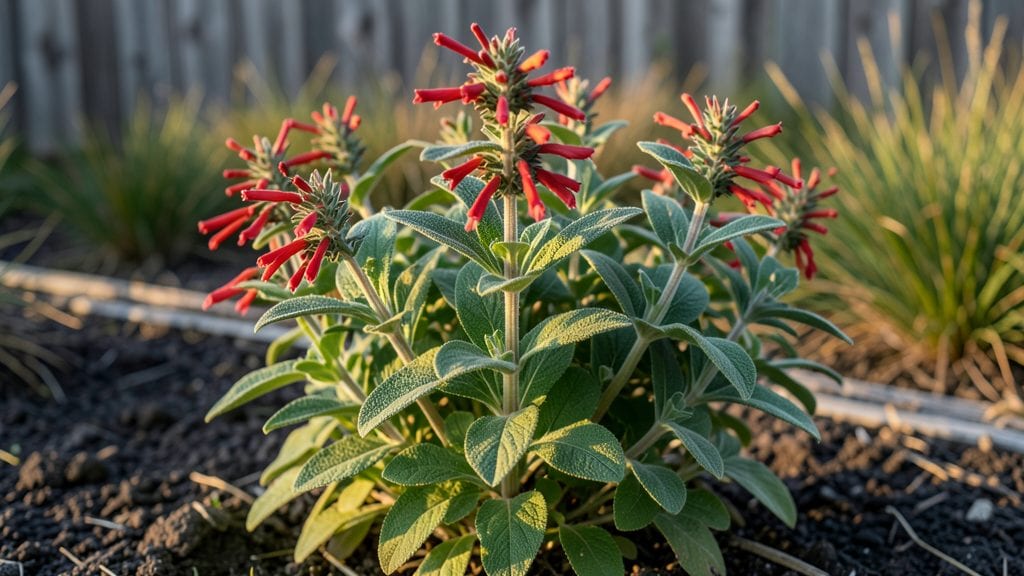
Pineapple sage behaves as a semi-perennial in most climates, meaning it won't reliably survive winter outdoors. While it may regrow from its base in mild winters, it typically thrives as an annual in colder regions (USDA zones 8-11) and dies back to the ground when frost hits—but with protection or replanting, you can enjoy it year after year.
Pineapple sage's survival hinges on temperature and growing conditions. In frost-free zones, it naturally persists year-round, but the moment temperatures dip below 20°F, its leaves blacken and the plant appears dead. 🔥 The good news?
Even if it looks finished, the roots often stay alive underground, ready to sprout again once warmth returns. I've seen gardeners in zone 7 successfully overwinter it by cutting stems back and covering the base with thick mulch or moving potted plants indoors."
What sets pineapple sage apart is its resilience—unlike true perennials, it doesn't demand years of established roots to bounce back. With proper care, you can coax multiple harvests from the same plant over several seasons, making it a low-maintenance perennial stand-in for those who love its pineapple-scented leaves.
The key is acting fast after frost: prune back dead growth in early spring and watch for new shoots within weeks.
💡 In This Article
- Pineapple Sage Cold Hardiness by USDA Zone
- How to Overwinter Pineapple Sage for Repeated Growth
Pineapple sage cold hardiness by USDA zone
Pineapple sage's cold tolerance hinges on its native tropical origins—it thrives in USDA zones 8-11, where winter temperatures rarely drop below 10°F. The plant's growth slows dramatically when nighttime temps hit 40°F, and leaves begin wilting at 32°F.
Here's what's actually happening: the plant's cells contain high concentrations of sucrose and proline (osmoprotectants) that prevent ice crystal formation, but these defenses fail when temperatures plummet below 20°F for extended periods. 🌟
The science behind its semi-perennial behavior involves its cambium layer—the growth tissue just beneath the bark. In mild winters (zones 9-11), this layer stays active enough to allow regrowth from the base, even after frost damage.
However, in colder zones (8 and below), the cambium often dies back completely, requiring new growth from cuttings or seeds. What most people don't realize is that pineapple sage's roots can survive -5°F for short durations, but prolonged exposure to 15°F or lower will kill even the hardiest root systems.
Let's compare zones to understand practical implications: In zone 10, pineapple sage may survive winters with minimal protection, while in zone 8, it's typically treated as an annual unless you take active measures.
The key factor is cumulative cold exposure—a single 25°F night might cause leaf damage, but repeated 20°F nights will kill the plant to the ground. This is why gardeners in marginal zones often cut plants back to 6 inches before first frost and mulch heavily.
Temperature isn't the only factor—soil moisture plays a crucial role. Wet, cold soil accelerates root rot, while dry conditions can protect roots better. Here's a zone-specific breakdown of what to expect: Zone 11 (frost-free): perennial with no winter care; Zone 10): may survive with light mulch; Zone 9): needs winter protection; Zone 8): typically dies back completely.
The plant's aromatic oils actually increase in concentration when stressed by cold, which is why damaged leaves often smell even more intensely pineapple-like.
What most gardeners overlook is the plant's regrowth timing. Even if the tops die back, new shoots typically emerge within 2-4 weeks of spring warmth (when soil temps reach 55°F). This rapid recovery is why many treat it as a short-lived perennial rather than a true annual.
The trade-off? Each year's growth produces slightly less vigorous plants than the original, which is why professional growers often take cuttings annually to maintain vigor. 🌱
For those in zone 7 and colder, the plant's semi-perennial nature becomes particularly evident. While it may regrow from roots in exceptionally mild winters, the energy required for recovery often results in slower growth the following season.
This is why many gardeners in these zones opt to grow pineapple sage as an annual container plant, bringing it indoors before frost and replanting fresh cuttings each spring.