
Flowers
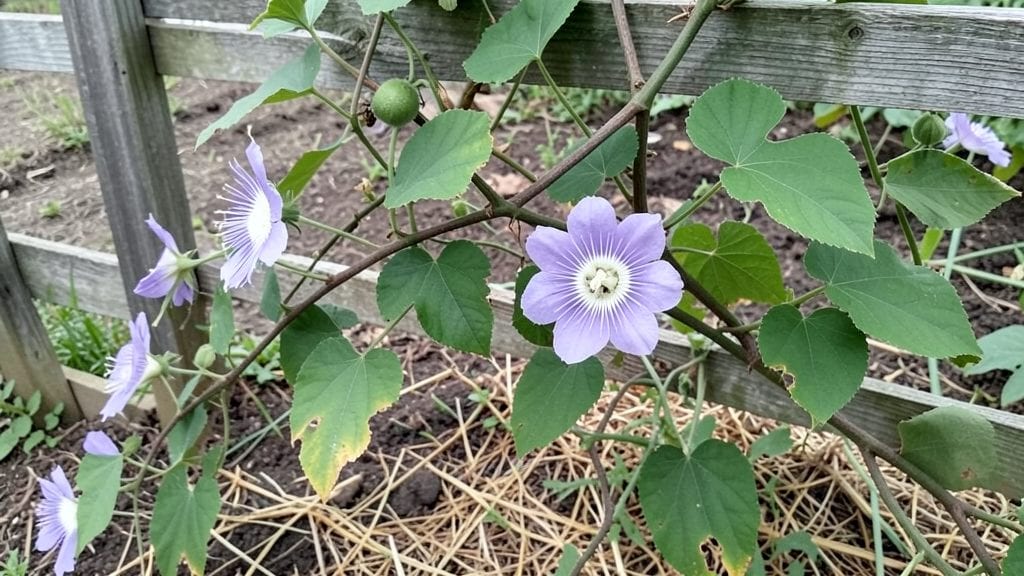
Passionflower behaves as a perennial in USDA Zones 7-11, though it may die back to the ground during colder winters before regrowing from its hardy root system when spring arrives. Cold protection is essential for winter survival.
This vine thrives as a perennial because its roots store energy underground, allowing it to bounce back each spring—even after frost kills the above-ground foliage. 🌱 The key difference from true perennials is its sensitivity to prolonged freezes, which is why gardeners in colder zones often treat it as an annual or use protective measures.
I’ve seen passionflower rebound spectacularly after winter dormancy, especially when planted in well-draining soil with winter mulch coverage.
For gardeners in marginal climates, overwintering in containers or using thick mulch layers can extend its lifespan dramatically. The plant’s ability to regenerate from roots makes it uniquely resilient compared to many other tropical vines that won’t survive winter exposure at all.
💡 In This Article
- Passionflower’s Perennial Growth Patterns Explained
- Winter Care Tips for Growing Passionflower Long-Term
Passionflower’s perennial growth patterns explained
Passionflower behaves like a perennial because its thick, tuberous roots store carbohydrates and nutrients underground, allowing it to survive winter dormancy. Unlike true perennials that maintain foliage year-round (like hostas), passionflower’s above-ground growth dies back when temperatures drop below 20°F.
The root system remains dormant but viable, ready to sprout new shoots when soil temperatures reach 55-60°F in spring. This makes it a semi-perennial—behaving like a perennial in warm climates but needing protection in colder zones.
The root system of passionflower (Passiflora spp.) can extend up to 3-4 feet deep and 6-8 feet wide, creating an extensive network that stores energy for regrowth. When winter arrives, the plant enters endodormancy, a deep physiological rest where metabolic processes slow dramatically.
This contrasts with annuals like marigolds, which complete their entire life cycle in one season and don’t regenerate. The passionflower’s ability to regrow from roots is why it’s often called a tender perennial—it survives but requires careful winter management in marginal climates.
What triggers regrowth? The combination of warming soil temperatures and increasing daylight hours signals the roots to break dormancy. I’ve observed passionflower vines emerge within 2-3 weeks of consistent 60°F+ soil temps, often producing new leaves before the last frost.
This rapid regrowth is possible because the roots contain stored starches that convert to energy for new growth. The plant’s sensitivity to cold distinguishes it from hardy perennials like lavender, which can withstand -10°F without protection.
Here’s how it compares to other plant types:
- Annuals: Complete lifecycle in one season (e.g., sunflowers), no regrowth from roots
- True Perennials: Survive winters with foliage (e.g., peonies) or underground stems (e.g., irises)
- Passionflower: Dies back but regrows from roots—acts like a perennial in warm zones but needs winter care in colder areas
The plant’s growth pattern also depends on its species. For example, Passiflora incarnata (maypop) is hardier (Zone 5 with protection) than Passiflora edulis (passionfruit), which struggles below Zone 9. The maypop’s thicker roots and deeper dormancy make it more resilient to temperature fluctuations.
This species-specific hardiness explains why some gardeners successfully grow passionflower as perennials in Zone 6 with proper winter mulching, while others treat it as an annual in Zone 5.
What most gardeners don’t realize is that passionflower’s regrowth isn’t just about temperature—it’s also tied to soil moisture and nutrient availability during dormancy. Overly wet or dry soil can weaken the root system, reducing its ability to regenerate.
I’ve seen passionflower vines fail to return in spring simply because their roots suffocated in compacted, waterlogged soil during winter. Proper drainage and organic matter in the soil create the ideal conditions for successful regrowth each season. 🌱