
Vegetables
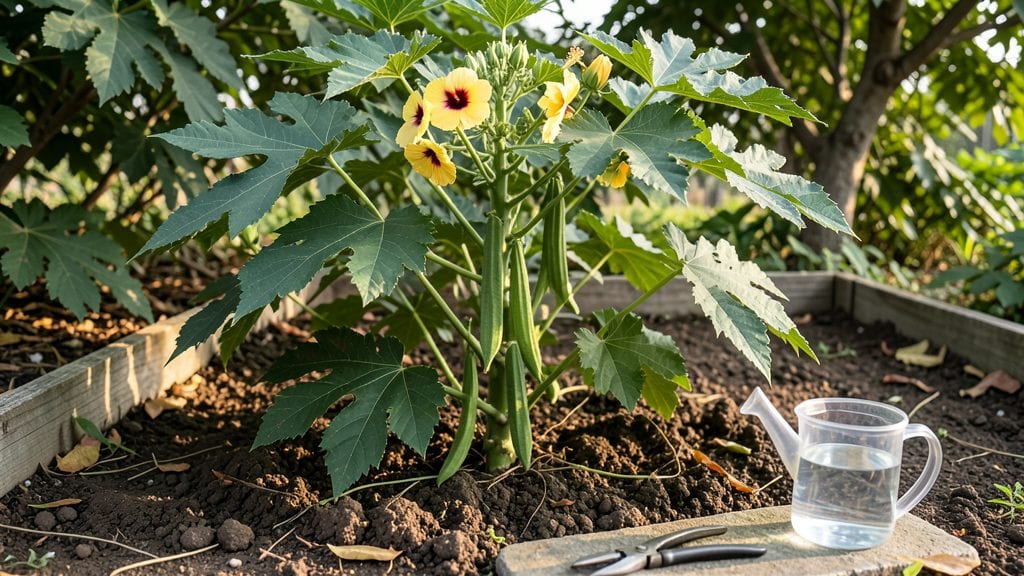
Okra is not a true perennial in most climates, as it dies back in frost and typically requires replanting annually. However, in warm, frost-free zones like USDA Hardiness Zone 10+, it may regrow from the same roots year-round under ideal conditions.
Okra behaves more like a tender perennial—it thrives in warm weather but won’t survive freezing temperatures. 🌱 In frost-free areas like Southern Florida or California’s coastal regions, the plant can persist for years, sending up new growth from its root system each spring.
Meanwhile, gardeners in cooler climates often treat it as an annual, replanting seeds every year when soil temperatures rise above 60°F. The key difference lies in temperature tolerance: true perennials (like asparagus) endure winter dormancy, while okra simply shuts down and dies when exposed to frost.
This growth pattern explains why okra’s lifespan varies so dramatically by region. In the Deep South, you might see the same plant produce pods for 3-5 years without replanting, while Northern gardeners typically get just one harvest season before the first frost.
The plant’s ability to regenerate from roots in warm climates makes it act more like a perennial, but its frost sensitivity keeps it classified as an annual in most gardening guides.
💡 In This Article
- Okra’s Growth Cycle: Annual vs Perennial Behavior
- Extending Okra’s Lifespan in Cold Climates
Okra’s growth cycle: annual vs perennial behavior
Botanically, okra (Abelmoschus esculentus) is classified as a tender perennial—meaning it has the potential to live multiple years but lacks the hardiness to survive freezing temperatures. The plant’s root system can persist underground in frost-free conditions, allowing regrowth each season.
This behavior contrasts sharply with true perennials like asparagus (Asparagus officinalis), which store energy in thick, insulated rhizomes that survive -20°F winters. Okra’s roots, however, are far more delicate and succumb to temperatures below 32°F, which is why most gardeners treat it as an annual.
The science behind okra’s regrowth lies in its taproot system, which stores carbohydrates and nutrients. In warm climates (Zone 10+), these roots remain viable year-round, sprouting new shoots when soil temperatures exceed 65°F.
Studies show that okra plants in Florida can produce pods for 4-6 years without replanting, while those in Zone 7 or colder typically die back after the first frost. The plant’s ability to regenerate depends on consistent warmth—even a single hard freeze will kill the roots entirely.
Here’s how okra’s growth compares to true perennials:
- True Perennials (e.g., rhubarb): Survive winter dormancy through specialized storage organs (rhizomes, tubers) that protect against freezing.
- Tender Perennials (okra): Regrow annually from roots but lack frost tolerance; die back completely when exposed to cold.
- Annuals (e.g., tomatoes): Complete their entire life cycle in one season, producing seeds before dying.
Okra’s frost sensitivity stems from its tropical origins. Native to West Africa, the plant evolved in climates where temperatures rarely drop below 50°F. When grown in cooler regions, gardeners must replant seeds each spring after the last frost date.
Even in mild winters (Zone 8-9), okra often requires protection like row covers or mulch to prevent root damage. The plant’s fast maturation cycle (50-60 days to harvest) makes it practical to treat as an annual in most U.S. growing zones.
What most gardeners don’t realize is that okra’s regrowth potential creates a gray area in classification. While it’s not a true perennial, its ability to persist for years in ideal conditions blurs the line.
In Hawaii or Southern California, you’ll find okra plants that produce continuously for 5+ years with minimal care, behaving more like a shrub than an annual. This adaptability makes it a fascinating study in plant resilience—one that rewards patient gardeners in warm climates with a near-perpetual harvest.