
Aphids
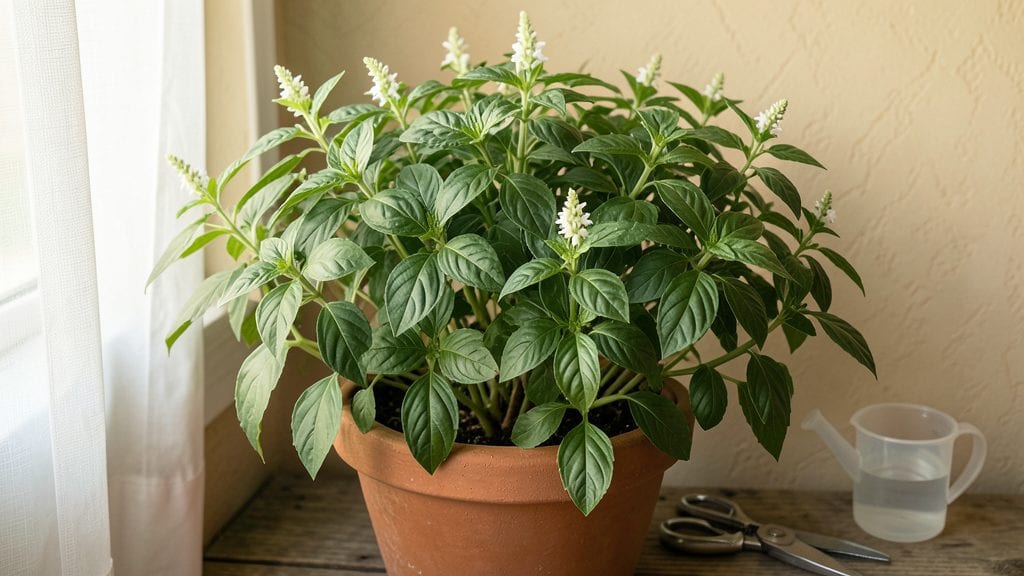
Holy basil isn't a true perennial in most regions—it behaves like an annual or short-lived tender perennial in zones 10-12, though some types might regrow from roots in mild winters with extra protection.
This tropical plant thrives in warm climates where frost never touches the soil, but even a light freeze will kill it back to the ground. 🌱 The key difference between true perennials (like mint) and holy basil lies in its sensitivity to cold—it simply can't survive freezing temperatures, which is why gardeners in colder zones treat it as a seasonal herb rather than a long-term staple.
Some varieties show surprising resilience when grown in containers and brought indoors before winter, but without protection, holy basil's lifespan resets each growing season.
Understanding this helps explain why holy basil often appears in tropical cuisine traditions—it's perfectly adapted to regions where winter never arrives.
In cooler climates, gardeners rely on clever workarounds like overwintering cuttings or using row covers to extend the growing season, but the plant fundamentally behaves like an annual in most of the U.S.
💡 In This Article
- Holy Basil’s Growth Cycle and Cold Tolerance Limits
- Extending Holy Basil’s Lifespan in Cooler Climates
Holy basil’s growth cycle and cold tolerance limits
Holy basil's growth follows a tropical pattern where warmth is essential for survival. In its native regions of India and Southeast Asia, temperatures rarely drop below 50°F, allowing it to grow continuously as a perennial.
The plant's life cycle begins with seed germination at 70-80°F, producing fast-growing stems with distinctive oval leaves that release a spicy, clove-like aroma when crushed. 🌿 However, the moment temperatures fall below 32°F, cellular damage occurs—ice crystals form in the plant's tissues, disrupting water transport and causing irreversible harm.
This sensitivity explains why holy basil behaves differently in various climates. In frost-free zones 10-12, it can persist for multiple years, often flowering in late summer with small white or purple blooms that attract pollinators.
The plant's woody base may survive mild winters if protected by mulch, but the foliage will die back completely. In colder regions, even a light frost (28-32°F) will kill the above-ground growth, forcing gardeners to treat it as an annual unless they take protective measures.
The key physiological mechanism is holy basil's lack of cold acclimation. Unlike hardy perennials that develop protective sugars and antifreeze proteins during fall, holy basil remains metabolically active until frozen. Its tropical heritage means it evolved without exposure to seasonal temperature drops, making it particularly vulnerable to 32°F or lower.
This explains why even in zone 9, where winters are mild, holy basil often dies back without winter protection.
What most gardeners don't realize is how quickly holy basil responds to temperature changes. When nights drop below 55°F, growth slows dramatically—leaves become smaller and more brittle, signaling the plant's shift toward dormancy.
The roots may survive in well-drained soil if protected, but the crown (where new growth emerges) is the most sensitive part. This is why overwintering techniques focus on protecting this critical growth zone.
Comparing holy basil to true perennials like mint reveals the difference clearly. Mint can survive -10°F through winter with proper mulching, while holy basil's roots typically die if exposed to 25°F for more than a few hours.
The plant's tropical nature means it lacks the cold-hardiness adaptations found in temperate perennials, making it more similar to annual herbs like basil or cilantro in its cold sensitivity.
Understanding this growth cycle helps explain why holy basil flourishes in tropical cuisines but struggles in temperate gardens.
The plant's entire biology is optimized for warm, consistent temperatures, which is why gardeners in cooler climates must treat it as a seasonal herb or invest in protective measures to extend its growing season. 🌱