
Flowers
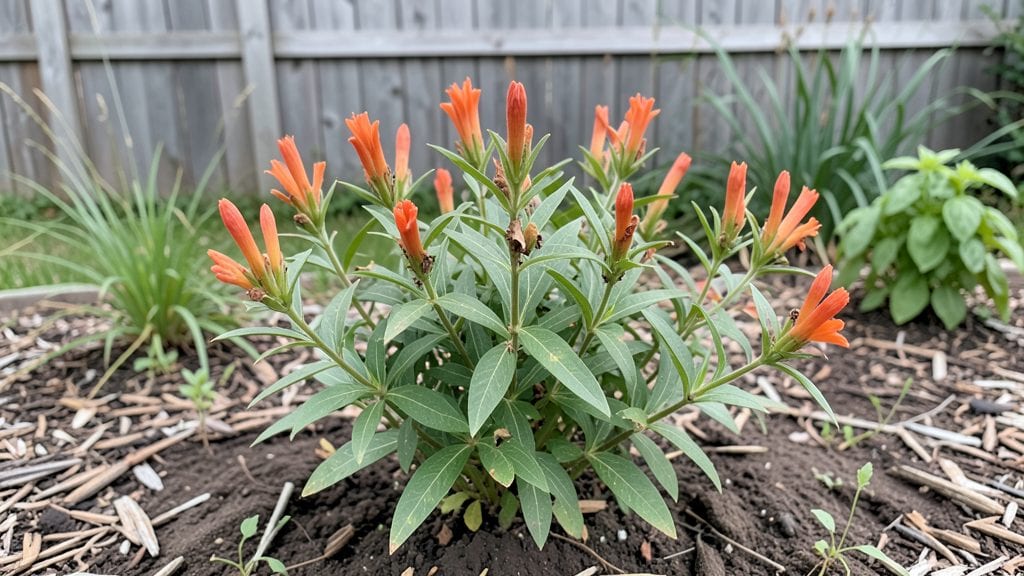
Crossandra behaves as a seasonal plant rather than a true perennial in most regions, surviving only in frost-free zones like USDA 10-12. Outside these areas, it dies back with cold weather but can easily be propagated from cuttings or seeds each year.
Crossandra's tropical origins explain why it struggles in cooler climates—its delicate foliage can't withstand temperatures below 40°F. 🌿 In zones 10-12, it naturally thrives year-round, but gardeners in colder areas often treat it as a seasonal favorite.
The good news? Its fast growth and adaptability make it perfect for container gardening, where you can simply move plants indoors before the first frost hits.
This plant's ability to regrow from cuttings means you can effectively "reset" it annually, maintaining vibrant blooms season after season. The key is understanding its growth cycle: it focuses on foliage in cooler months and bursts into flower when temperatures rise again.
Many gardeners swear by overwintering cuttings in bright windowsills to jumpstart spring planting.
💡 In This Article
- Crossandra Growing Zones and Cold Hardiness Limits
- How to Overwinter Crossandra in Cooler Climates
Crossandra growing zones and cold hardiness limits
Crossandra's classification as a seasonal plant stems directly from its native tropical habitat in India and Southeast Asia, where temperatures rarely drop below 60°F. This species evolved in environments with consistent warmth and humidity, making its cellular structure highly sensitive to freezing conditions.
The plant's thin, waxy leaves and delicate stems lack the protective adaptations—like thick bark or deep root systems—found in true perennials from temperate climates. When exposed to temperatures near 32°F, cellular membranes rupture, causing irreversible damage to the plant's vascular system.
The USDA hardiness zones 10-12 represent the sweet spot for Crossandra because these regions maintain average winter lows above 40°F, allowing the plant to remain active year-round.
In contrast, zones 9 and below experience frost, which triggers a survival response: the plant's growth slows dramatically, and it enters a state of dormancy.
Unlike hardy perennials that store energy in roots to regrow, Crossandra lacks this capability, making it dependent on human intervention to persist beyond one growing season. 🌡️
What makes Crossandra particularly vulnerable is its tropical growth habit—it prioritizes rapid above-ground growth during warm months rather than developing robust underground structures. This strategy works perfectly in its native environment but becomes a liability in cooler climates.
For comparison, a true perennial like lavender can withstand -15°F temperatures because it allocates energy to root development, creating a reservoir of nutrients. Crossandra, however, directs nearly all its resources to producing its signature flame-shaped blooms and lush foliage during its active phase.
The plant's survival strategy in cooler regions relies on its remarkable ability to regenerate from cuttings. This vegetative propagation works because Crossandra's stems contain meristematic cells—undifferentiated cells that can quickly differentiate into new roots and shoots when provided with optimal conditions (warmth, moisture, and bright light).
Gardeners in zones 7-9 often use this method to "reset" their plants annually, effectively creating new specimens that behave like perennials through human intervention. The process mimics how tropical plants naturally propagate in their native habitats through stem layering or water sprouts.
Here's what happens when you try to overwinter Crossandra outdoors in marginal zones: the first frost causes the above-ground portions to blacken and die back, but the roots may survive if protected by mulch.
However, these roots lack the energy reserves to produce new growth in spring, which is why propagation from cuttings is far more reliable. The key temperature threshold is 45°F—below this, even the roots begin to suffer irreversible damage.
This explains why Crossandra is classified as a "tender perennial" rather than a true hardy perennial.
For gardeners in cooler climates, understanding this biological limitation transforms Crossandra from a one-season wonder into a renewable resource. By treating it as a "managed perennial"—through cuttings, seeds, or container gardening—the plant can provide years of vibrant color with minimal effort.
The trade-off is that you're essentially creating new plants each year rather than nurturing a single specimen through multiple seasons, which is the hallmark of true perennials like peonies or hostas. 🌱