
Flowers
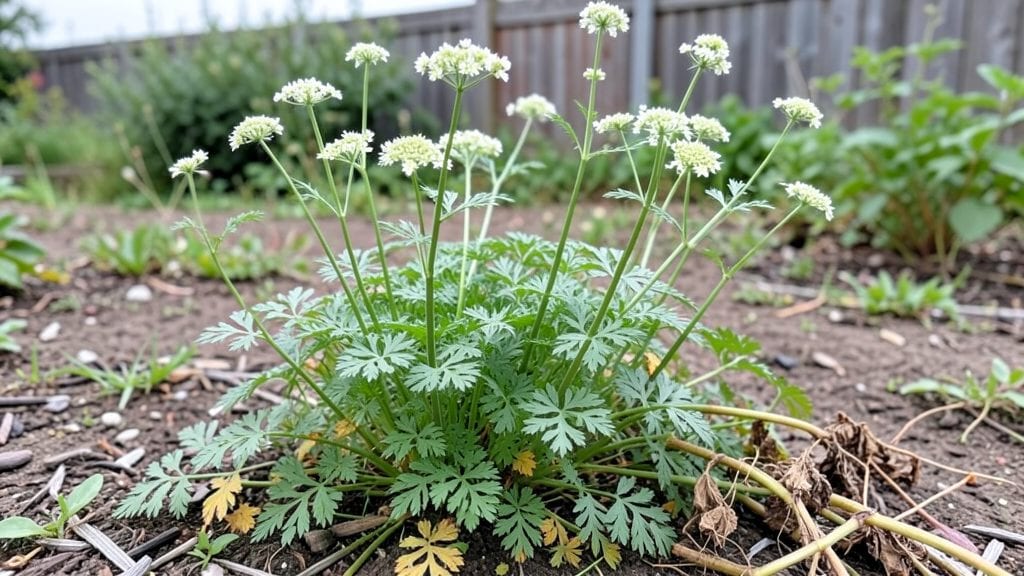
Chervil is not a true perennial in most climates, as it thrives as a cool-season annual or biennial, dying back in heat or frost. However, in mild winter regions (USDA Zones 7-10), it may self-seed and persist for 2+ years under ideal conditions.
Chervil's classification as an annual or biennial depends entirely on your climate zone and growing conditions.
In colder regions, it completes its life cycle in one year, producing seeds before dying in summer heat—a classic annual pattern. 🌱 Meanwhile, in temperate zones like California or the Southeast, it often lives two years, flowering and seeding in its second season.
This biennial behavior makes it behave like a short-lived perennial in those areas, but true perennial status requires surviving multiple winters without replanting, which chervil rarely does outside Zones 7-10.
What sets chervil apart from true perennials is its sensitivity to temperature extremes. Even in mild climates, it bolts quickly when stressed by heat or drought, making consistent harvests challenging. That's why gardeners in cooler areas often treat it like an annual, sowing fresh seeds every spring.
The good news? Its self-seeding habit in Zones 7-10 means you can get "perennial-like" behavior with minimal effort—just let the plants go to seed and thin volunteers in spring.
💡 In This Article
- Chervil’s Growth Cycle: Annual vs Biennial Behavior
- Extending Chervil’s Lifespan: Cold Hardiness Tips
Chervil’s growth cycle: annual vs biennial behavior
Chervil (Anthriscus cerefolium), a delicate member of the Apiaceae family, follows a growth pattern dictated by temperature cues rather than inherent perennial hardiness.
As a cool-season crop, it behaves as an annual in regions with harsh winters or hot summers—bolting (rapidly flowering) when temperatures exceed 75°F and dying back within 90-120 days of germination.
This bolting response is triggered by the plant's photoperiod sensitivity, where long daylight hours combined with heat accelerate its reproductive cycle. 🌿 Unlike true perennials that regrow from woody roots or rhizomes, chervil's herbaceous structure lacks the structural resilience to survive freeze-thaw cycles or prolonged heat stress.
The biennial behavior emerges in transitional climates (USDA Zones 6-9) where winters are mild enough to allow survival but summers remain cool. Here's how it works: chervil germinates in spring, grows vegetatively through summer, then enters dormancy in fall.
With winter's cooler temperatures (50-60°F average), it resumes growth in early spring, flowering and seeding by late spring or early summer of its second year.
This two-year cycle explains why it's often called a "short-lived perennial"—it persists longer than true annuals but lacks the multi-year regenerative capacity of plants like asparagus or rhubarb.
What limits chervil's perennial potential is its shallow root system and lack of true winter hardiness. While it can tolerate light frosts (25-30°F), prolonged exposure to 15°F or below causes cellular damage to its non-woody stems.
Even in Zones 7-10, where it may self-seed prolifically, each generation behaves independently—new plants emerge from dropped seeds rather than from established root systems. This makes chervil more of a "volunteer perennial" than a true one, similar to how dill or fennel behave in favorable conditions.
Botanically, chervil's life cycle mirrors other Apiaceae members like parsley and cilantro, which also exhibit annual/biennial plasticity. The key difference lies in chervil's 30-45 day germination-to-harvest window when grown as an annual—far faster than parsley's 120+ days.
This rapid growth makes it particularly sensitive to environmental shifts. In heat waves, chervil's leaves develop a bitter, coarse texture as it diverts energy toward flowering, a survival mechanism that renders the herb unusable for culinary purposes. 💫
Consider this comparison: In Zone 5 (annual treatment), chervil completes its life cycle in one summer; in Zone 8 (biennial treatment), it may produce two harvests over two years. The transition occurs because chervil's flowering hormones (florigen) activate at different temperature thresholds depending on daylight exposure.
Gardeners in marginal zones (like Zone 6) often get hybrid behavior—some plants bolt early as annuals while others persist into a second year, creating a patchwork of growth stages in the same bed.
The herb's delicate nature extends to its storage life—even harvested stems last only 5-7 days in the fridge when not properly blanched. This short post-harvest shelf life mirrors its ephemeral growing season, reinforcing why chervil remains a seasonal specialty rather than a garden staple.
For those in Zones 7-10, the solution lies in accepting chervil's self-seeding habit as a "perennial light" strategy, where you manage rather than control its lifecycle.