
Flowers
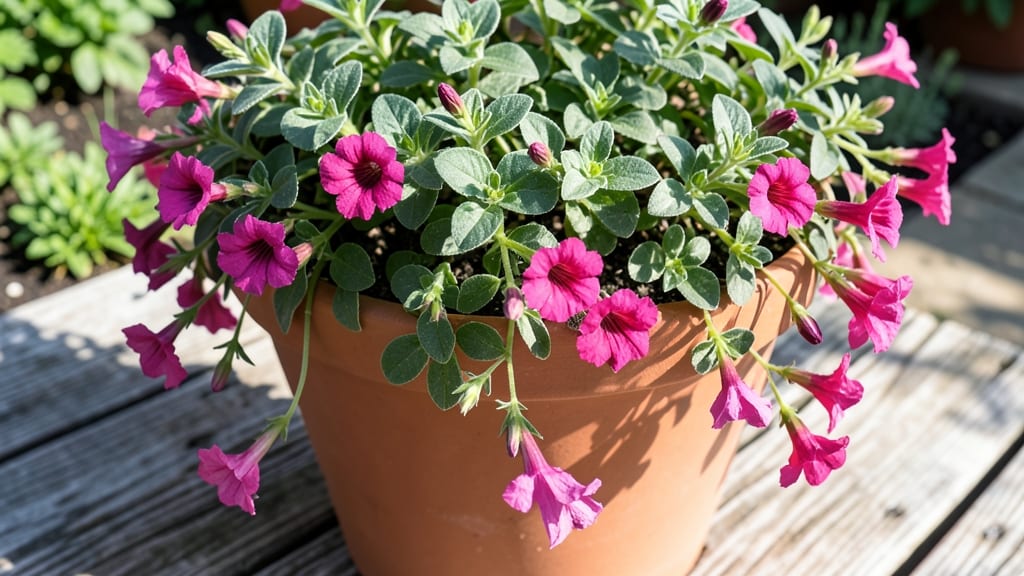
Calibrachoa behaves as a tender perennial only in USDA Zones 10-11, where it survives winters with minimal protection. In cooler climates, it dies back annually and must be replanted each spring.
This tropical plant—often called "million bells"—struggles with frost, so its lifespan depends entirely on your hardiness zone. 🌱 In Zones 9-10, gardeners can sometimes overwinter it by moving pots indoors or using heavy mulch, but even then, it rarely survives unprotected.
The key difference? True perennials like hostas regrow from roots after winter, while calibrachoa relies on tender care to persist at all.
For most gardeners in Zones 7 and below, treating it as an annual simplifies things—just plant fresh seeds or seedlings each spring. The trade-off? You get vibrant blooms all season without the winter maintenance hassle.
Even in Zone 10, a single cold snap can wipe out unprotected plants, so proper winter prep is non-negotiable.
💡 In This Article
- Calibrachoa Plant Lifespan by Climate Zone
- Extending Calibrachoa’s Season: Overwintering Tips
Calibrachoa plant lifespan by climate Zone
Calibrachoa's lifespan hinges on its tropical origins—native to South America's warm climates where temperatures rarely drop below 40°F. This sensitivity explains why it behaves differently across USDA zones.
In Zones 10-11, where winters average 50-60°F, calibrachoa acts as a tender perennial, surviving with minimal protection because its cells contain antifreeze proteins that prevent ice crystal formation—similar to how some orchids endure mild winters. 🌿 However, these proteins only work within a narrow temperature range.
The turning point occurs at 32°F, where cellular damage begins. In Zones 9-10, even brief cold snaps trigger leaf drop and dormancy. Unlike true perennials (e.g., lavender), calibrachoa lacks hardened underground structures—its roots are shallow and fibrous, making them vulnerable to 28°F or below.
In Zones 7 and colder, frost kills the entire plant, leaving only seeds or cuttings for propagation. This explains why gardeners in these areas treat it as an annual.
Dormancy patterns reveal the science behind its behavior. In marginal zones, calibrachoa enters a state called "quiescence"—a temporary growth pause triggered by cold exposure. Unlike true perennials that regrow from protected root systems, calibrachoa's survival depends on protecting the entire plant.
Even in Zone 10, unprotected plants may suffer 50% mortality during 35°F nights, demonstrating why winter care is critical. 🌡️
Here's what happens zone-by-zone:
- Zones 10-11: Acts as tender perennial with proper mulching (4-6 inches of straw) and frost cloth
- Zones 9: May survive winters in containers moved to 50°F garages, but rarely outdoors
- Zones 8 and below: Dies back completely—treat as annual
What most gardeners miss is calibrachoa's light sensitivity during dormancy. Even in mild winters, reduced daylight triggers flower bud formation for next season—but only if the plant survives.
In colder zones, this natural cycle gets interrupted, forcing replanting. The plant's 6-8 week growth cycle from seed to bloom makes annual replanting practical for most gardeners. 🌸
For those in transition zones, the key is understanding calibrachoa's thermal limits. While it can tolerate brief 45°F nights, prolonged exposure below 50°F stresses the plant. This explains why even experienced gardeners in Zone 9 often lose plants without greenhouse protection.
The plant's rapid growth and short lifespan make it more practical as an annual in most U.S. regions.