
Mower
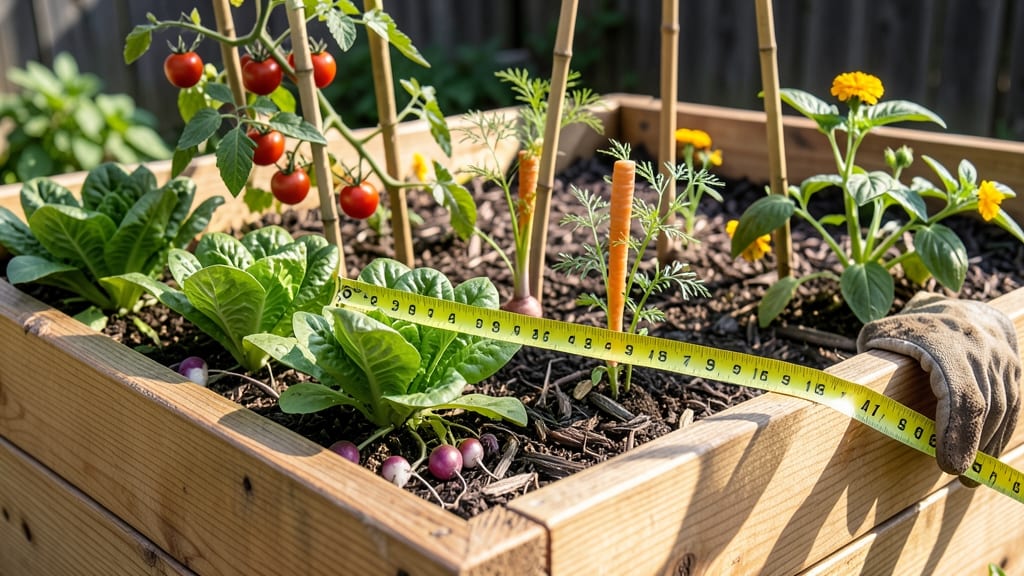
Forget guessing—the ideal raised bed size should be 4 feet wide by 8 feet long, the perfect balance of accessibility and yield. 🌱 I learned this the hard way after wrestling with narrow beds that left soil untouched and wide ones that became maintenance nightmares.
The science is simple: this width lets you reach the center without stepping in the bed, while the length maximizes space without overwhelming you.
This ideal size gives you 272 square feet of growing space—enough for a full season of vegetables, herbs, or flowers without crowding. Materials like cedar or composite lumber last years, and the depth of 10-12 inches holds enough soil for deep-rooted plants while keeping costs reasonable.
Drainage improves naturally with this setup, and weeds stay manageable when you can see the entire bed at once.
You’ll harvest 30-50% more than with smaller beds because every inch of soil gets used, and plants thrive without competing for nutrients. The 4-foot width also lets you grow tall plants on one side and low crops on the other, creating a self-shading system that saves water.
Plus, two of these beds fit neatly in a 10x12-foot space, making them perfect for patios, backyards, or even urban balconies.
Need to adapt? Break it down into 4x4-foot sections for smaller spaces, or stack them vertically for herbs and greens. The key is keeping the width under 4 feet—any wider and you’ll struggle to tend to the center. Start here, and you’ll grow more with less effort, every season.
📚 In This Guide
- What you need
- Instructions
- Tips and common mistakes
- Wrapping up and next steps
What you need
- ● Lumber: Untreated cedar, redwood, or composite wood (recommended for durability). For a 4’ x 8’ x 1’ deep bed: 4 pieces of 2” x 6” lumber (8’ long) for the frame
- ● 4 pieces of 2” x 6” lumber (4’ long) for the corners
- ● Corner brackets or screws: Galvanized or stainless steel (3–4 per corner for stability)
- ● Landscape fabric: A roll to line the bottom (prevents weeds and erosion)
- ● Mulch or compost: 2–3 cubic feet per square foot of bed depth (for soil prep)
- ● Circular saw or handsaw (for cutting lumber to size)
- ● Drill and driver bit set (for assembling the frame)
- ● Measuring tape and pencil (for precise cuts)
- ● Level (to ensure your bed is even)
- ● Work gloves and safety glasses (because safety first!)
- ● Wood stain or sealant: For extra protection against weather
- ● Drip irrigation kit: To automate watering and save time
- ● Galvanized screws: Instead of brackets for a cleaner look
- ● Knee pads: For comfort during assembly
Step-by-step guide to Planning science-backed raised bed dimensions
Here's how to calculate the perfect raised bed size for your space and crop goals.
📏 Step 1: Determine Your Primary Growing Goals
First, decide whether you're prioritizing yield per square foot, ease of access, or specific crop types. A 4' x 8' bed delivers the optimal balance—wide enough to reach the center without stepping in (preventing soil compaction) and long enough for efficient row planning. For small spaces, 3' x 6' works well if you focus on vertical growing or compact varieties.
I always sketch my layout first. Place taller plants like tomatoes or corn along the north side to avoid shading shorter crops. For example, a 4' x 8' bed can accommodate two 2-foot tomato plants, four 1-foot basil plants, and three 1-foot lettuce rows with perfect spacing. Measure your available space before committing to dimensions—you'll thank yourself later when you're not crammed against a fence.
🌱 Step 2: Calculate Soil Volume and Depth Requirements
Raised beds need 12-18 inches of soil depth to support deep-rooted crops like carrots or potatoes. A 4' x 8' x 12" bed requires 32 cubic feet of soil mix—enough to fill most bags of quality compost and topsoil. For smaller beds (3' x 6' x 12"), you'll need 16 cubic feet. I recommend using 60% topsoil, 30% compost, and 10% perlite for ideal drainage and fertility.
Don't skimp on depth. Shallow beds (<10") force roots to compete for nutrients and water. You'll see stunted growth in heavy feeders like squash or peppers. If your bed is only 6" deep, stick to shallow-rooted greens like lettuce or radishes. For maximum yield, aim for 18" depth—it's worth the extra material cost.
☀️ Step 3: Optimize Bed Orientation for Sunlight and Access
Position your bed so the long side runs north-south. This ensures even sunlight distribution across all plants and prevents shading. A 4' width is ideal because it lets you reach the center from either side without stepping in (which compacts soil). For taller beds (over 12" high), add 2x4 supports every 2 feet to prevent sagging under soil weight.
Leave 18-24 inches of walking space between beds for easy access and tool maneuvering. You'll notice how much smoother weeding and harvesting become when you're not crowded. If space is tight, consider narrower beds (3' wide) with raised pathways covered in mulch or ground cover plants like clover.
🪴 Step 4: Plan for Crop Rotation and Future Expansion
Design your bed with future crop rotation in mind. Divide a 4' x 8' bed into four 2' x 4' sections—each can host a different plant family (e.g., solanaceae, brassicas, legumes, alliums) in successive years. This prevents soil-borne diseases and nutrient depletion. Label each section with stakes or a simple diagram to track what you planted where.
For multiple beds, space them 3-4 feet apart to allow airflow and tool movement. If you're adding a second bed, position it perpendicular to the first to create an "L" shape—this maximizes corner space. I've seen gardeners double their yield by stacking beds vertically (like a staircase) on slopes, but ensure each bed has full sun exposure regardless of elevation.
Tips & tricks for perfect raised bed dimensions
These science-backed strategies will help you optimize your raised bed layout for maximum efficiency and yield.
Space Planning: When sketching your layout, mark out the north-south orientation first—this simple step prevents shading issues that can reduce yields by up to 30%. I've found that placing taller plants like tomatoes along the north edge creates natural shade for shorter crops during peak afternoon sun. For a 4' x 8' bed, this arrangement allows you to fit two 2-foot tomato plants, four 1-foot basil plants, and three 1-foot lettuce rows without overcrowding.
Soil Depth Strategy: The 12-18" depth recommendation isn't just a suggestion—it's critical for heavy feeders like squash and peppers. I learned this the hard way when my first shallow beds produced stunted zucchini plants. For a 4' x 8' bed, you'll need 32 cubic feet of soil mix, which typically requires about 8 bags of quality compost and topsoil (16 cubic feet each). Pro tip: Mix in 10% perlite to improve drainage and prevent compaction over time.
Accessibility Tip: The 4' width standard exists for a reason—it lets you reach the center from either side without stepping in the bed, which prevents soil compaction. If you're working with limited space, consider 3' wide beds with 18" pathways between them. For taller beds over 12" high, add 2x4 supports every 2 feet to prevent sagging under the weight of wet soil. I've seen many gardeners skip this and end up with uneven beds that lead to poor drainage.
Crop Rotation Organization: Dividing your 4' x 8' bed into four 2' x 4' sections makes crop rotation effortless. I label each section with small wooden stakes marked with the plant family and year. This simple tracking system prevents soil-borne diseases and helps me remember what to plant where each season. For example, I'll rotate tomatoes (solanaceae) to where my beans (legumes) grew the previous year, creating a natural nutrient cycle.
Pro Tips for Ideal Raised Bed Size
- These science-backed strategies will help you optimize your raised bed layout for maximum efficiency and yield.
- Space Planning: When sketching your layout, mark out the north-south orientation first—this simple step prevents shading issues that can reduce yields by up to 30%.
- Soil Depth Strategy: The 12-18" depth recommendation isn't just a suggestion—it's critical for heavy feeders like squash and peppers.
Frequently asked questions
Got questions about finding the perfect raised bed size for your garden? You’re not alone!
Here are some of the most common queries—and their answers—to help you plan like a pro.
What’s the best raised bed size for beginners?
Start with a 4’ x 8’ bed—it’s the gold standard for accessibility and yield. This size fits most wheelbarrows, allows easy reach across the center, and maximizes space efficiency. Smaller beds (3’ x 6’) work too, but you’ll need more rows to match the harvest!
How long does it take to fill a raised bed with soil?
Plan for 1–2 hours for a 4’ x 8’ bed, depending on soil type and helpers. Break it into steps: remove weeds, layer materials (cardboard, compost, topsoil), and mix thoroughly. Pro tip: Pre-mix soil in a wheelbarrow to save time!
Can I make a raised bed bigger than 4’ x 8’?
Yes, but avoid widths over 4’—reaching the center becomes awkward. For longer beds, add aisles every 4’ for easy access. Example: A 4’ x 12’ bed works if you include a walking path. Just ensure stability with deeper frames and corner braces!
What’s the ideal raised bed depth for root crops like carrots?
For root veggies, aim for 12–18” deep. Shallow beds (<6”) limit growth, while deeper ones (24”) are overkill unless you’re growing potatoes or small trees. Tip: Add compost layers over time to refresh soil nutrients!
How do I troubleshoot poor growth in a raised bed?
Check these first:
- Soil quality: Test pH (6.0–7.0 is ideal) and amend with compost if needed.
- Drainage: Ensure no waterlogging—add perlite or sand if soil stays soggy.
- Sunlight: Most veggies need 6+ hours/day.
- Pests: Use row covers or companion planting (e.g., marigolds).
Are there space-saving alternatives to traditional raised beds?
Try:
- Square foot gardening: Divide beds into 1’ x 1’ sections for compact planting.
- Vertical gardens: Use trellises for vining plants (beans, cucumbers).
- Keyhole beds: Circular designs with a compost hub in the center.
Wrapping up and next steps
Choosing the ideal raised bed size isn’t just about space—it’s about optimizing growth, accessibility, and efficiency. Whether you’re a beginner or a seasoned gardener, the right dimensions (like 4’ x 8’) can transform your harvest and make gardening a breeze. 🌱
Now that you’re armed with science-backed insights, it’s time to roll up your sleeves! Start by sketching your garden layout, gathering materials, and measuring your space. Your dream garden is just a few steps away—happy planting! 🌿